Passive house and rainwater harvesting: do they work together?
Rainwater harvesting and passive house design tend to attract the same kind of homeowner – someone who wants their home to perform well, cost less to run and sit more lightly on the environment. Yet the two systems are rarely planned together.
A passive design house with a rainwater harvesting system is simply a home that performs well on both energy and water. In the context of sustainable living in Australia, where water scarcity is an ongoing concern, combining the two makes sense.
What is a passive house?
What is rainwater harvesting?
Where they complement each other
While the two systems are largely independent, there are a few places where they interact in useful ways.
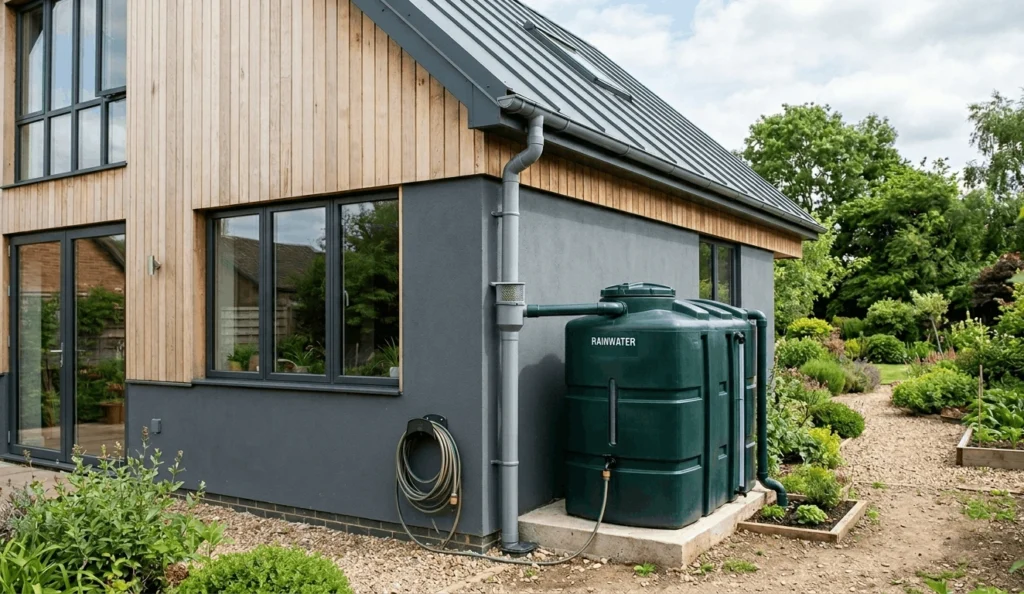
The first is the roof. Passive house designs in Australia typically feature well-insulated, carefully detailed roof assemblies with continuous membranes and controlled penetrations. That same roof is your primary rainwater catchment surface. A large, uninterrupted roof plane – common in passive house design – is an efficient catchment area, and the careful detailing that goes into a passive house roof tends to produce a cleaner catchment surface than a conventionally built equivalent.
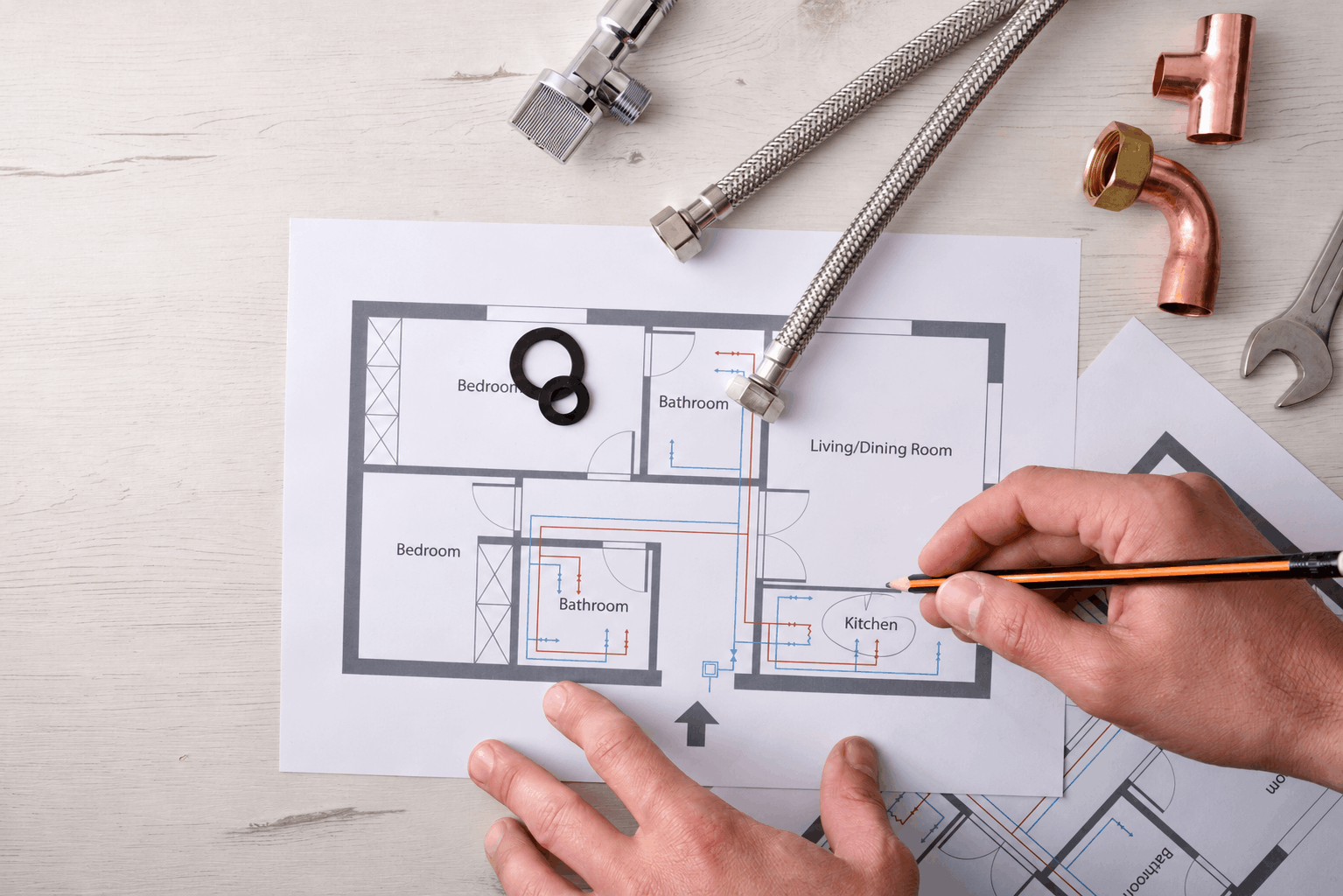
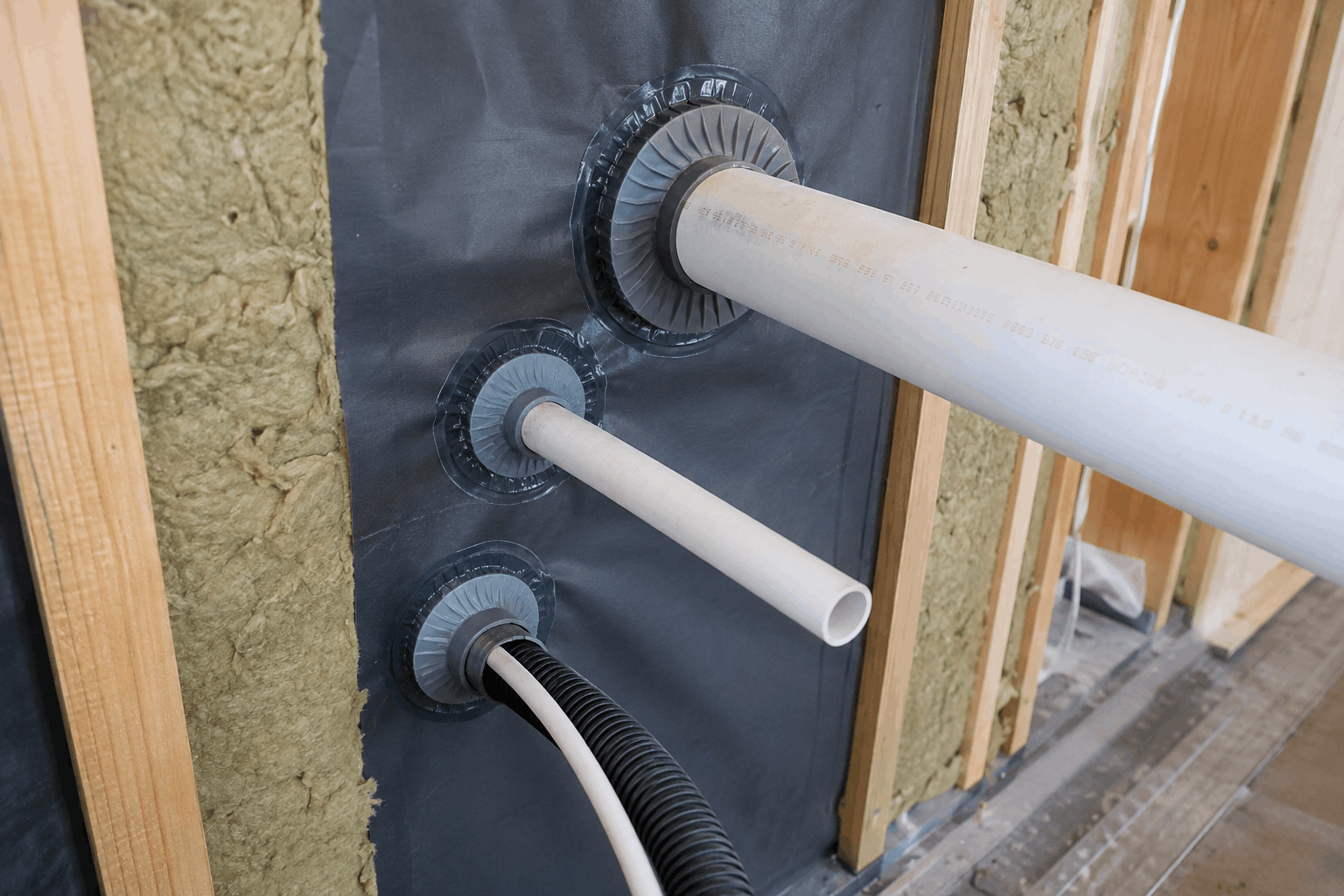
The second is planning and integration. Passive houses in Australia use detailed upfront modelling and coordination between trades to achieve certification. That thorough planning is well-suited to integrating a rainwater system from the start – sizing tanks appropriately, coordinating pipe runs with the building envelope and ensuring that penetrations through the airtight layer are properly detailed and sealed. Retrofitting a rainwater system to any home is messier and more expensive than building it in from the beginning, and passive home building projects are already oriented towards getting those decisions right early.
The third is energy use. Pumping rainwater from a tank to the point of use requires electricity. In a passive home that’s already minimising energy demand and potentially paired with solar generation, that pump load is relatively modest and easily absorbed. The home’s low overall energy footprint makes the additional demand from a rainwater pump a small fraction of total consumption.
Airtightness and the wet areas
One question worth addressing directly: does introducing a rainwater system create any risks for the airtight envelope that passive building design depends on?
In practice, no, provided the system is designed and installed correctly. Pipe penetrations through the building envelope need to be properly sealed, just as any other penetration does. This is standard practice in passive house designs and is part of the detailed coordination that experienced passive house builders in Australia manage. A rainwater pipe entering the building is no different in principle from a power conduit or a drainage system.
What rainwater harvesting can and can't supply
In Australia, the permitted uses of harvested rainwater vary by state and local council. In most jurisdictions, rainwater can be used for toilet flushing, laundry and irrigation. Toilet flushing and laundry alone account for a significant proportion of household water consumption, so even a system limited to those uses delivers meaningful savings.
For passive house designers in Australia working on projects with a strong sustainability brief, rainwater harvesting for toilet flushing and laundry is generally the most straightforward integration. It requires minimal treatment, is widely permitted and produces reliable savings year-round.
Potable rainwater systems – those supplying drinking water – require more sophisticated filtration and UV treatment and are subject to more strict regulation. But they are worth considering for a passive house in Australia with ambitious sustainability targets and a suitable roof catchment area.
Sizing the system for your site
The performance of a rainwater harvesting system depends heavily on local rainfall patterns and roof catchment area. A passive house design in coastal Queensland will collect far more water than one on the same footprint in inland Australia. Your design team should model expected annual yield against anticipated demand to determine appropriate tank sizing. Undersizing a tank is a common mistake that limits the system’s usefulness, while oversizing adds cost without proportional benefit.
This kind of integrated modelling sits comfortably within the planning process that passive house builders already apply to energy performance. The same rigour that goes into PHPP modelling for energy can be applied to water balance calculations for rainwater harvesting.