Passive house and downsizing – is it worth it for retirees?

Downsizing is a common decision that many Australians make in or just before retirement. Less space to maintain, lower running costs and a home better suited to the years ahead are all compelling reasons to make the move.
The decision to downsize usually comes down to a spreadsheet that covers whether to sell the family home, buy or build something smaller, and see what’s left over. For retirees considering a passive house as that smaller home, the spreadsheet needs a few extra lines – ones that don’t typically appear in a standard downsizing calculation, but that materially change the answer.
The standard downsizing maths
A typical downsizing calculation compares the sale price of the existing home against the cost of the new one, with the difference banked, invested or used to fund retirement income. Build versus buy decisions are usually assessed on construction cost per square metre, with the assumption that a smaller home will naturally cost less to build and run simply because there’s less of it.
While this is broadly true, it also understates how much the building standard, not just the size, determines the long-term financial outcome. Two homes of identical floor area, one built to minimum code and one built to passive house design, will have very different running costs over a 20 or 30-year retirement. The standard downsizing spreadsheet usually doesn’t account for this difference at all.
What the passive house premium actually competes against
The relevant comparison for a retiree isn’t passive house versus no house. Rather, it’s a passive house versus a conventional smaller home of the same size. The passive house premium, typically 5 to 15%, needs to be weighed against what that money would otherwise do: sit in an investment account, fund aged care contingency or simply provide a larger buffer for the years ahead.
This is where the retiree’s specific financial position matters more than it would for a younger buyer still accumulating wealth. Money spent on a building premium is money not available for other purposes during retirement, and there’s no future salary to replenish it. That makes the decision more consequential.
The way to do the sums is to look at the running costs, as that’s where a passive house really shines. If the passive house premium on a downsized home is $50,000, that premium is offset by what you would have otherwise spent on energy bills in a conventional equivalent. A passive house design typically uses 80 to 90% less energy for heating and cooling than a standard home, and the resulting savings on electricity and gas – often $2,000 to $3,000 a year for a typical household, depending on climate and energy prices – go directly toward recovering that upfront cost. At $2,500 a year, the passive house premium is recovered in 20 years through energy savings alone, before accounting for reduced maintenance or the rising cost of energy over that period.
For a retiree in their late 60s building a home they intend to stay in for the rest of their life, that’s a recoverable cost within a realistic timeframe – though it’s a more marginal proposition for someone downsizing in their early 80s with a shorter expected occupancy.
Downsizers are already prioritising sustainability
Recent PropTrack data on the downsizing market shows that downsizers place a greater emphasis on sustainability and practical amenities than the broader market, with over half citing solar energy or water systems as a key feature they look for in a retirement home, compared with around 39% of all buyers. So the downsizing cohort is already primed to value the kind of performance credentials that passive house designs offer, even if they haven’t yet connected that instinct to the specific standard.
The smaller footprint also helps
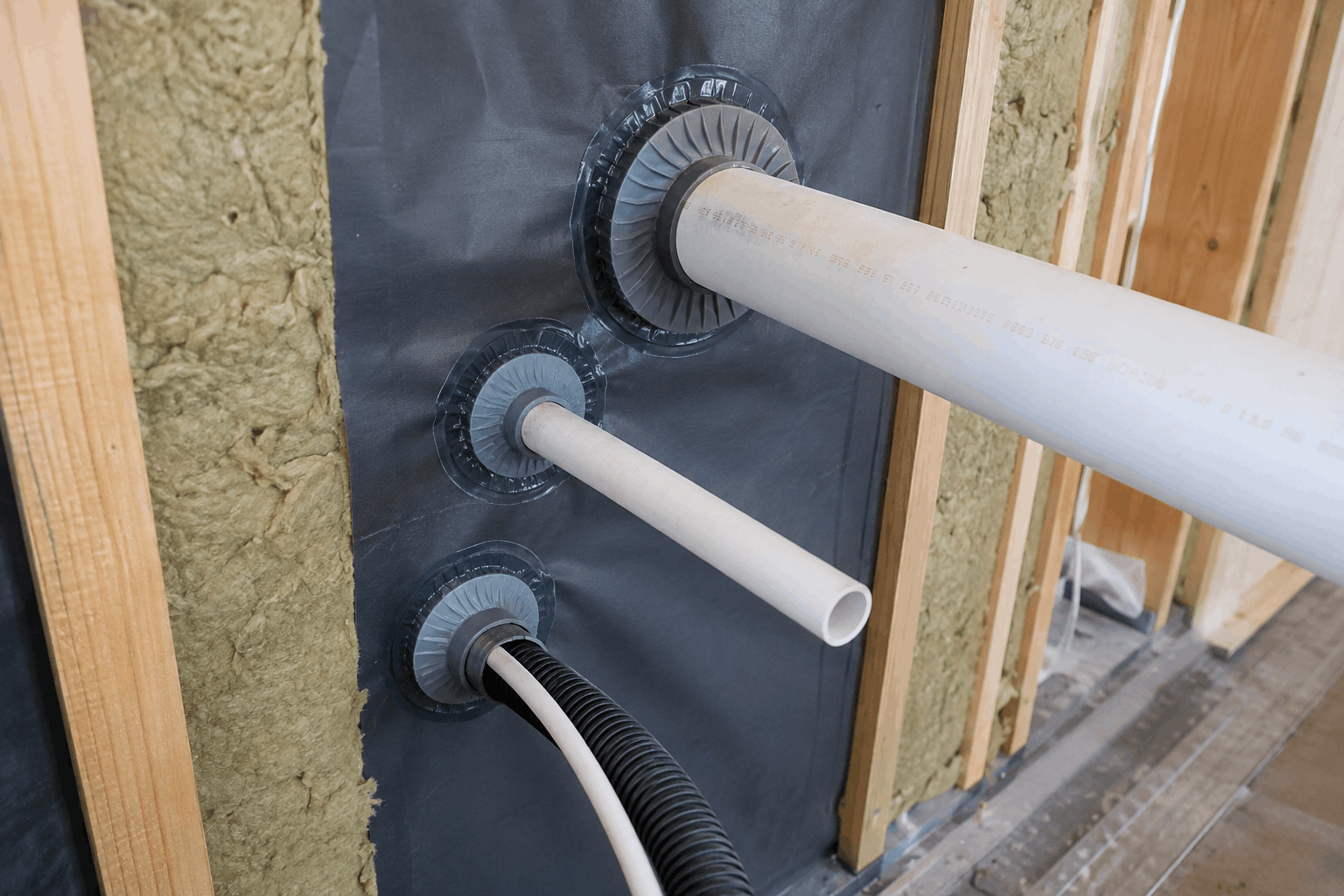
One thing that works specifically in favour of passive house design for downsizers is that the premium tends to apply less aggressively at smaller scales than the percentages suggest. Some of the fixed costs of passive house construction, like the MVHR unit, the design and certification process, don’t scale down proportionally with floor area. But the energy savings, as a percentage of a smaller home’s total energy use, can be just as dramatic.
In practical terms, this means the relative value proposition of passive house design in Australia can actually improve on a downsized home compared to a larger family home, because the fixed costs are spread across a smaller floor area. The home’s lower baseline energy demand also pairs very efficiently with a modestly sized rooftop solar system.
The honest answer to whether passive house design is worth it for a downsizing retiree depends on three things: how long you intend to stay in the home, how exposed your retirement income is to rising energy costs, and how much weight you put on the daily comfort and health benefits relative to their dollar value.
It’s a calculation worth running properly, with real numbers from passive house builders in Australia, rather than rules of thumb borrowed from a different kind of build entirely.
Frequently Asked Questions
Not upfront. Expect a premium of around 5 to 15% over a conventional equivalent. But running costs are dramatically lower, so over a typical 15 to 20 year retirement the total cost often works out in favour of the passive house, especially as energy prices continue to rise.
Usually, yes, through energy savings alone the premium is typically recovered within 15 to 20 years, and reduced maintenance and a growing resale premium for certified homes shorten that further. The exact numbers depend on your specific design, climate and energy prices, which a passive house designer in Australia can model for you.
For many retirees planning to stay in the home long-term, the combination of lower running costs, better comfort and improved air quality tends to outweigh the upfront premium. It's a more marginal decision for those expecting a shorter stay, such as before a likely move into aged care.