How thermal mass works differently in passive houses
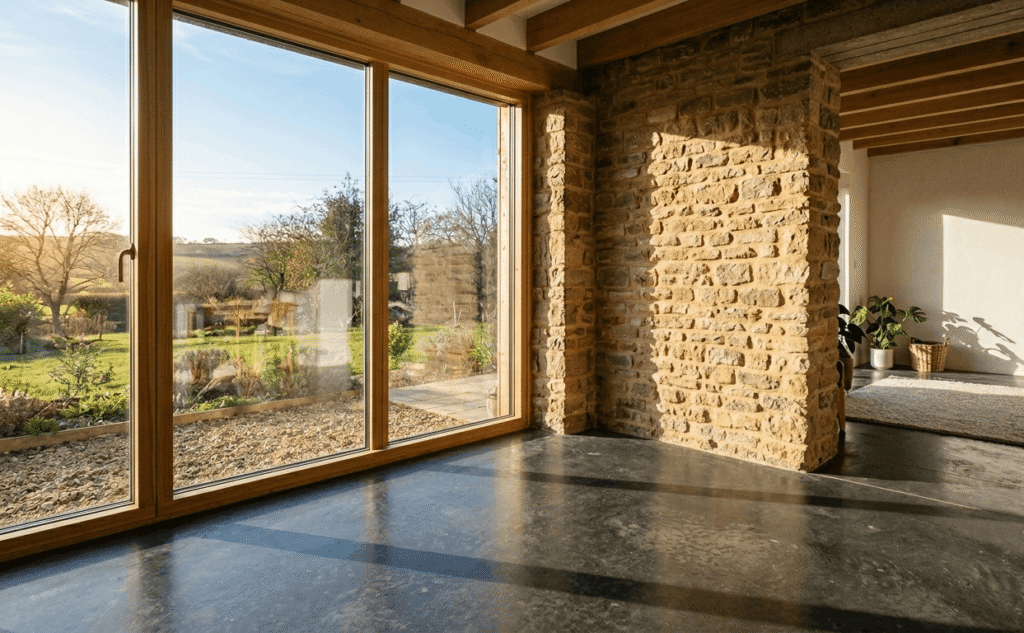
Thermal mass isn’t a passive house invention. Builders have been using dense materials to moderate indoor temperatures for centuries – think thick stone walls in Mediterranean
farmhouses or rammed earth in outback Australia.
But thermal mass in a passive house design behaves quite differently from thermal mass in
a conventional home. Understanding why is one of the more useful pieces of technical
knowledge you can take into a passive house project.
The problem with thermal mass in conventional homes
In a conventional home, thermal mass is often more of a liability than an asset. A concrete
slab floor absorbs heat from the winter sun during the day, but in a poorly insulated building,
that stored heat escapes quickly through the walls, roof and floor edge. The thermal mass
did its job, but the building envelope couldn't hold onto what it stored. The result is a floor
that feels warm in the afternoon and a house that's cold by morning.
Even worse is that in a conventional home with significant thermal mass and poor insulation, the mass can work against you in summer. A poorly shaded concrete floor absorbs solar radiation through the day, stores it and releases it through the evening, keeping the home
uncomfortably warm long after the sun has gone down.
Why the passive house envelope changes everything
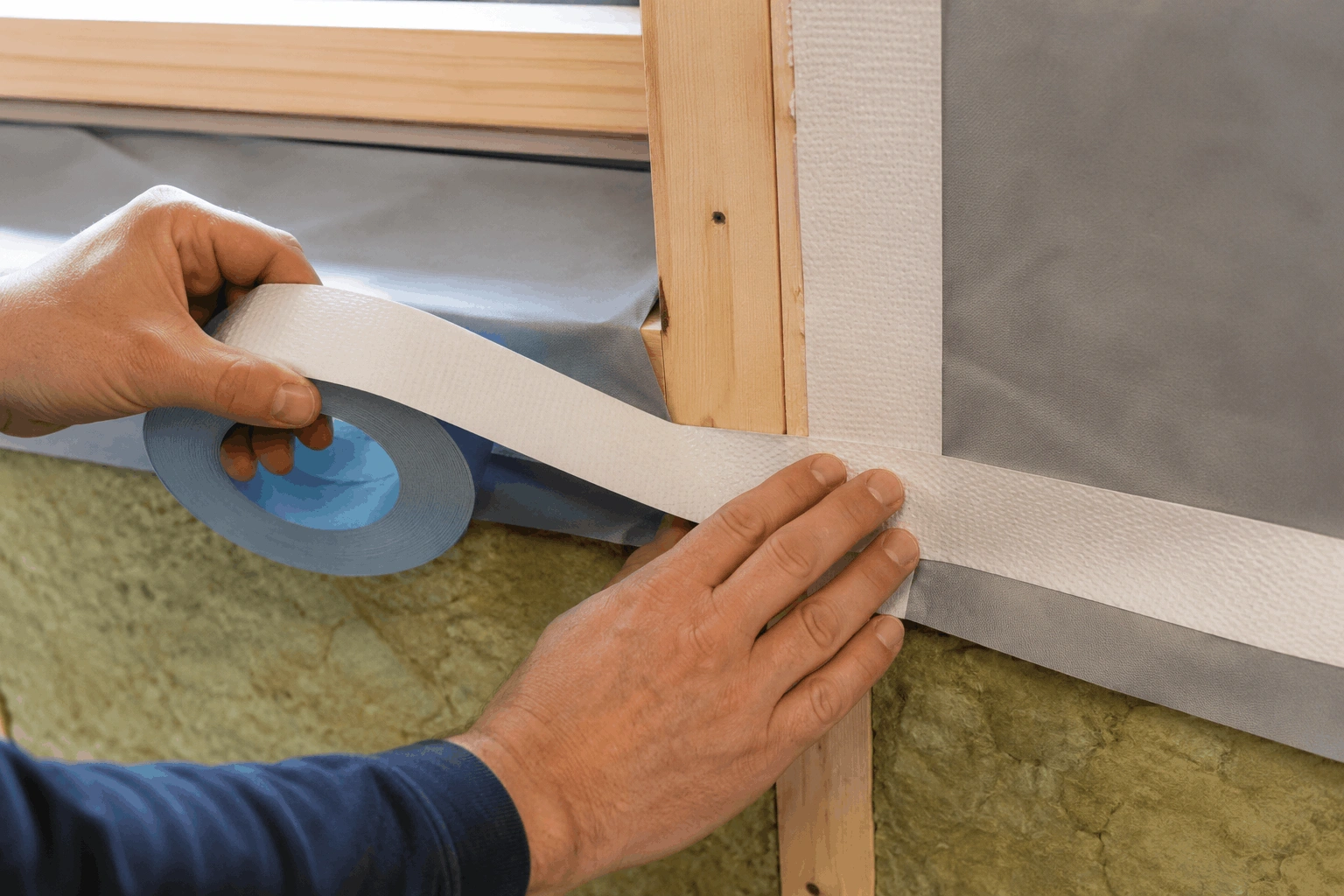
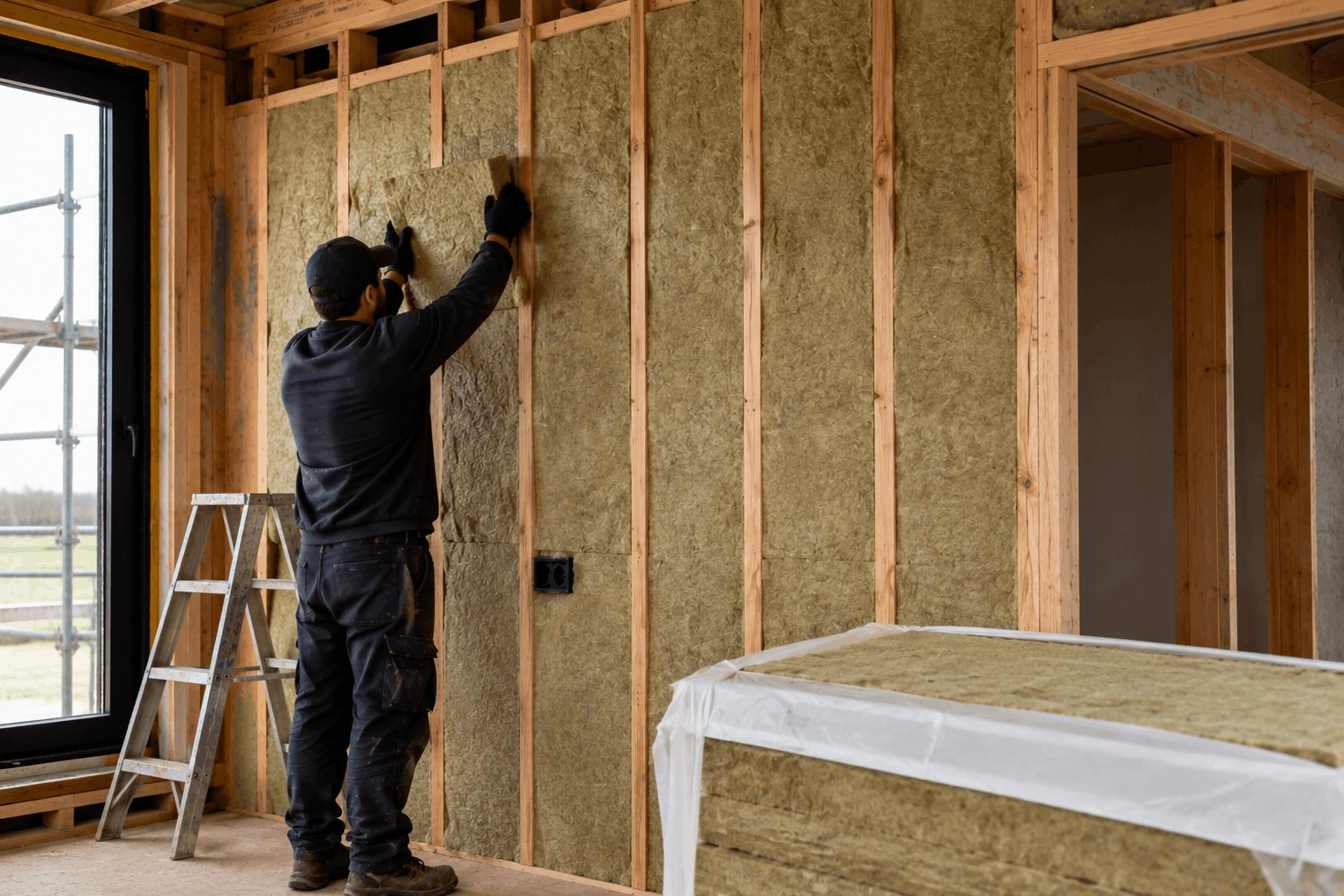
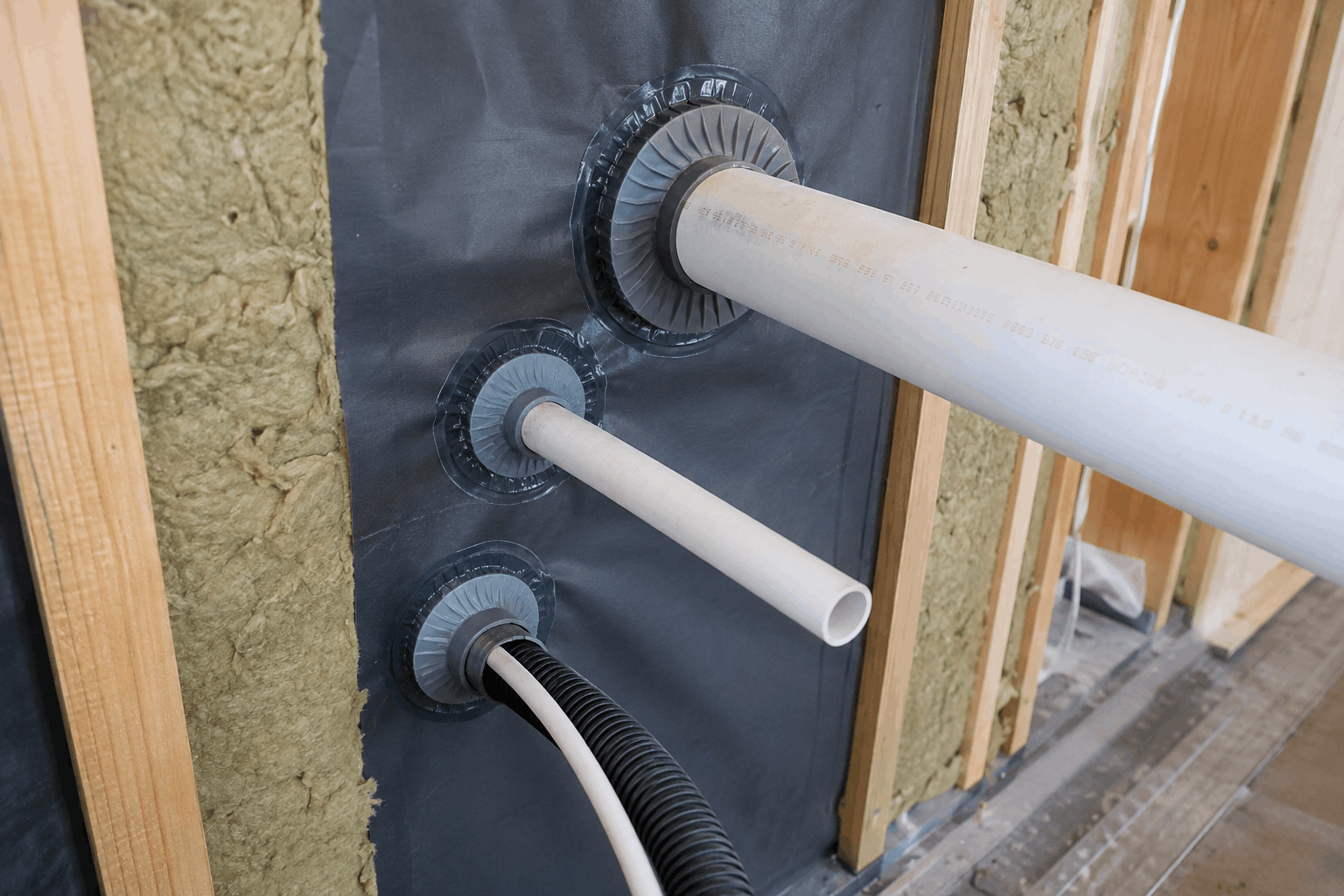
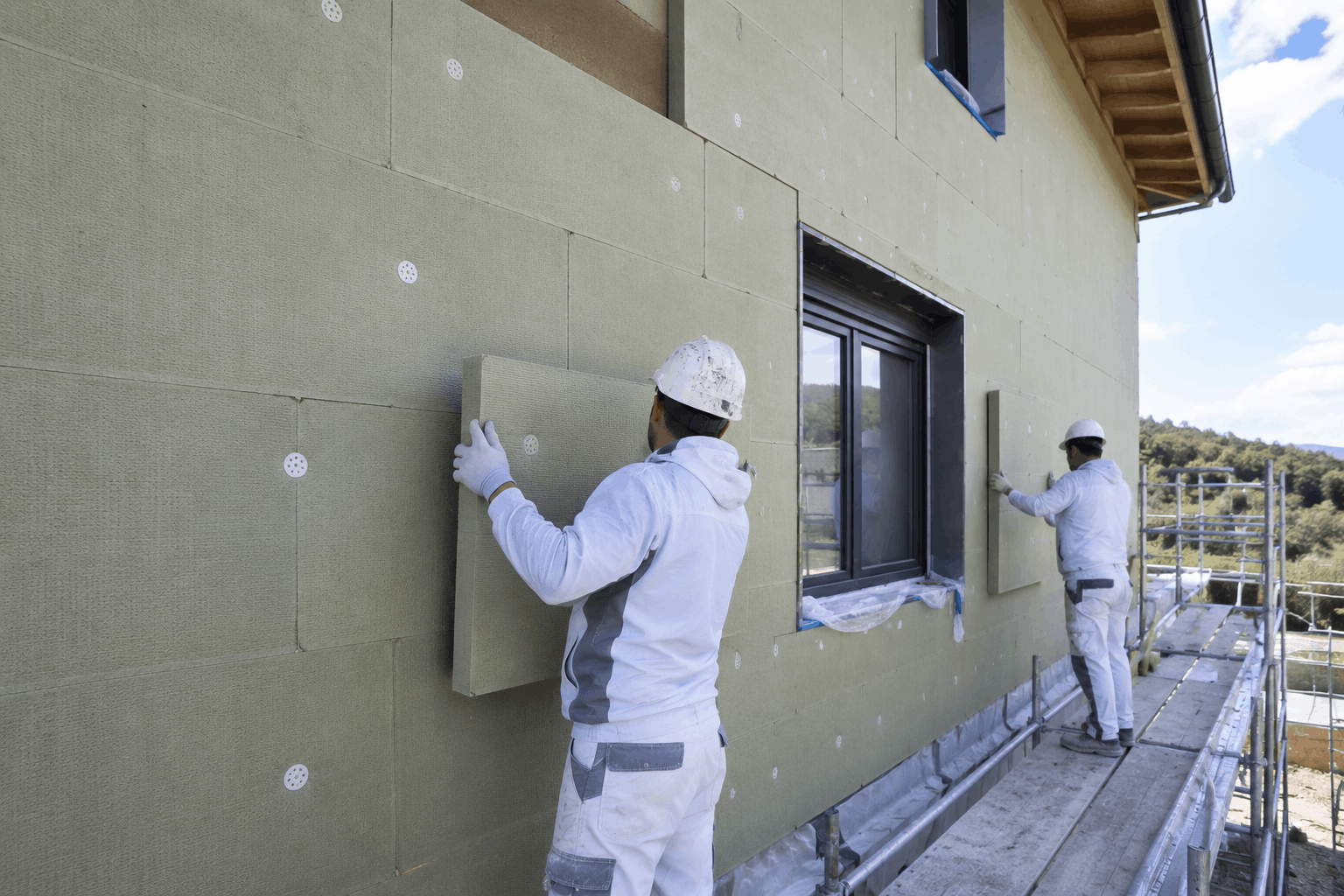
The continuous insulation, airtight construction and high performance windows that define
passive building design create an envelope that retains heat far more effectively than a
conventional building, which fundamentally changes how thermal mass behaves inside it.
In a passive house, heat stored in a concrete slab or a brick wall has somewhere to stay.
The insulated envelope slows the rate at which that stored heat escapes to the outside,
extending the period over which the mass contributes to indoor comfort. A floor that absorbs
winter solar gain during the day can still be releasing that heat at midnight. This is not
because the floor is unusually dense, but because the building surrounding it is so good at
holding onto what’s inside.
This is the core difference: in a conventional home, thermal mass performance is limited by
the envelope's inability to hold heat. In a passive house design in Australia, the envelope
and the thermal mass work together as a system rather than fighting each other.
Less mass can do more work
One of the counterintuitive consequences of this relationship is that passive house designs
often need less thermal mass than conventional homes to achieve the same or better
thermal stability. Because the envelope retains heat so effectively, a modest amount of well-
placed thermal mass can maintain comfortable indoor temperatures without the large
volumes of dense material that a conventional home might require to compensate for its own
heat loss.
This has practical implications for passive house builders in Australia, as a heavy concrete
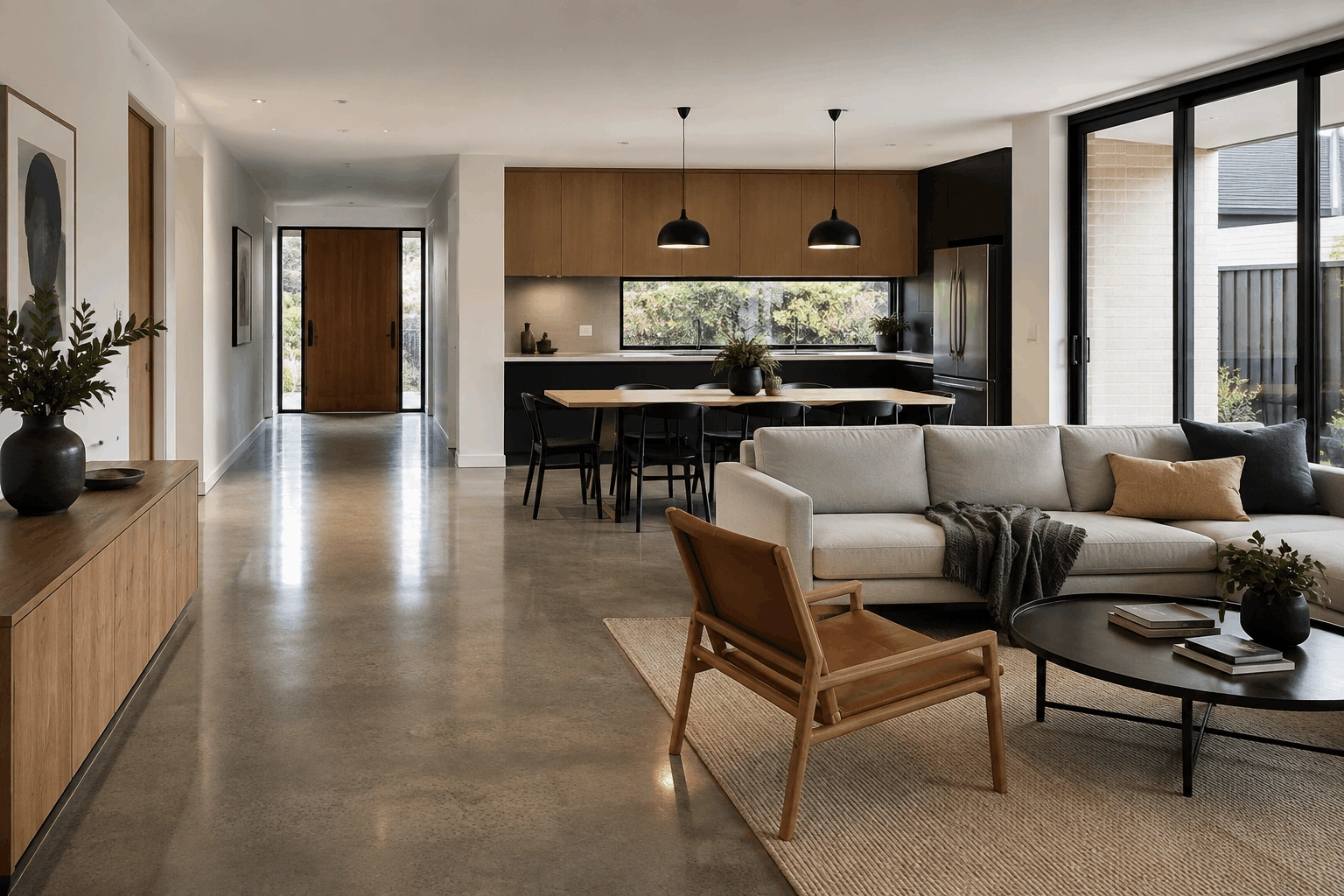
slab throughout the entire home isn't always necessary. A well-placed concrete floor in the
main living area, exposed to winter solar gain through north-facing glazing and protected by
appropriate shading in summer, can do most of the thermal work needed in a well-sealed
passive house design in Australia. The rest of the floor plan can use lighter construction
without significantly compromising thermal performance.
The risk of too much thermal mass
There's a flip side to this relationship: in a passive house, too much thermal mass can cause
problems that it wouldn't cause in a conventional home.
Because the passive house envelope is so effective at retaining heat, a home with very high
thermal mass can be slow to respond to changes in heating or cooling demand. If a heavily
massed passive house overheats on a warm day – perhaps because of unexpected solar
gain or high internal loads from occupants and appliances – the thermal mass stores that
heat and releases it slowly, making it difficult to cool the home down quickly. opening windows helps, but the mass itself will continue radiating warmth for hours.
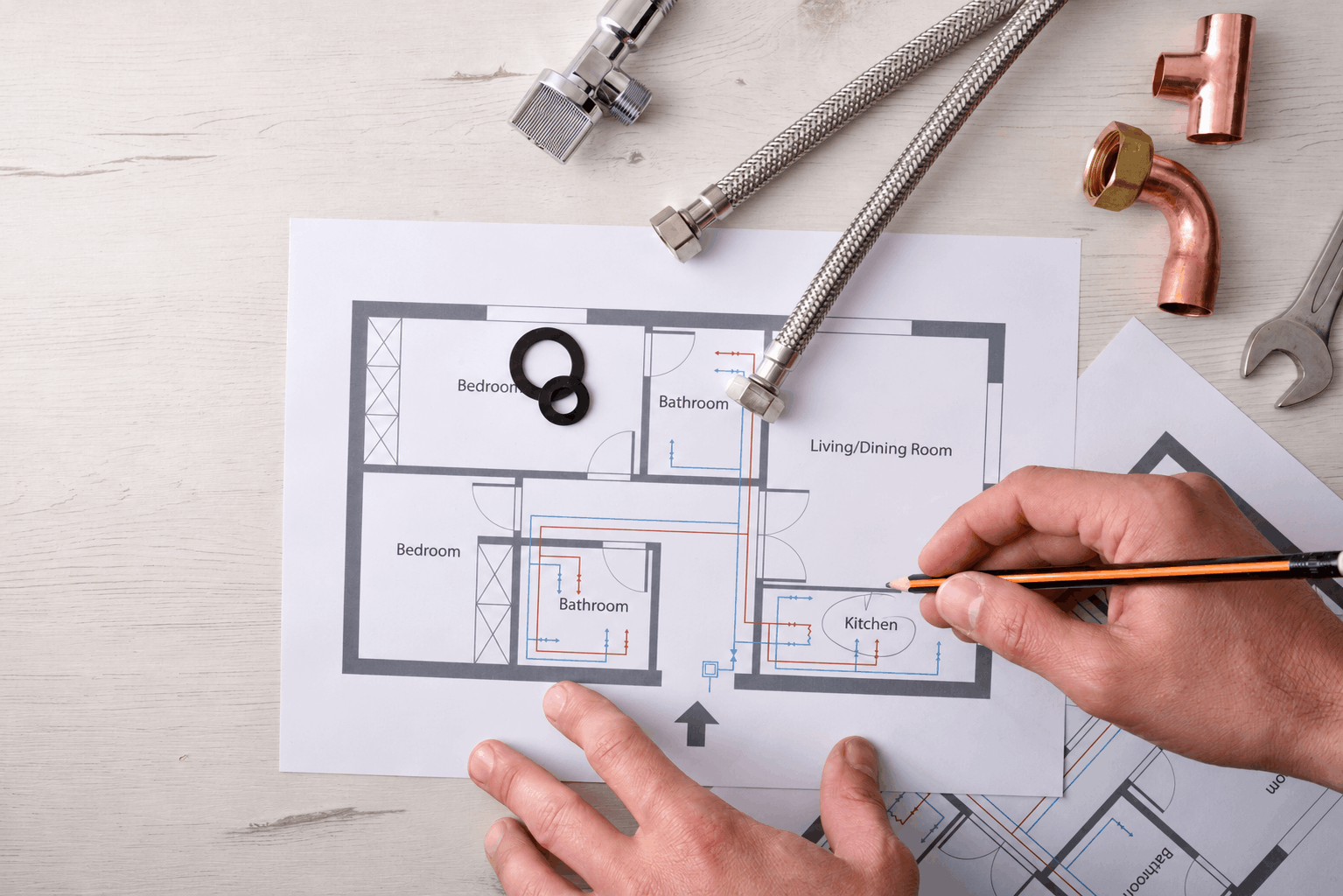
This is why passive house designers in Australia model thermal mass carefully in PHPP –
the energy modelling software used to design and verify every certified passive house –
rather than simply maximising it. The goal is to find the right amount of mass for the specific
climate, orientation and occupancy pattern of the home. More is not always better.
What's changing?
Several things are beginning to move the needle on passive house adoption in Australia.
Energy prices are the most powerful driver. Australian households have experienced dramatic increases in electricity and gas costs over the past decade, and the structural pressures driving those increases haven’t been resolved. When energy bills are low and stable, the operational savings from passive house design are a nice-to-have. When energy bills are high and volatile, they become a compelling financial argument that reaches well beyond the early adopters who built the first wave of passive house designs in Australia.
Building codes have tightened, creating upward pressure on minimum performance standards. The move to a 7-star NatHERS minimum for new homes was a significant step, and the trajectory of the National Construction Code is consistently toward higher performance requirements. Each change to the code narrows the gap between minimum compliance and passive house standard.
Consumer awareness is growing, slowly. Media coverage of passive house designs in Australia has increased. Open days and demonstration projects run by the Australian Passive House Association are reaching larger audiences.
And the professional community is expanding. More architects, designers and builders are completing passive house training each year. The pool of certified passive house designers in Australia and passive house builders in Australia is growing, and the quality of work being produced is internationally competitive.
Frequently Asked Questions
Not necessarily. A concrete slab is common and cost-effective, but brick walls, tiled floors
and even large water volumes can provide thermal mass in a passive house design. What
matters more than the material is the positioning – thermal mass needs to be exposed to the
right conditions to be effective. Your passive house designers in Australia will model this as
part of the design process.
Yes, in many climates. The insulated envelope of a passive house design retains heat so
effectively that even modest amounts of well-placed thermal mass can maintain stable
temperatures. In climates with large swings between day and night temperatures, thermal
mass becomes more valuable, but it's rarely needed in the large volumes that conventional
passive solar design relies on.
It's more effective in a passive house, because the insulated envelope holds onto the heat
the mass stores, rather than losing it through the building fabric. In a conventional home,
thermal mass is often undermined by poor insulation.