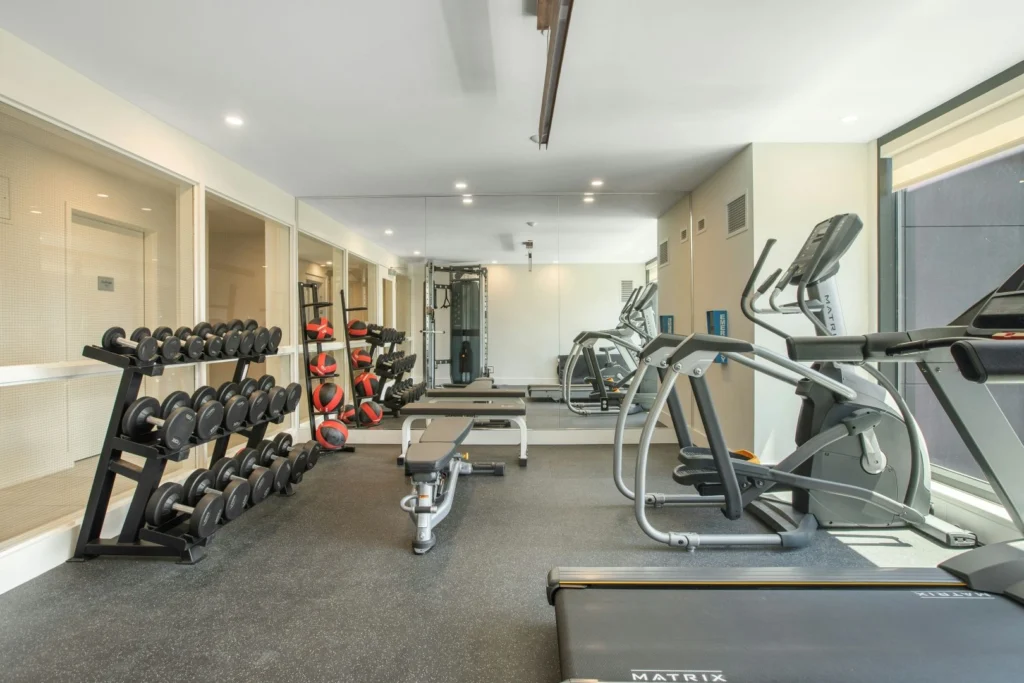
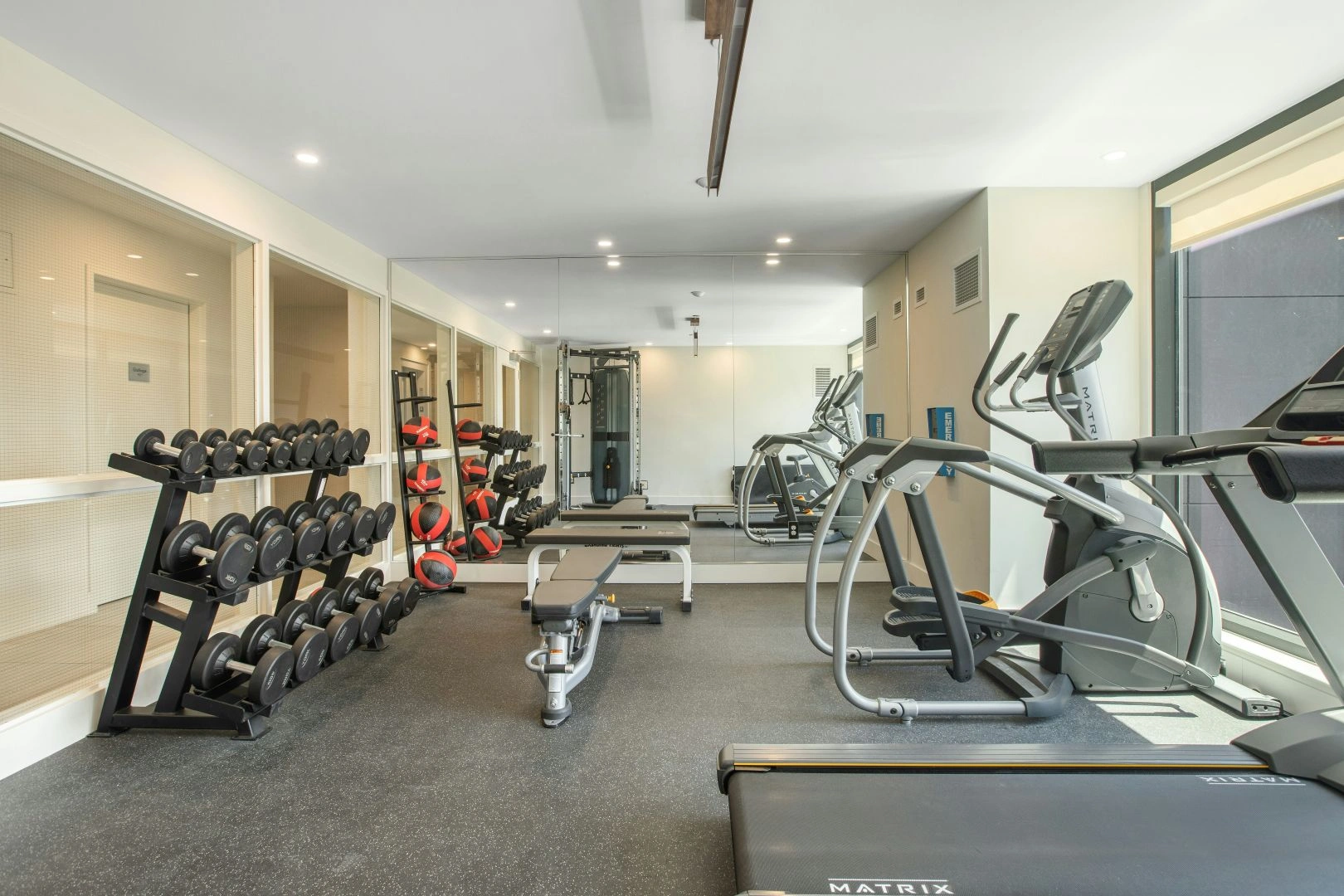
Some passive house designers in Australia specify a boost mode for the gym extract. This is a manual or automatic override that increases extraction during and immediately after a workout, then returns to normal once humidity and temperature levels have settled. This approach keeps the gym from becoming a source of excess humidity that migrates into the rest of the home, while avoiding the energy penalty of running the entire ventilation system at boost speed continuously.
The location of the gym within the floor plan is also important. A home gym positioned away from bedrooms and quiet living areas, and ideally with its own zoned extract, is easier to manage than one integrated into the centre of an open-plan living space, where heat and moisture have more opportunity to spread before being extracted.
A sauna is a bigger design challenge than a home gym, because the temperatures involved are so much higher than anything else in the home. Saunas are also, by design, intended to retain heat rather than let it escape.
In most cases, the most practical approach in passive house design is to treat the sauna as a separate, enclosed pod within the building – effectively its own small building envelope within the larger one. This means the sauna structure itself is insulated to retain the heat it generates, while the surrounding spaces of the passive house are protected from that heat by the sauna’s own enclosure rather than relying on the home’s overall envelope to absorb it.
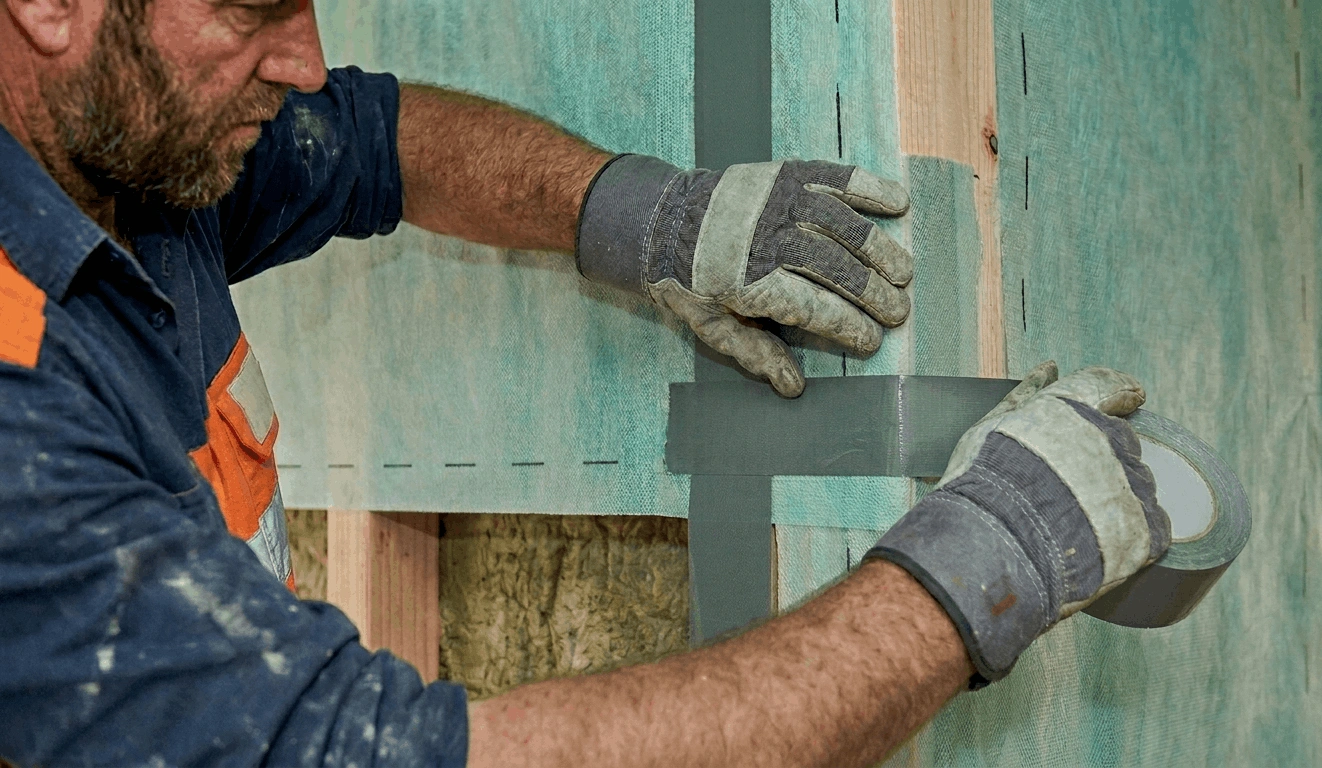
This approach also simplifies the airtightness detailing considerably. Rather than trying to integrate a high heat source into the home’s airtight layer, the sauna sits within it as a contained unit – much like a fridge or a piece of equipment, rather than a room that needs to be thermally integrated with the rest of the house.
For a sauna in particular, the materials used in its construction – typically timber lining inside the pod – need to be able to handle repeated cycles of heating, humidity and drying without degrading. This is established practice in sauna construction generally, but it needs to be coordinated with the passive house vapour control strategy for the surrounding building to ensure moisture from the sauna doesn’t migrate into the building’s insulation or structure.
The energy used by a home gym is generally much lower – primarily lighting, any climate control and equipment such as treadmills. The main energy consideration for a home gym in passive house design is less about the gym itself and more about the additional ventilation load discussed above.