Raising children in a passive house: health and development benefits
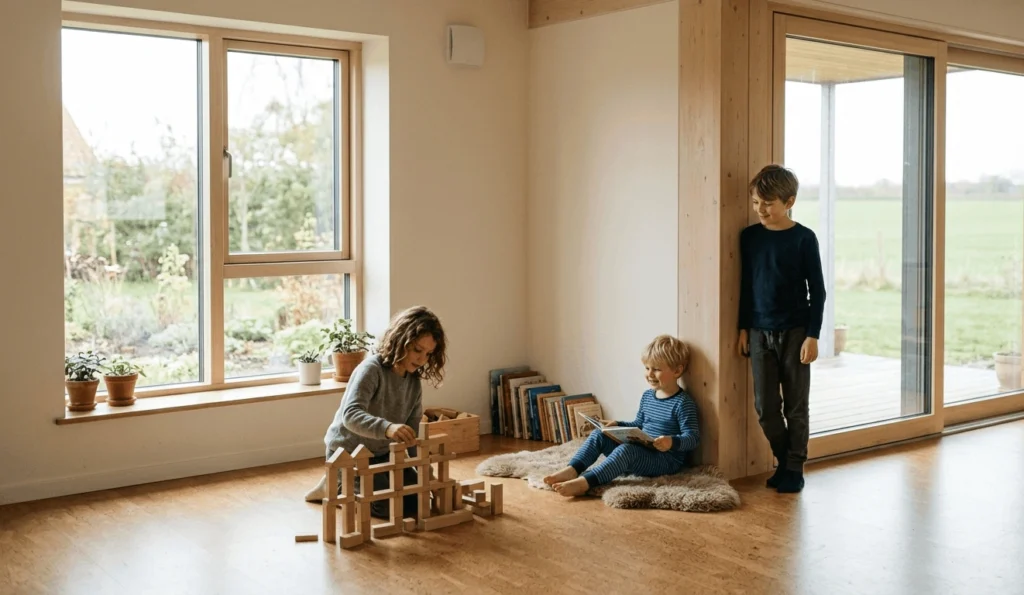
When families think about building or renovating a home, the focus is often on space, layout and location. These are important, but the indoor environment also plays a major role in how children grow, learn and feel day to day.
A well-executed passive house design creates a stable, comfortable and healthy living environment. For families with young children, that can offer meaningful benefits across comfort, sleep, concentration and general wellbeing.
Air quality and respiratory health
Children breathe more air relative to their body weight than adults do. That makes indoor air quality more important for children than for almost any other occupant group, and it makes the ventilation strategy of a home one of the most important health decisions a parent can make.
In a conventionally built home, indoor air quality is largely uncontrolled. Air enters through gaps in the building fabric, carrying with it whatever is present outside – pollen, traffic pollution, dust and mould spores – along with whatever accumulates inside from cooking, cleaning products and off-gassing from furniture and finishes. The result is an air environment that varies unpredictably and is rarely actively managed.
A passive house design takes a different approach. The mechanical ventilation with heat recovery (MVHR) system supplies a continuous stream of filtered fresh air to living areas and bedrooms while extracting stale air from wet rooms. Incoming air passes through filters that remove a significant proportion of airborne particles, pollen and allergens before they reach the living space. The air your children breathe at home is cleaner, more consistent and more actively managed than in any conventionally built equivalent.
For children with asthma, hay fever or other respiratory sensitivities, this difference can be profound. Reduced allergen load, lower humidity variation and the absence of the draughts and cold spots that characterise leaky conventional homes create conditions that are measurably better for respiratory health.
Consistent temperature and physical comfort
Young children, particularly infants and toddlers, are less able to regulate their own body temperature than older children and adults. They’re more vulnerable to cold stress in underheated rooms and to heat stress in overheated ones. The thermal consistency of a passive house in Australia removes that vulnerability in a way that conventional heating and cooling systems, which cycle on and off and create temperature swings rather than stability, cannot.
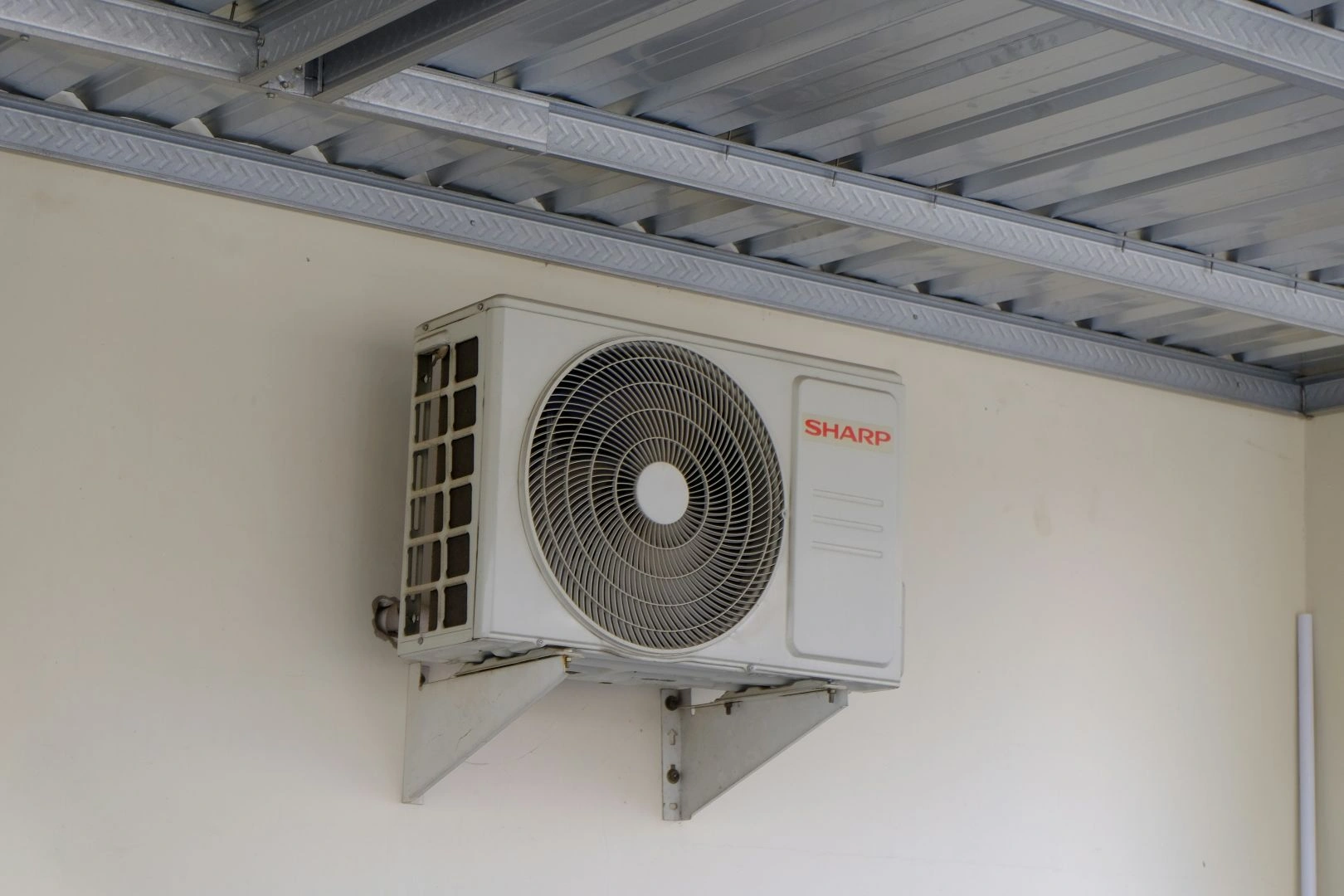
This matters most at the extremes of the Australian climate. A passive house design in Australia on a 40-degree summer day maintains a stable, comfortable internal temperature without relying on air conditioning running continuously. A conventional home in the same conditions may cycle between too hot and too cold as the air conditioning struggles to compensate for a poorly insulated envelope.
Mould, moisture and childhood health
Mould is a common and damaging indoor air quality problem in Australian homes, and children are among the most vulnerable to its effects. Respiratory irritation, allergic responses and aggravated asthma are all associated with mould exposure. Mould thrives in the cold, damp, poorly ventilated conditions that characterise many conventional Australian homes in winter.
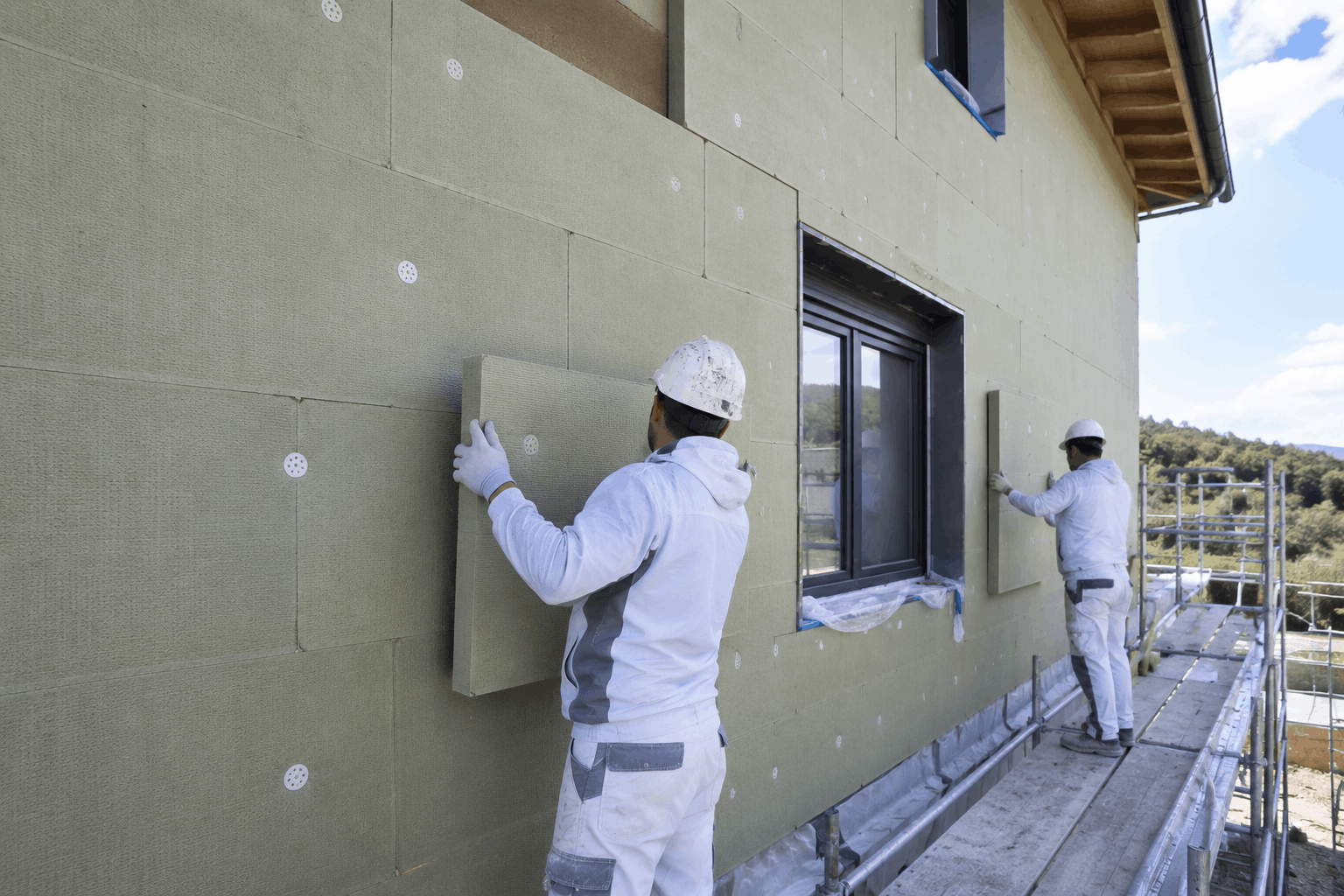
Passive building design addresses mould risk at a structural level. Continuous insulation eliminates the cold surfaces where condensation forms. Airtight construction prevents the uncontrolled infiltration of moist air. The MVHR system manages humidity continuously, keeping the indoor environment within a range that discourages mould growth.
A well-built passive house is not immune to moisture issues if something goes wrong – a plumbing leak, a poorly detailed junction – but the conditions that allow mould to establish and spread in a conventionally built home simply don’t exist in a properly designed and constructed passive house in Australia.
Noise, calm and cognitive development
The acoustic environment of a home affects children beyond sleep. Chronic background noise from traffic, mechanical systems cycling or thin walls transmitting sound from adjoining spaces has been associated in research with elevated stress responses, reduced concentration and interference with language development in young children.
Passive house designs are exceptionally quiet homes. The same construction features that make them thermally efficient also make them acoustically calm. External noise is dramatically attenuated. The MVHR system runs at a whisper and there are no cycling compressors, rattling split systems or thermostat clicks in the night. The result is a home environment that is genuinely quieter than a conventionally built equivalent, and that quietness creates conditions more conducive to concentration, play and the kind of sustained attention that underpins early learning.
The home as a learning environment
There’s a dimension to raising children in a passive house that goes beyond the physiological. A home that performs visibly and verifiably – that has energy monitoring data, that maintains comfortable temperatures without effort, that demonstrates the consequences of design decisions in ways that can be observed and discussed – is a good environment for children to develop environmental awareness and systems thinking.
Children who grow up in passive houses in Australia may develop an intuitive understanding of how buildings work, how energy is used and what sustainable living looks like in practice. These aren’t abstract concepts taught in a classroom – they’re the lived reality of the home they grow up in. That’s a less quantifiable benefit than air quality or sleep, but it’s a real one.