What is airtightness tape and why is it used in passive house construction?
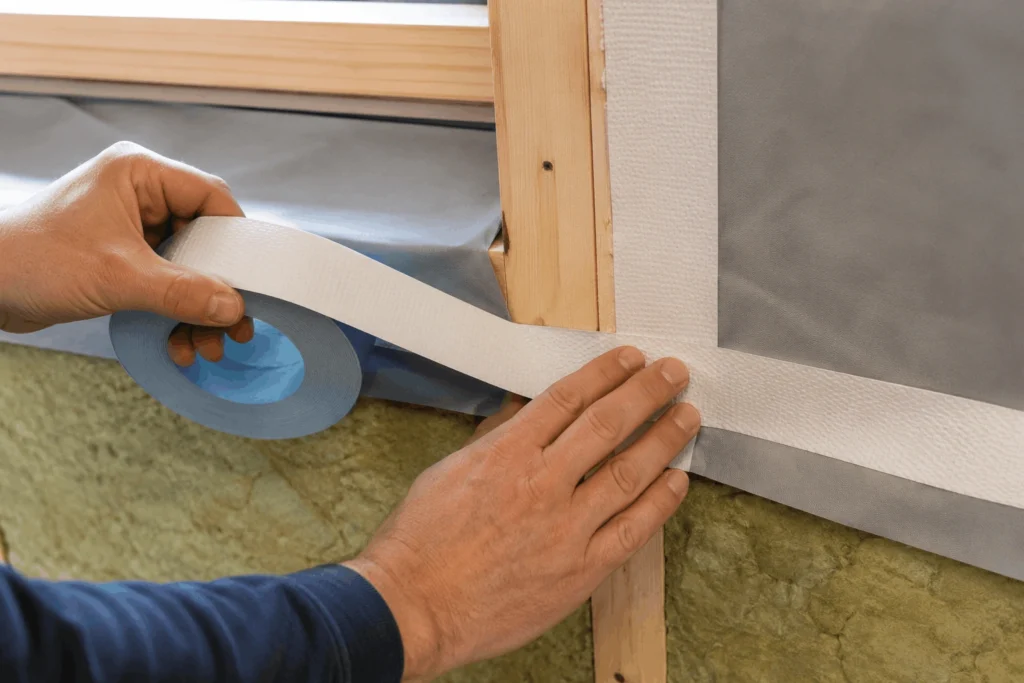
Airtightness tape is one of those building products that most homeowners never see, rarely hear about and yet depend on for the performance of their passive house. It’s applied during construction, covered up by linings and finishes and then largely forgotten. But its presence, and the quality of its application, is one of the factors that determines whether a passive house design achieves its certified performance or falls short of it.
What is airtightness tape?
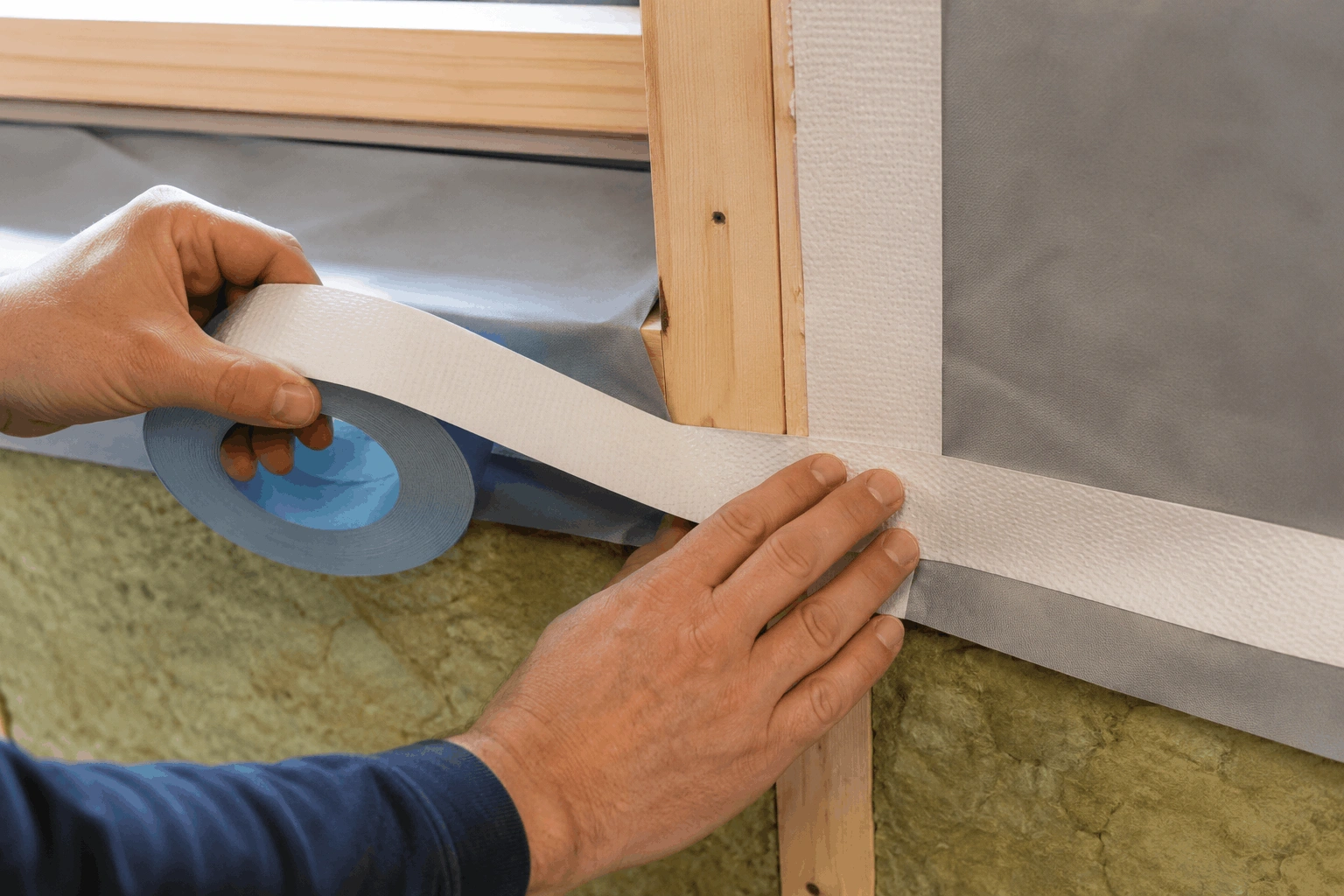
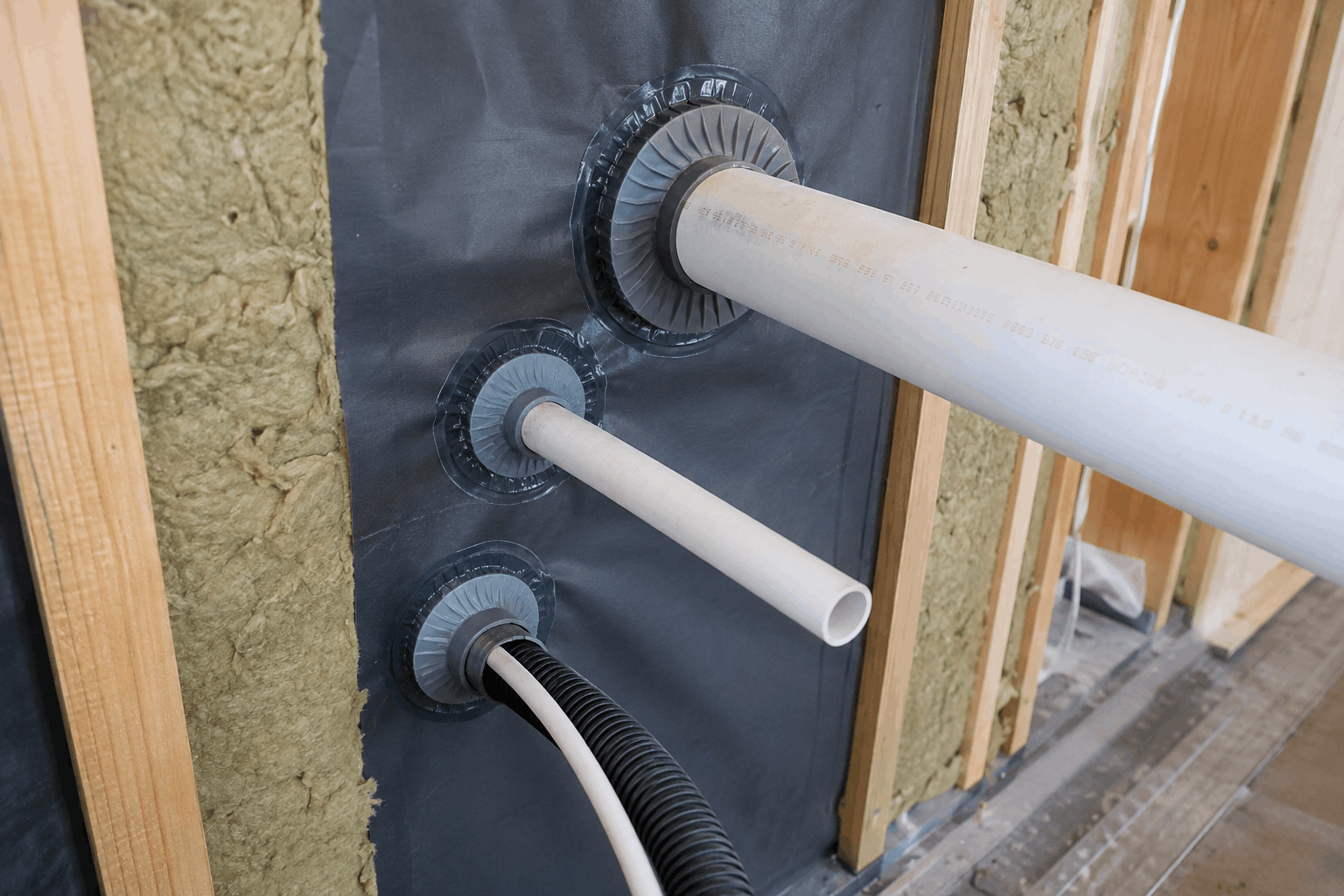
Airtightness tape is a pressure-sensitive adhesive tape designed specifically for sealing joints, laps and penetrations in the airtight layer of a building envelope. It’s used wherever two sheets of airtightness membrane meet, wherever a membrane terminates against a structural element, such as a wall plate, window frame or concrete slab, and wherever a pipe, cable or duct penetrates the membrane.
Superficially, it can look similar to the duct tape or packing tape found in any hardware store, but it’s a fundamentally different product. Standard tapes use adhesives that degrade over time, lose adhesion in damp conditions or at temperature extremes and weren’t designed to bond reliably to the range of substrates found in a building envelope. Airtightness tapes are engineered for long-term performance in building applications. They maintain their adhesion across a wide temperature range, bond reliably to membranes, timber, concrete and masonry and are designed to remain effective for the life of the building.
Why is airtightness tape used in passive house construction?
The airtight layer in a passive house design is only as good as its weakest point. A membrane that has been carefully installed across every wall and ceiling surface means very little if its joints are sealed with a tape that loses adhesion within five years. The blower door test at certification measures the airtightness of the completed building, but it doesn’t tell you how the building will perform in 10 or 20 years if the sealing products used during construction weren’t specified for long-term durability.
This is why passive house designers in Australia often specify airtightness tape products by brand and type rather than leaving the choice to the builder or the trades on site.
The different types and their applications
Not all airtightness tapes are the same, and different tapes are suited to different applications within the building envelope.
Membrane-to-membrane tapes are used to seal the overlapping joints between sheets of airtightness membrane. These tapes need to bond reliably to the membrane material and maintain that bond under the stresses imposed by the building moving, settling and responding to temperature changes over time.
Membrane-to-substrate tapes are used where the membrane terminates against a different material, like timber framing, concrete, masonry or a window frame. These tapes need to bond to two different materials at the same time, which requires a more versatile adhesive system than a membrane-to-membrane tape. Getting this junction right is one of the most critical details in passive house construction, as the point where the membrane meets a structural element is where airtightness failures most commonly occur.
Flexible tapes and pre-compressed sealing tapes are used at junctions that involve movement or that have irregular surfaces, typically around window and door frames, at pipe penetrations and at connections between different building elements. These products accommodate the movement that occurs at these junctions without losing their seal.
The installation is just as important as the product
The best airtightness tape in the world performs poorly if it’s applied incorrectly. Airtightness tape needs a clean, dry, dust-free surface to bond to. Tape applied over a dusty surface or damp timber simply won’t stick properly, regardless of what the product is rated to achieve under ideal conditions.
The pressure you use to apply it is also important. Most airtightness tapes require firm, consistent pressure across the full width of the tape to activate the adhesive properly. A tape that’s been run along a joint without adequate pressure may appear to be sticking but lift at the edges over time, creating air leakage paths that are invisible until a blower door test reveals them.
Interim testing and tape performance
The most effective way to verify that airtightness tape has been applied correctly is interim blower door testing, conducted before internal linings are installed, when any tape failures are still visible and accessible. A failed tape joint typically shows up as a localised pressure anomaly during the test, which can be tracked down and fixed before the lining goes on.
This is one of the biggest reasons passive house certifiers recommend interim blower door tests throughout construction.
Longevity and the passive house standard
A passive house is built to perform well not just on the day of certification but for the life of the building. That expectation extends to every component in the envelope, including the tape.
Quality airtightness tapes come with independently tested durability data showing how long they’ll maintain their bond under real building conditions. A passive house designer in Australia will specify products with that verified performance data rather than general-purpose tapes whose long-term behaviour in a building envelope hasn’t been properly assessed.
Frequently Asked Questions
It seals the joints, laps and penetrations in the airtight membrane layer of the building envelope – wherever two sheets of membrane meet, wherever the membrane meets a structural element and wherever pipes or cables pass through the airtight layer. It is a critical component of passive house design.
A failed tape joint creates an air leak in the building envelope, allowing conditioned air to escape in winter and hot humid air to enter in summer. Over time, this can also allow moisture into the building fabric. In a passive house, where the envelope is otherwise performing very well, even a small number of tape failures can have a measurable effect on the blower door test result.
No. Standard tapes degrade over time, lose adhesion in damp conditions and weren't designed for long-term durability in a building envelope. Airtightness tapes are specifically engineered to maintain their bond to building substrates across the full range of temperature and humidity conditions the building will experience.