How passive house design handles plumbing penetrations through the envelope
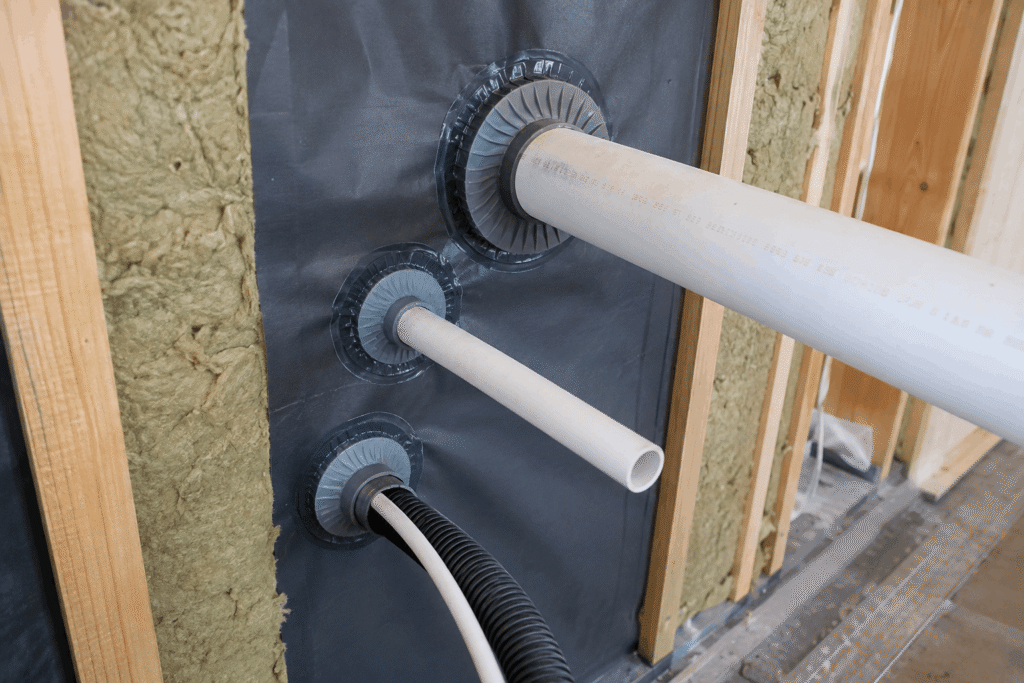
A passive house is only as airtight as its weakest point. The insulation can be perfect, the windows can be triple-glazed and the framing can be detailed to eliminate every thermal bridge, but if there are unsealed holes through the building envelope, the performance of everything else is undermined. Plumbing penetrations are one of the most common sources of those holes, and one of the areas where the difference between passive house construction and conventional building practice is most practically significant.
Why are penetrations in a passive house a concern?
Every pipe that passes through the building envelope, such as a water supply line, a drain, a
gas connection or a hot water pipe, creates a hole in the airtight layer that needs to be
carefully sealed. In a conventional home, these holes are sealed to a standard that prevents water ingress and meets minimum weatherproofing requirements. But in a passive house design, that's not enough. The airtight layer needs to be continuous and unbroken, and every penetration through it needs to be sealed to a standard that prevents uncontrolled air movement – not just water.
That distinction is important because air movement carries heat and moisture. An unsealed
or poorly sealed plumbing penetration doesn't just let air through – it lets conditioned air out in winter and hot humid air in during summer, undermining the thermal performance of the
envelope and potentially introducing moisture into the building fabric where it can cause long-term damage.
The two types of penetration
Plumbing penetrations through a passive house envelope fall into two broad categories: Wet penetrations are those that carry water, such as supply pipes bringing cold or hot water
into the home, drainpipes taking wastewater out and any external connections to rainwater tanks or irrigation systems. These need to be sealed for both water and air at the point where they pass through the airtight layer.
Dry penetrations are those that carry air rather than water, including ventilation ducts for
rangehoods, bathroom exhaust fans if used in addition to or instead of the mechanical
ventilation with heat recovery (MVHR) system and any other duct that passes through the
envelope. These need to be sealed not only at their perimeter, but also to incorporate a motorised damper or check valve that closes when the duct isn't in use, preventing uncontrolled air movement through an otherwise open duct.
How to seal a plumbing penetration in a passive house
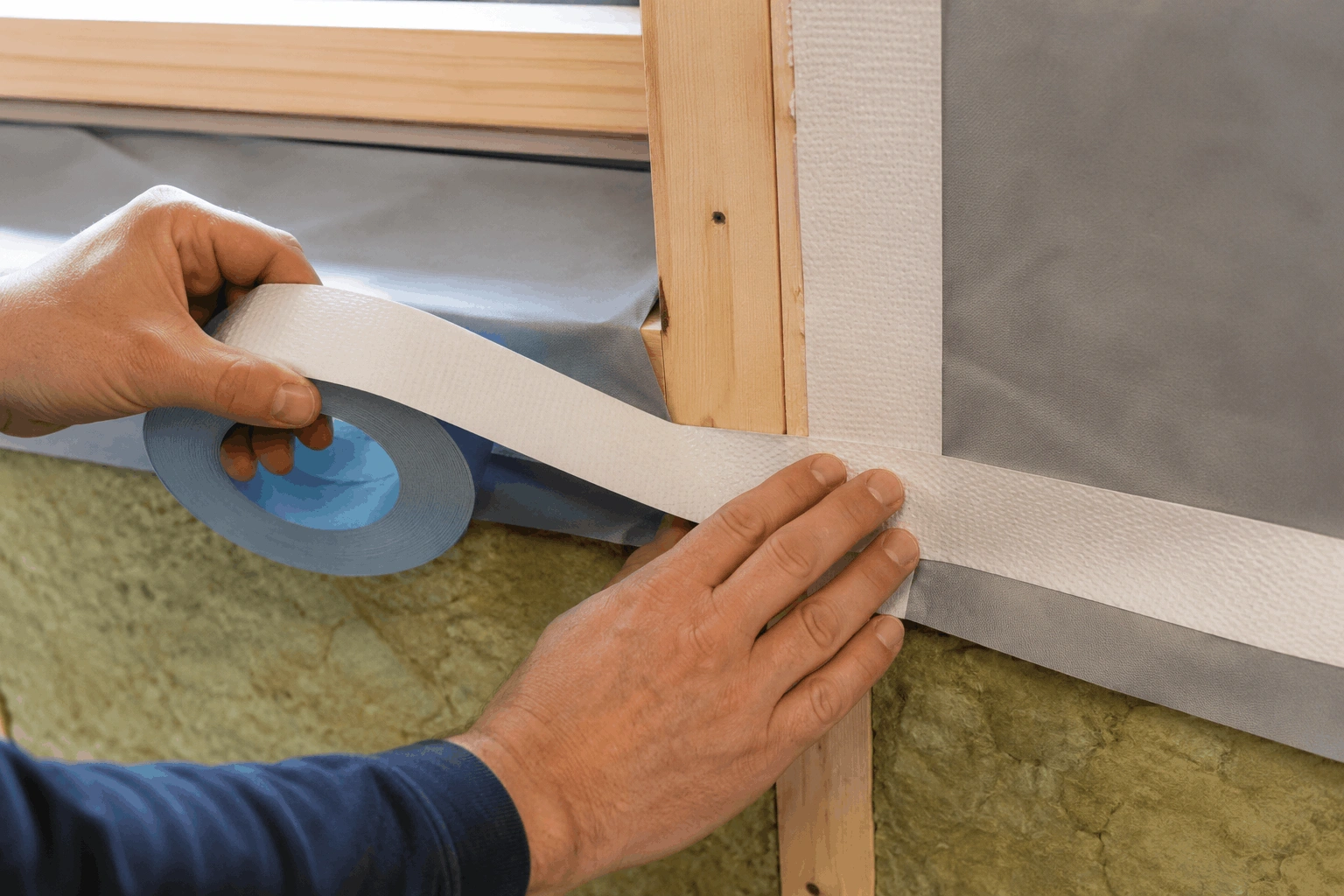
In a passive house in Australia, sealing penetrations uses products specifically designed for airtightness applications – not standard building foam or silicone, which can crack, shrink or lose adhesion over time and don't meet the airtightness performance requirements of
passive house certification.
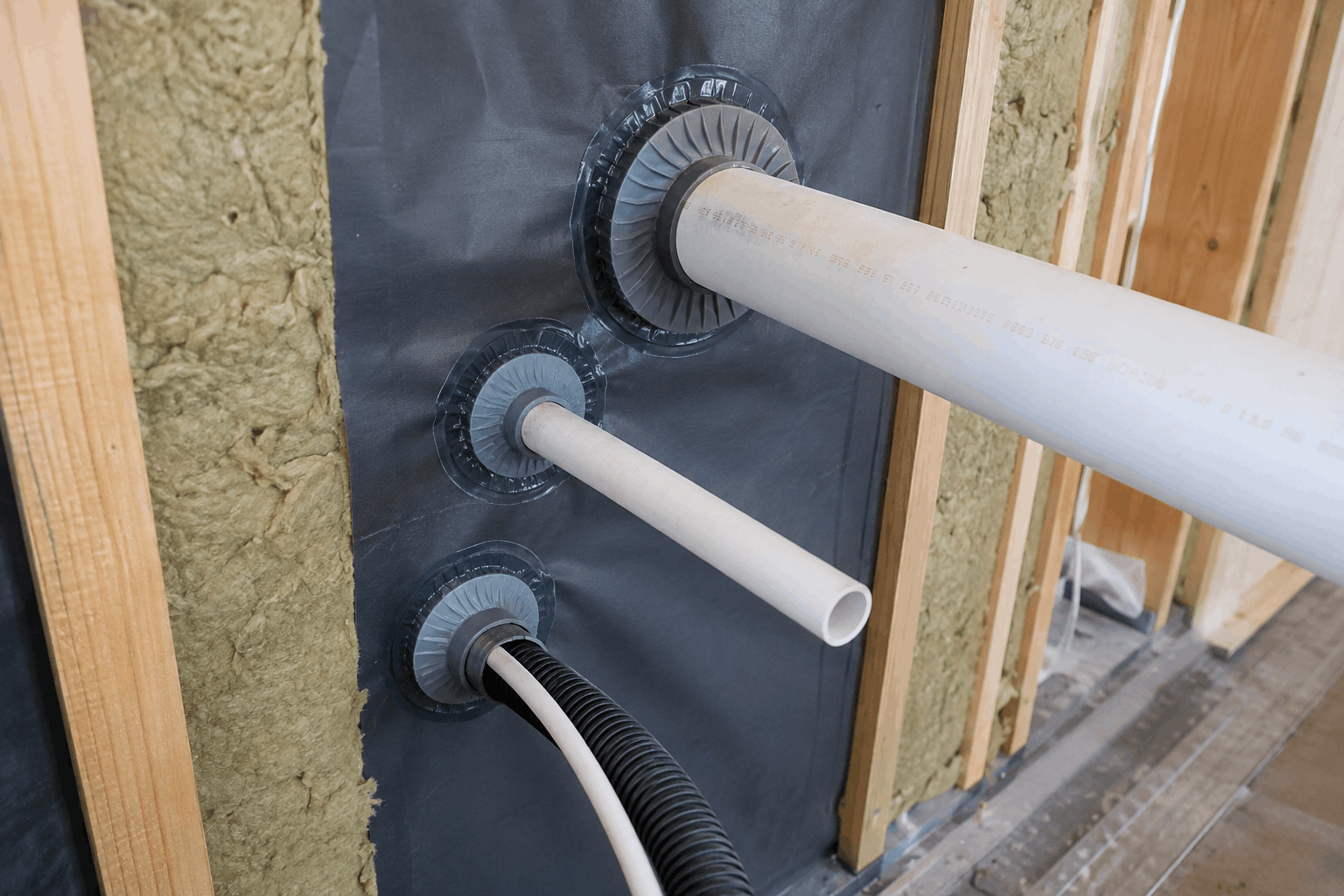
For pipe penetrations through membranes, specialist airtightness sealing collars or
grommets are used. These are flexible sleeves that are bonded to the airtight membrane
and then clamped tightly around the pipe. As these pipes expand and contract with temperature changes, these products accommodate the thermal movement without losing their seal over time.
For penetrations through solid construction such as a concrete slab or a masonry wall, expanding foam or purpose-made penetration seals are used, selected for their long-term durability and compatibility with the specific materials on either side of the junction. The key in all cases is that the seal is continuous around the full perimeter of the pipe, without gaps or voids that allow air to bypass it.
Getting the tradies on board
Even the best-specified penetration sealing strategy fails if the trades installing it don't understand why it matters. A plumber who has never worked on a passive house and who
approaches the penetration sealing as a minor finishing task will produce a different result
from one who understands that the airtight layer is the building's primary thermal defence and that every unsealed hole undermines it.
Certified passive house builders in Australia typically brief their plumbing and mechanical
trades specifically on airtightness requirements – what products to use, how to install them
correctly and what to do when unexpected penetration locations arise during construction. Interim blower door testing conducted before internal linings are installed is the most effective quality assurance tool for penetration sealing. It allows any unsealed or poorly sealed penetrations to be identified and rectified while they're still accessible, rather than
being discovered at final certification when they're hidden behind plasterboard and floor finishes.
Frequently Asked Questions
Yes. Every pipe passing through the building envelope is a potential air leak if not correctly sealed. In a passive house design, penetrations are sealed using specialist airtightness products rather than standard building foam or silicone and every location is planned and detailed before construction begins.
Using specialist collars, grommets or penetration seals that bond to the airtight membrane and clamp tightly around the pipe. For duct penetrations, a motorised damper or check valve is also required to close the duct when it isn't in use, otherwise it becomes an uncontrolled air leak through an otherwise sealed envelope.
Conditioned air escapes in winter and hot humid air enters in summer, undermining thermal performance and potentially introducing moisture into the building fabric. In a passive house
where everything else is carefully detailed, a single poorly sealed penetration can have a disproportionate effect on the blower door test result.