What changes about entertaining and hosting guests in a passive house?
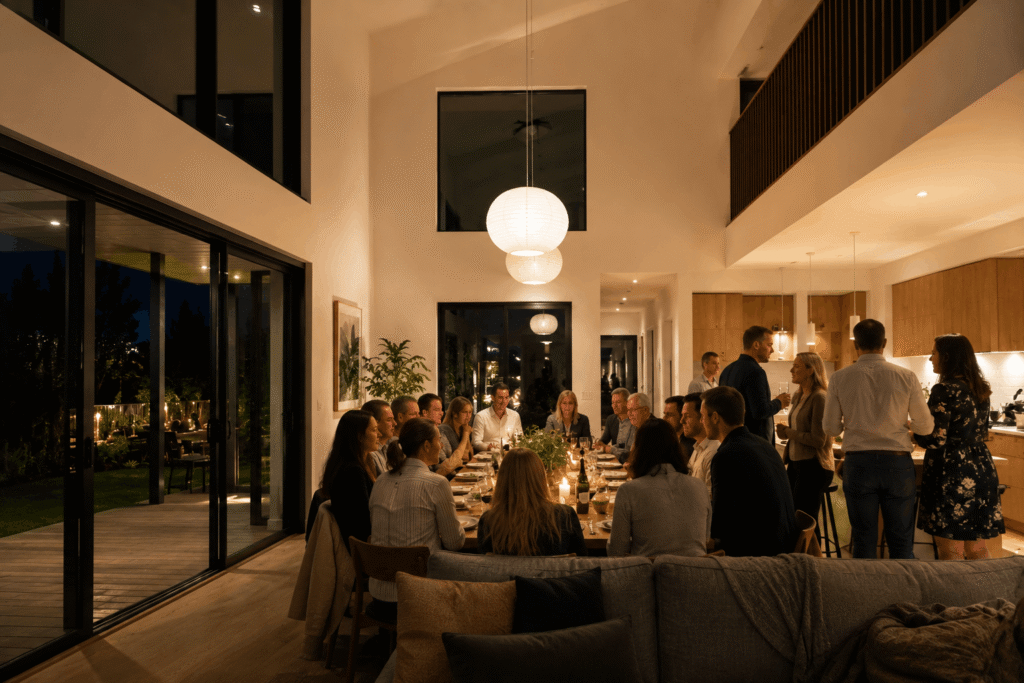
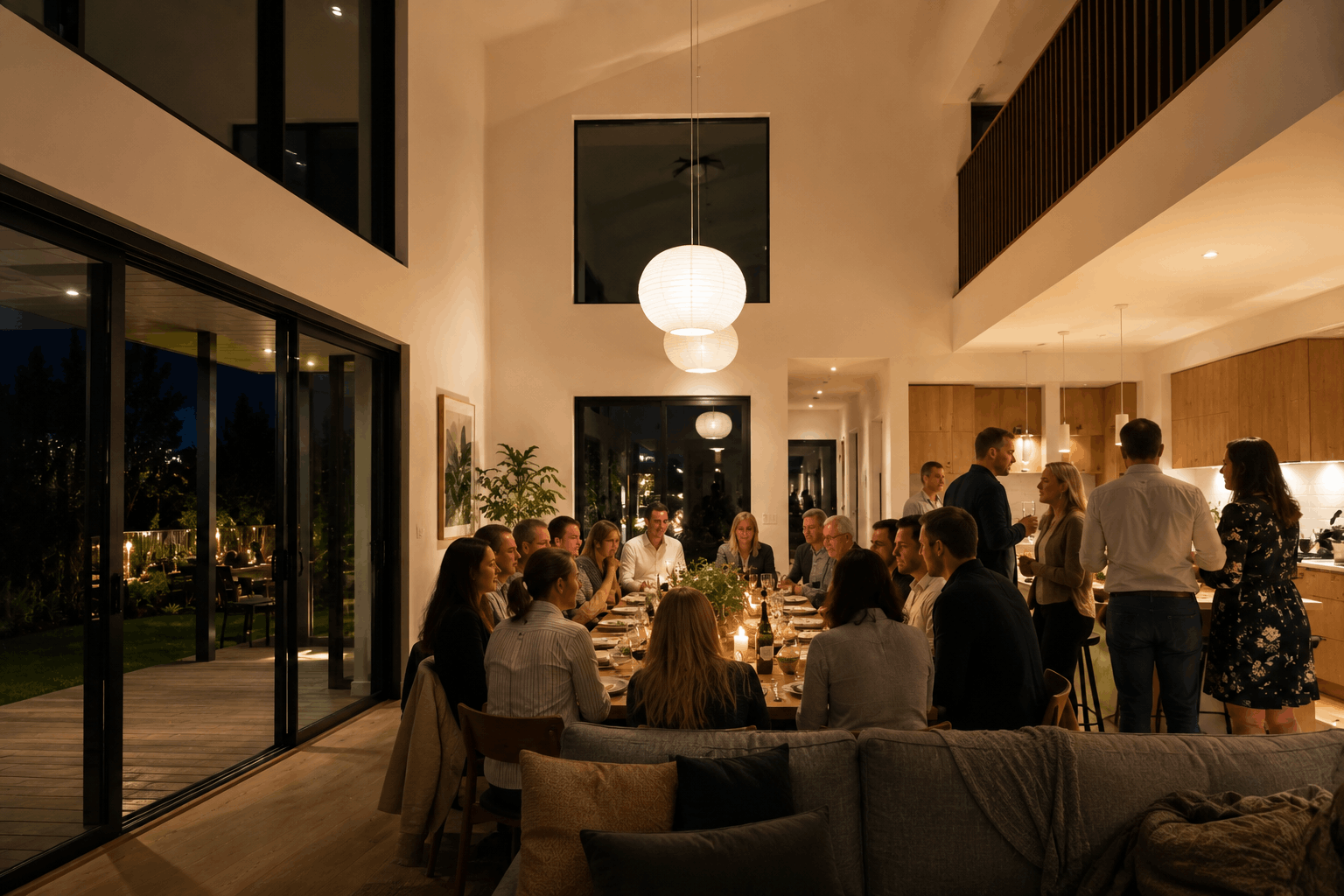
You don't think about it consciously, but entertaining puts your home under a kind of stress test. A room full of people generates significant body heat. Cooking for a crowd produces steam, grease and odours. The front door opens and closes twenty times as guests arrive. Conversations get louder as the evening progresses and the ambient temperature climbs without anyone touching a thermostat.
In a conventional home, all of this is managed (or not managed) by turning up the air conditioning, opening windows, running the rangehood at full speed and hoping the building
catches up before dinner is on the table. In a passive house design, the same scenario plays
out quite differently.
Body heat in a passive house
The first thing most passive house owners notice when they host a large gathering is that the home warms up more than expected and more quickly than they anticipated. This is a direct consequence of how well the building works.
In a passive house, the heat generated by guests’ bodies is retained by the highly insulated,
airtight envelope,
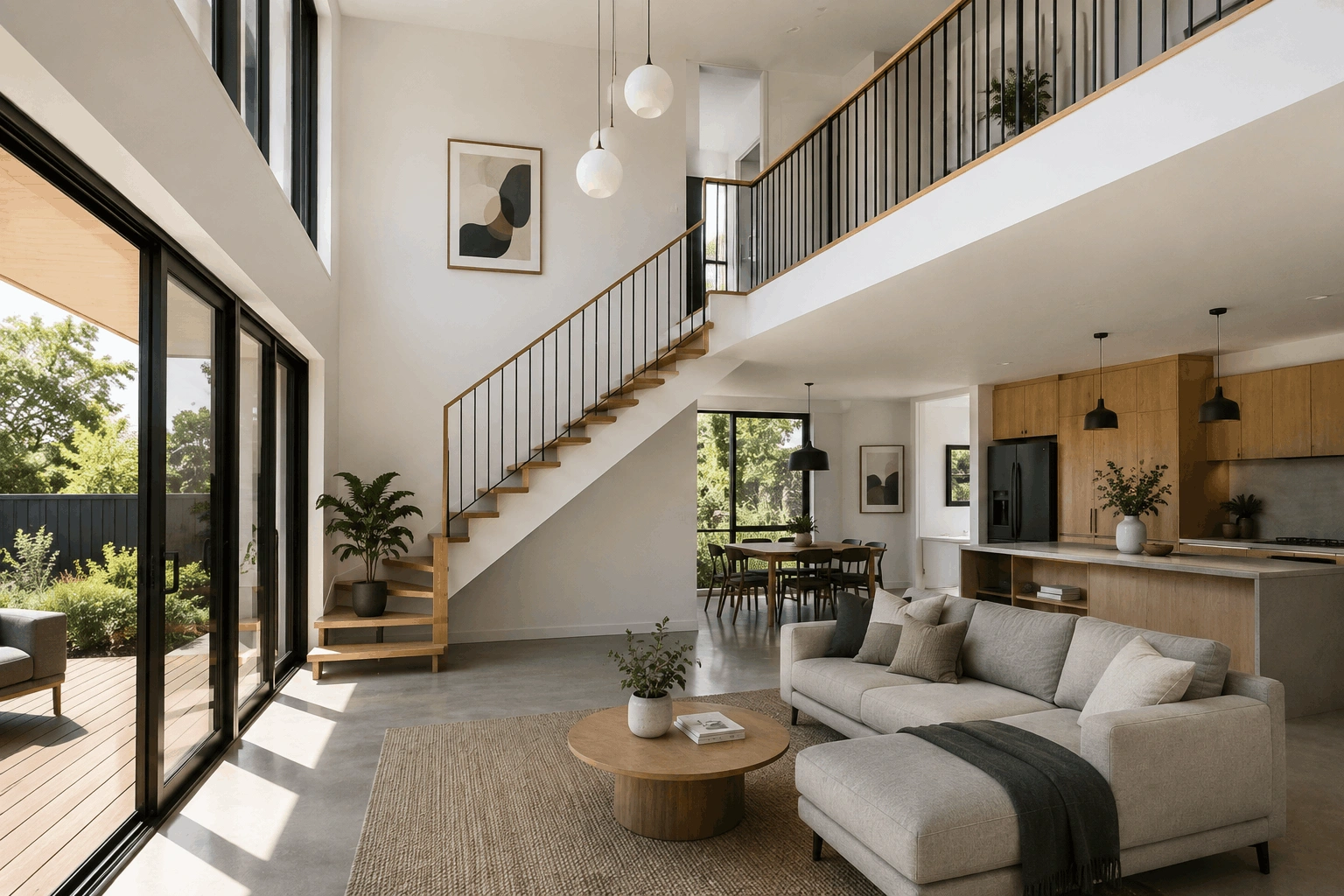
rather than dissipating through gaps and a poorly performing building fabric. A living room with twenty people in it in a passive design house will warm noticeably over the course of an evening, simply because those people are generating heat that has nowhere to escape.
The practical response is straightforward: if you’re hosting a large gathering, start with the home slightly cooler than usual. If supplementary cooling is available, run it at a modest
setting earlier in the evening rather than reactively once the room is already warm. And if the weather permits, opening windows or doors to the outdoor entertaining area provides natural ventilation
that works perfectly well in a passive house when conditions allow. The airtightness is a feature for when the building needs to retain or exclude heat, not a constraint that prevents you from enjoying a breeze on a pleasant evening.
Cooking for a crowd
Cooking
is the other significant variable when entertaining in a passive design house. A conventional kitchen open to a living area produces substantial heat, steam and cooking odours during meal preparation, all of which need to go somewhere.
In a passive house design, the rangehood is the primary tool for managing cooking-generated moisture and heat. A fully ducted rangehood that extracts directly to the outside is the most effective solution, provided the roof or wall penetration is correctly detailed. Running the rangehood at a higher speed during intensive cooking and for a period after removes the bulk of the cooking-generated load before it distributes through the open-plan living area.
The mechanical ventilation with heat recovery (MVHR) system
handles background cooking
odours and humidity effectively between cooking sessions, but it isn’t designed to manage
the larger load of a full dinner party preparation in real time. Some passive house owners find that entertaining prompts them to run the MVHR on its boost setting during cooking and for an hour or so afterwards, which increases the overall ventilation rate and clears the cooking-generated load more quickly. This is exactly what the boost function is designed for.
Noise and conversation
One of the more pleasant discoveries of entertaining in a passive house is the acoustic
environment. The triple-glazed windows, continuous insulation and airtight construction that
make a passive house design in Australia thermally efficient also make it acoustically calm.
External noise doesn't intrude, and the interior acoustic environment is noticeably more settled than in a conventionally built home.
For entertaining, this means conversations are easier to sustain, music doesn't need to compete with traffic noise from outside and the general ambient acoustic quality of the
gathering is better than in a home where external noise is a constant presence.
Frequently Asked Questions
It can warm up more than expected, because body heat from guests is retained by the highly insulated envelope rather than dissipating through the building fabric. The practical response is to start the home slightly cooler than usual before guests arrive, use supplementary cooling at a modest setting if available and open windows or doors to outdoor areas if conditions allow.
Yes. The airtightness of a passive house is a feature for when the building needs to retain or exclude heat, not a restriction on how you live in it. Open the doors, let people flow between inside and outside, and the home will recover its thermal balance quickly once everything is
closed again.
Through a combination of the rangehood and the MVHR system. The rangehood handles the acute load during cooking. Steam, grease and strong odours generated during meal
preparation are extracted directly to the outside. The MVHR system manages the
background load continuously, supplying fresh filtered air and extracting stale air from the kitchen throughout the day. Running the MVHR on its boost setting during and after cooking speeds up the clearance of any remaining odours.