What changes about cleaning and housekeeping in a passive house?
Moving into a passive house involves a period of adjustment. The home feels different. It is
quieter, more stable in temperature and fresher in air quality. This means that some of the habits developed in a conventional home turn out to be unnecessary, while a few new ones
can be adopted. Cleaning and housekeeping is one of the areas where this shows up most
practically.
A passive design house is still a home, and it still needs to be cleaned. What changes most
is less about the volume of cleaning and more about where you direct your attention. The
tasks that dominate housekeeping in poorly performing conventional homes largely disappear, replaced by a small number of well-defined maintenance tasks
that can be scheduled rather than responded to reactively.
Less dust, but filter maintenance matters more
One of the first things many owners of a passive house in Australia notice is that the home accumulates less dust than their previous conventional home. The mechanical ventilation with heat recovery (MVHR) system filters incoming air before it enters the living space, removing a large proportion of the airborne particles that would otherwise settle on surfaces.
Combined with the airtight envelope that prevents uncontrolled air infiltration through gaps and cracks, the result is an indoor environment with much lower particle levels than a conventionally ventilated home.
The trade-off is that the MVHR filters themselves need regular attention. Every three to six
months, depending on the unit, local air quality and household circumstances, the filters need to be checked and replaced if dirty. This is the most important housekeeping task
specific to a passive house design, as a clean filter maintains air quality and ventilation performance, while a clogged one reduces airflow and allows more particles into the home. It’s a quick, inexpensive job, but it needs to be in the calendar rather than done reactively.
Ventilation points and duct hygiene
The supply and extract vents of the MVHR system – typically small grilles in ceilings or walls
– can accumulate dust over time and benefit from occasional cleaning. This is a minor task,
similar to cleaning rangehood filters or exhaust fan covers in a conventional home, and
doesn't need to be done frequently. Once or twice a year with a vacuum or damp cloth is
generally sufficient to keep the vents clear and the airflow unobstructed.
The ductwork itself rarely needs attention in a well-maintained system, but if the home has
been through a renovation or building works that generated significant dust – particularly if filters weren't in place during that period – a professional duct clean may be worthwhile. But this is more a post-renovation consideration than a routine housekeeping task.
Windows and condensation
condensation
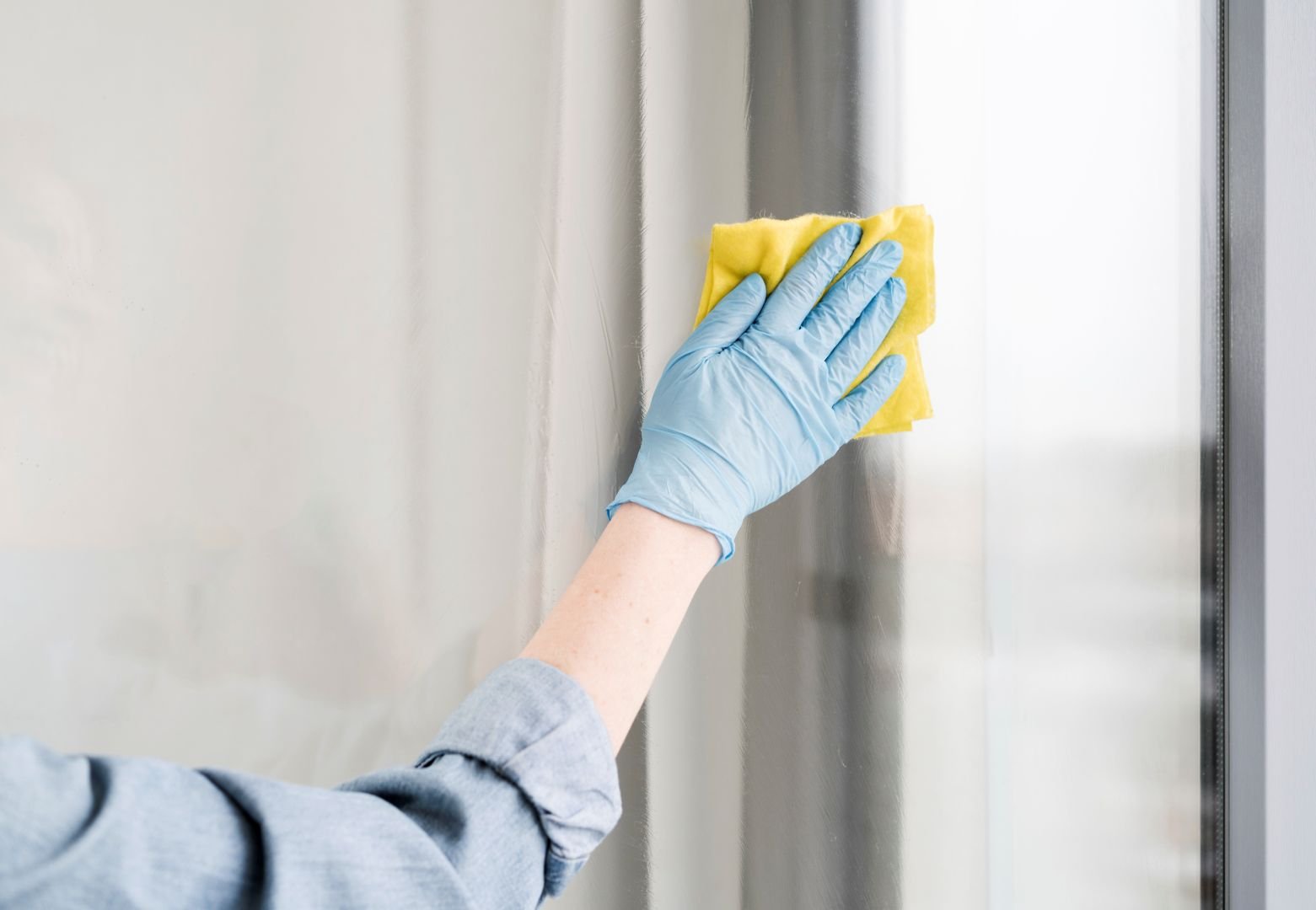
on windows is one of the most common housekeeping problems in conventional Australian homes, particularly in winter. Cold single or double-glazed windows provide a surface where warm indoor air deposits moisture, leading to water pooling on sills, mould growth in frames and the regular task of wiping down windows on cold mornings.
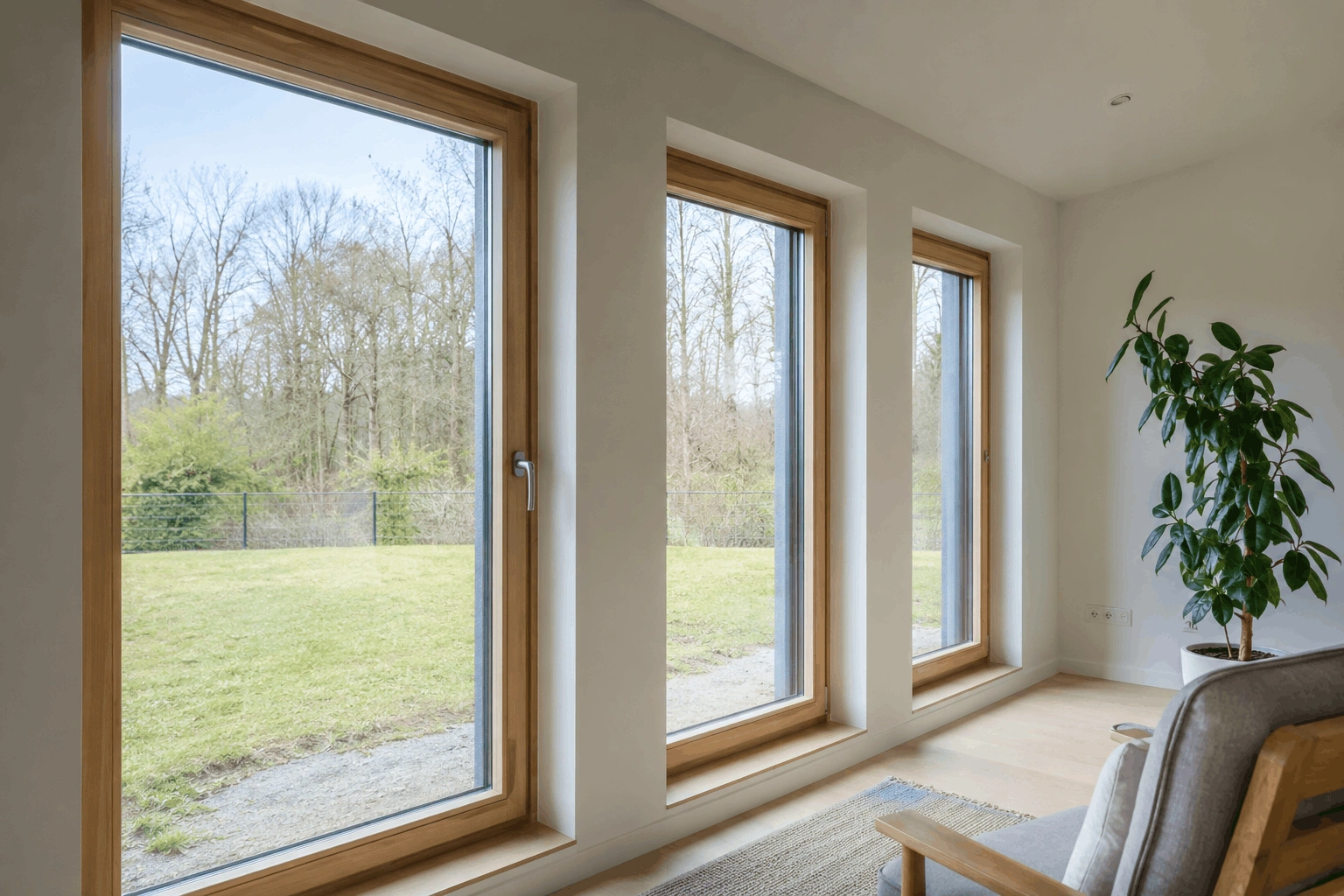
In a passive house in Australia, triple-glazed windows with thermally broken frames maintain
a much warmer internal glass surface temperature, reducing condensation risk. Most
passive house owners find that window condensation simply stops being a housekeeping task – one of the quality-of-life improvements that isn't immediately obvious from a spec
sheet but is felt every winter morning.
Mould and damp
Mould is one of the most persistent and time-consuming housekeeping challenges in
conventional Australian homes, particularly in bathrooms, laundries and poorly ventilated
bedrooms. It's also a health concern, not just an aesthetic issue.
A well-built passive house design addresses mould risk
at a structural level rather than leaving it to the occupant to manage reactively. The MVHR system maintains continuous
ventilation in wet areas, removing moist air before it has time to condense on surfaces. The continuous insulation and airtight construction eliminate the cold surfaces where condensation forms in conventional homes. Indoor humidity is maintained within a range that discourages mould growth year-round.
The practical housekeeping consequence is that mould remediation – scrubbing bathroom
grout, treating window frames and managing damp patches on walls – largely disappears as a recurring task. Bathrooms still need cleaning, but the conditions that cause mould to establish and spread in a conventional home are absent in a passive house in Australia that's been correctly built and maintained.
Cleaning products and indoor air quality
In a conventional home, strong cleaning product fumes dissipate relatively quickly through
gaps and cracks in the building fabric. In a passive house, the airtight envelope means that
volatile organic compounds (VOCs) from cleaning products, paints or solvents linger in the air longer before the MVHR system clears them.
This doesn’t have to be a problem if you're aware of it. Running the MVHR on boost during
and after cleaning, choosing lower-VOC cleaning products and ensuring good ventilation
during any painting or renovation work are all straightforward adaptations. Many passive
house owners find that this prompts a broader shift toward less chemically aggressive
cleaning products, which is both a practical response and a genuine benefit for household air
quality.
Frequently Asked Questions
Less so than a conventional home. The MVHR system filters incoming air before it reaches
the living space, and the airtight envelope prevents uncontrolled infiltration of outdoor dust and pollen. Most passive house owners notice a reduction in dust accumulation compared to their previous home.
Rarely, in a well-built and correctly maintained home. Continuous ventilation in wet areas, controlled humidity and the absence of cold surfaces where condensation forms remove the conditions that allow mould to establish. If mould does appear in a passive house design, it's
usually a sign something isn't working as designed – a blocked filter or a ventilation imbalance – rather than a normal housekeeping problem.
Generally, no, and this is one of the more welcome housekeeping changes for most passive house owners. Triple-glazed windows with thermally broken frames maintain a much warmer
internal glass surface, which reduces condensation. The winter task of wiping down windows and sills that's common in conventional homes largely disappears in a well-built passive house in Australia.