The role of thermal mass in passive house design
Building a home that stays comfortable all year round without a hefty energy bill might sound like a dream, but it’s the core promise of passive house design.
A key element of achieving this is thermal mass. For anyone designing a passive house, understanding how thermal mass works and how to use it effectively is important.
What is thermal mass?
Thermal mass refers to materials in a building that can absorb, store and release heat over time. Concrete, brick, stone and even some types of rammed earth are common examples. In a passive design house, these materials work like a natural battery, storing heat during the day and releasing it when temperatures drop at night.
The goal is simple: reduce the need for artificial heating and cooling while maintaining a stable indoor temperature. Passive building design relies on this principle along with insulation, airtightness and careful window placement to create a home that is comfortable year-round.
How thermal mass works in passive house designs
In a passive house design, thermal mass interacts closely with other elements like insulation, glazing and ventilation. Here’s how:
- Daytime heating: During the day, sunlight enters through your windows and warms the interior surfaces like floors and walls. Thermal mass materials absorb this energy.
- Nighttime release: After the sun sets, the thermal mass releases stored heat slowly, keeping indoor temperatures steady without relying on heaters.
- Seasonal balance: In winter, thermal mass helps maintain warmth. In summer, it can moderate heat gain if combined with shading strategies, creating a naturally cooler interior.
What types of thermal mass are used in passive homes?
Many passive house builders in Australia integrate thermal mass into their designs from the very beginning because it influences both construction methods and long-term home performance. There are several types of thermal mass materials commonly used in passive house design in Australia, each with its own advantages and applications.
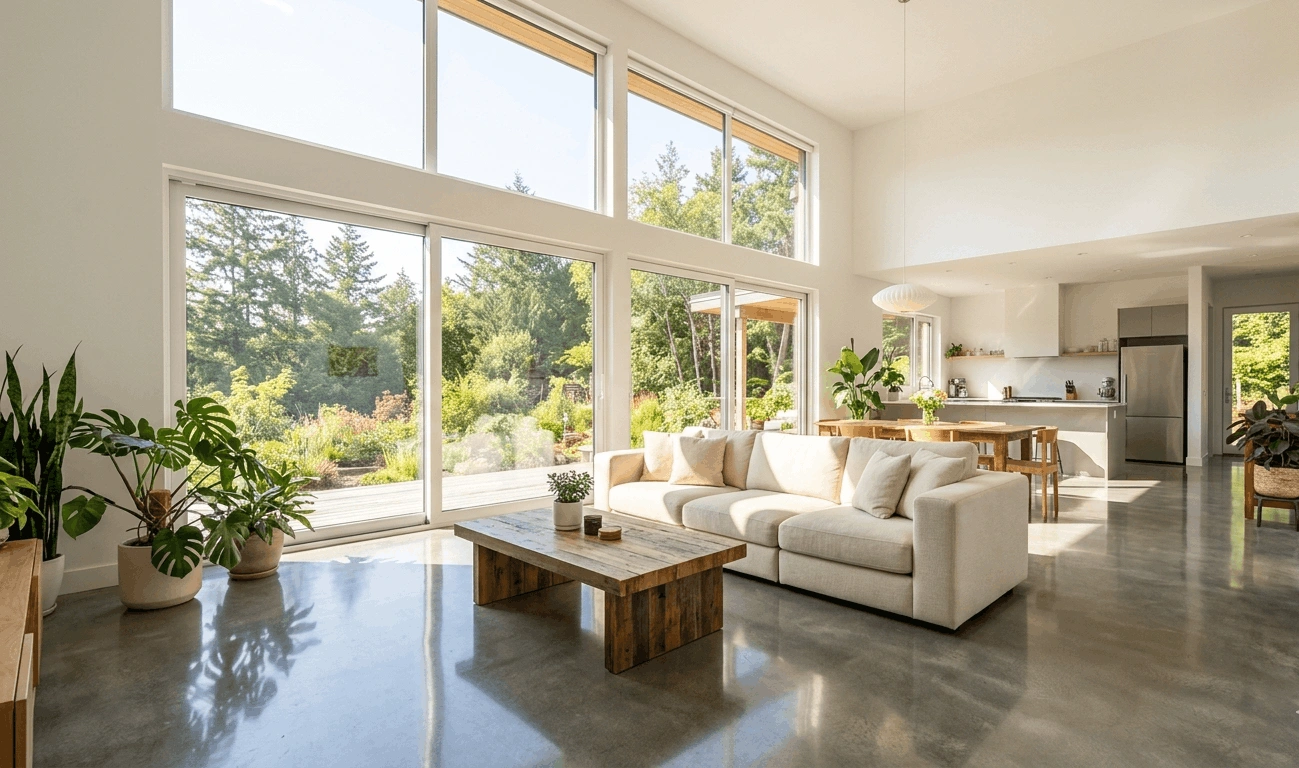
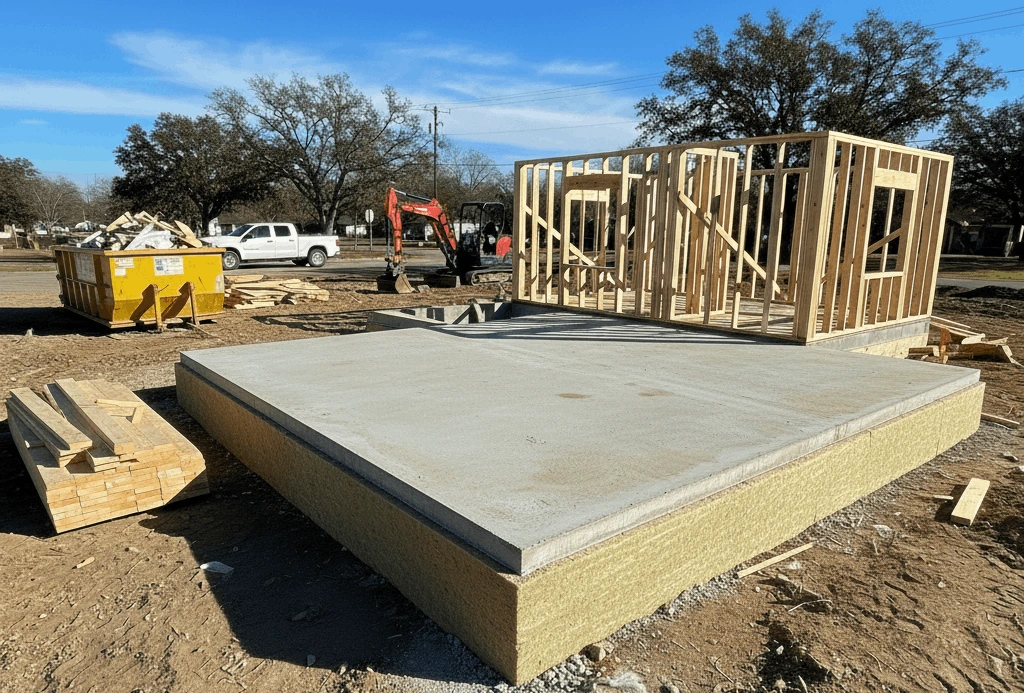
- Concrete slab floors are one of the most common forms of thermal mass. These floors absorb solar energy during the day and gradually release heat into living areas at night. This makes them particularly effective in spaces where sunlight can reach the floor directly, such as open-plan living rooms and kitchens in passive house designs in Australia.
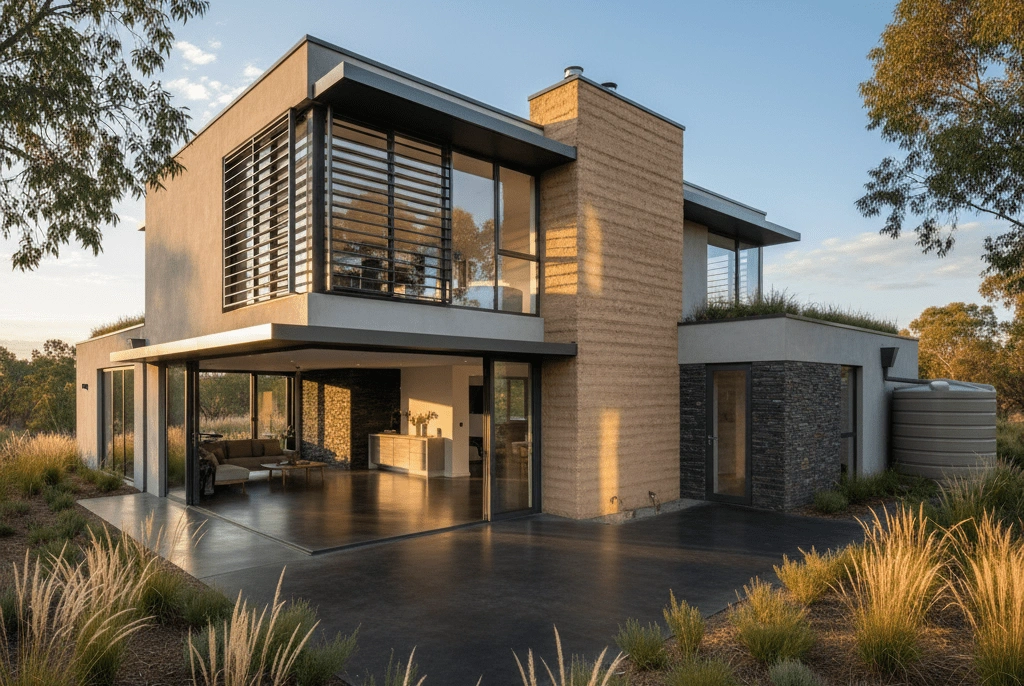
- Internal walls constructed from brick, stone or rammed earth also provide significant heat storage. These walls act as thermal batteries, storing heat from the sun or from indoor heating sources and releasing it slowly to maintain a steady temperature. In passive home building, these materials are often positioned in high-traffic areas to maximise comfort throughout the home.
- High-density ceilings and floors can also contribute to thermal mass. While less common than walls and floors, using dense materials in ceilings or mezzanines can help distribute heat more evenly across multiple levels in a home.
- Water features or tanks can be used as supplemental thermal mass. Large volumes of water absorb heat efficiently and release it slowly, supporting temperature stability in passive design house projects where other thermal mass options may be limited.
Combining thermal mass with high levels of insulation is another key strategy. Insulation helps retain the energy stored in walls, floors and ceilings, preventing heat from escaping too quickly.
By carefully selecting and placing the right types of thermal mass, passive home builders in Australia can create homes that are not only comfortable and energy-efficient but also resilient to daily and seasonal temperature fluctuations.
Frequently Asked Questions
Thermal mass and insulation perform different roles. Insulation (like rigid foam or mineral wool) is designed to resist the flow of heat, acting as a barrier to keep heat inside during winter and outside during summer. Thermal mass (like concrete or brick) is designed to store and slowly release heat. Both are critical for a successful passive house design: insulation keeps the stored heat contained, and the thermal mass provides the heat with stability.
Yes, it can. If the thermal mass is too great for the climate or the house's solar gain, it can be slow to respond. In cool weather, the house might take too long to warm up to the target temperature, leading to periods of discomfort. On the other hand, if it absorbs too much heat in summer and cannot be effectively 'night purged' (cooled down through ventilation), it could contribute to overheating. This is why calculations from your expert passive home builder are necessary.
Yes, the colour of the exposed thermal mass surface is important, especially when it is meant to absorb solar heat directly, such as a concrete floor. Darker colours absorb solar radiation more effectively and therefore heat up quicker. Lighter colours reflect more light, reducing heat absorption. Passive house builders often choose medium to dark finishes for exposed floors to maximise beneficial solar gain during the heating season.