The role of natural ventilation in passive house design
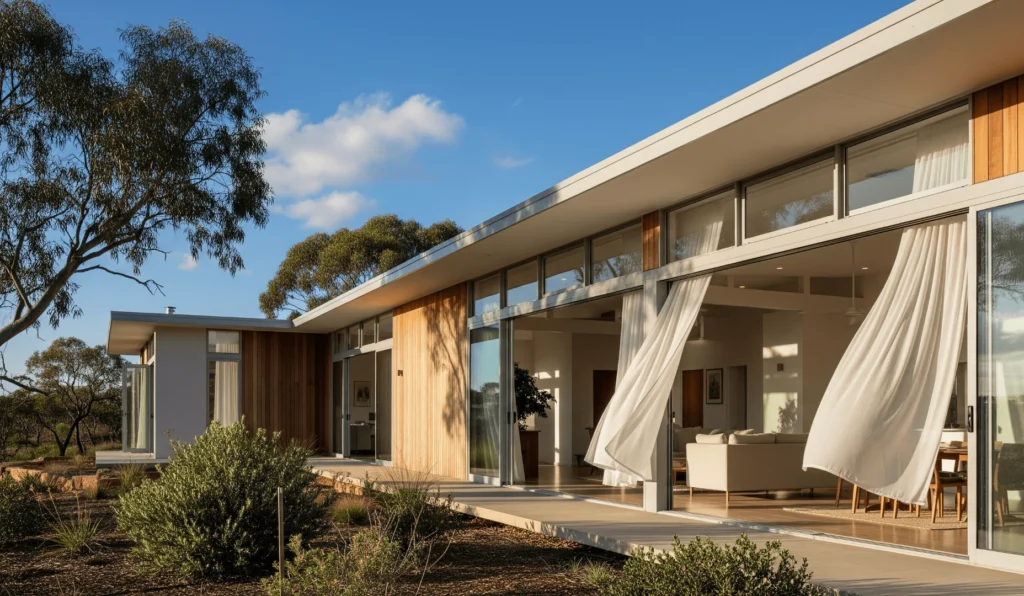
As we head into summer, keeping homes cool and comfortable is a priority for many Australians. This is where passive house design truly shines, particularly its focus on natural ventilation.
In a passive house in Australia, natural ventilation plays a crucial role in achieving indoor comfort without relying heavily on air conditioning or mechanical cooling. Effective airflow is a key part of passive house design, helping maintain indoor comfort, improve air quality and complement the energy-efficient features of a passive design house.
What is natural ventilation in a passive house context?
Natural ventilation involves using wind and temperature differences to move fresh air through a home. In a passive house, this is achieved through carefully placed windows, vents and openings that allow air to circulate freely.
Unlike mechanical systems, natural ventilation does not consume electricity, making it an integral part of passive home building.
However, if you are going to use natural ventilation effectively in your passive house in Australia, it needs to be incorporated from the planning stages, taking into account these key considerations:
Cross ventilation
Placing windows or vents on opposite sides of a room allows air to flow naturally. This creates a cooling effect in warmer months and improves air quality throughout the home. Passive house builders in Australia often use cross ventilation in living areas and bedrooms to maximise comfort without relying on mechanical systems.
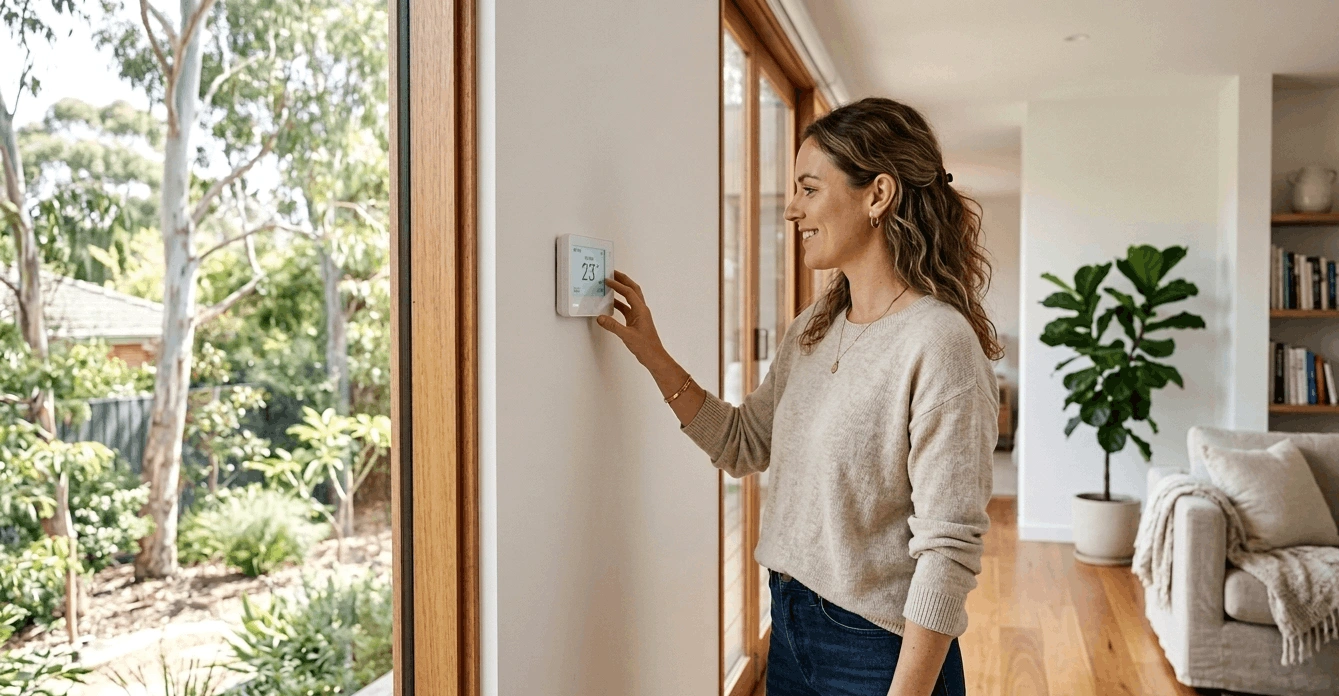
Different zones within a house may require different ventilation strategies. Smart controls or even simple manual operation can help occupants manage airflow effectively.
Stack effect (also known as buoyancy ventilation)
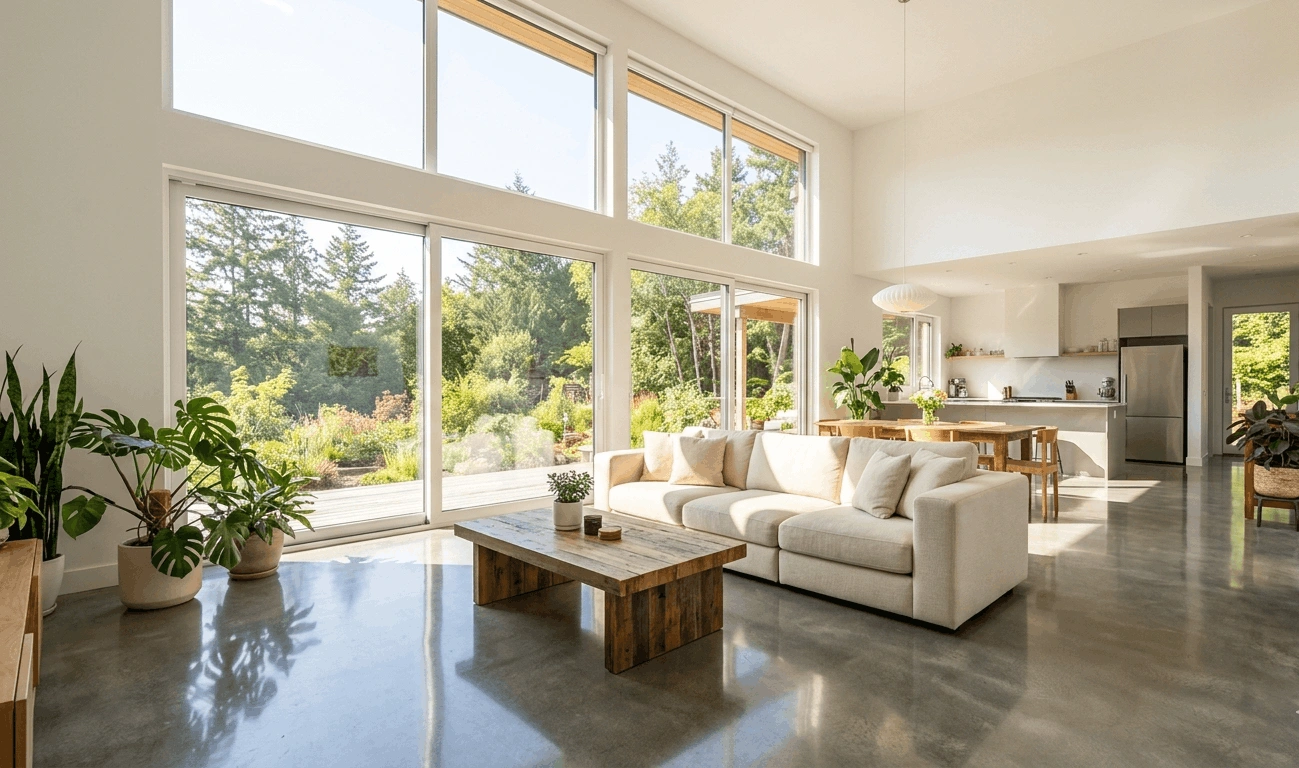
Warm air rises, and cooler air is drawn in at lower levels. A passive house design can take advantage of this principle by including high-level vents or clerestory windows that allow hot air to escape while drawing in cooler outdoor air. This works well in multi-level homes or rooms with high ceilings.
Orientation and window placement
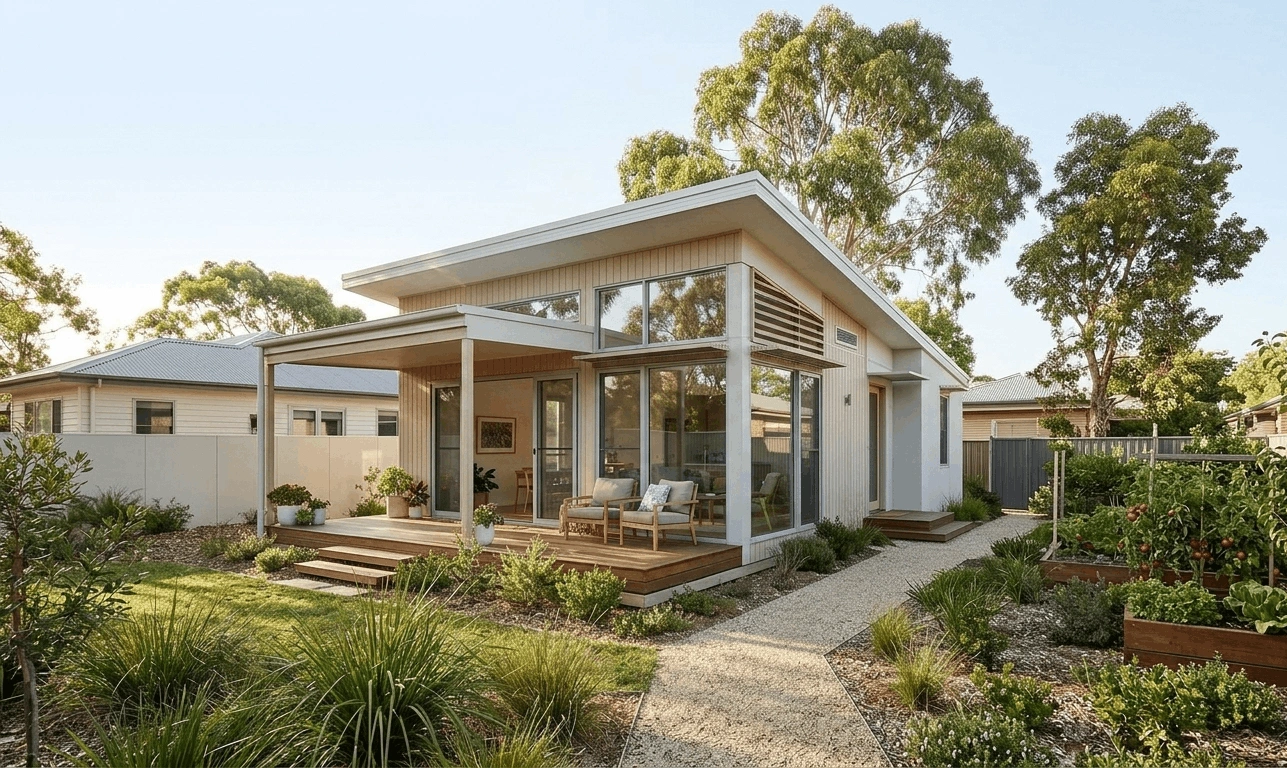
The direction a house faces affects how air moves through the building. Architects experienced in passive house design in Australia should carefully position windows and openings to capture prevailing winds and encourage airflow through the home. Thoughtful orientation also complements solar gains and daylighting strategies, contributing to a balanced and comfortable indoor environment.
Operable openings
Windows and vents that can be adjusted by you and your family give control over airflow. Passive home building often includes design elements that allow residents to manage ventilation according to changing weather conditions, creating flexibility while maintaining energy efficiency.
Night purge ventilation
Australia’s climate often features hot days followed by cooler nights. Passive house design can use this with night purge ventilation. By opening up the house during the cooler night hours, warm air that has built up inside the thermal mass of the building (concrete slabs, brickwork etc.) is expelled, and the building structure itself is cooled down. This cooled mass then helps absorb heat from the indoor air during the following day, significantly reducing the need for mechanical cooling. This strategy is a prime example of passive house design working with natural cycles.
What are the benefits of natural ventilation in a passive house?
While the original passive house standard focused heavily on heating demand (originating in Germany), its application in Australia demands a strong emphasis on cooling and preventing overheating. As a result of this careful planning, natural ventilation provides a range of benefits in a passive design house.
Reduced cooling loads
Effective natural ventilation can dramatically reduce or even eliminate the need for air conditioning, aligning perfectly with the passive house goal of minimal energy consumption. This means lower electricity bills and a smaller carbon footprint – a win-win for homeowners and the environment.
Improved indoor air quality
Beyond temperature control, natural ventilation ensures a continuous supply of fresh outdoor air, diluting pollutants, odours and CO2 levels indoors. This contributes to a healthier, more comfortable living environment, a key benefit of passive home building.
Resilience and comfort
In a country prone to heatwaves, a passive house designed with robust natural ventilation offers a degree of resilience. Even without electricity, the building can maintain more comfortable temperatures than a conventional home.
Cost-effectiveness
While there’s an initial investment in careful design and construction, the long-term savings on energy bills make designing a passive house a financially sound decision. Natural ventilation components are generally passive and require minimal maintenance compared to mechanical systems.
How does natural ventilation work in winter?
In a passive house, your ventilation strategy will change in winter. The goal is to maintain heat, not expel it.
Passive houses are built to be airtight, which is a key component to preventing heat loss. In winter, natural ventilation from open windows would negate this airtightness and allow heat to escape, requiring energy to be replaced. Instead, passive house builders in Australia rely on a Mechanical Ventilation with Heat Recovery (MVHR) system.
This system is central to a passive building design in colder months. It continuously extracts stale, moist air from the house (from kitchens, bathrooms etc.) and, before expelling it outside, uses a heat exchanger to transfer up to 90% of the heat from this outgoing air to the fresh, cold air being drawn in from outside.
The two air streams never mix, but the incoming air is pre-warmed, ensuring a constant supply of fresh air without a significant loss of internal heat. This system maintains a comfortable indoor temperature and good air quality, even when windows are closed to keep the cold out.