The psychology of living in a highly efficient home – does it change behaviour?
Most discussion about passive house design focuses on what the building does, how much energy it saves, how stable the temperature is, or how clean the air feels. That is all worth knowing – but it is only part of the story.
The less-examined question is what living in a high-performance home does to the people inside it. Whether the experience of occupying a passive design house changes how they think, what they value and how they behave beyond the walls of the building itself.
Awareness of energy use
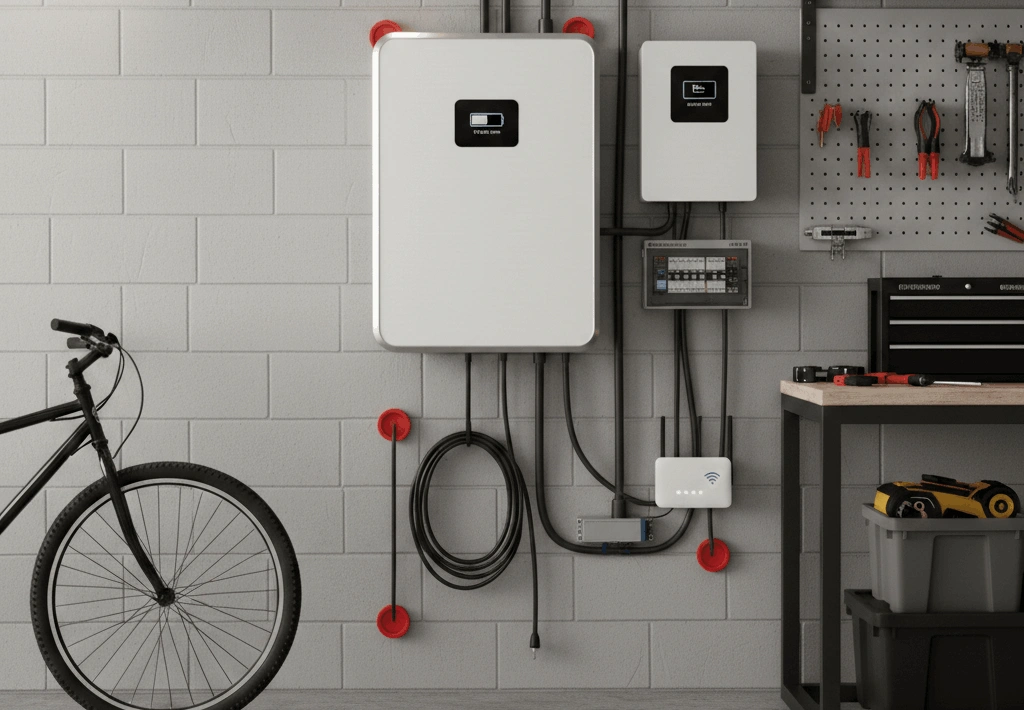
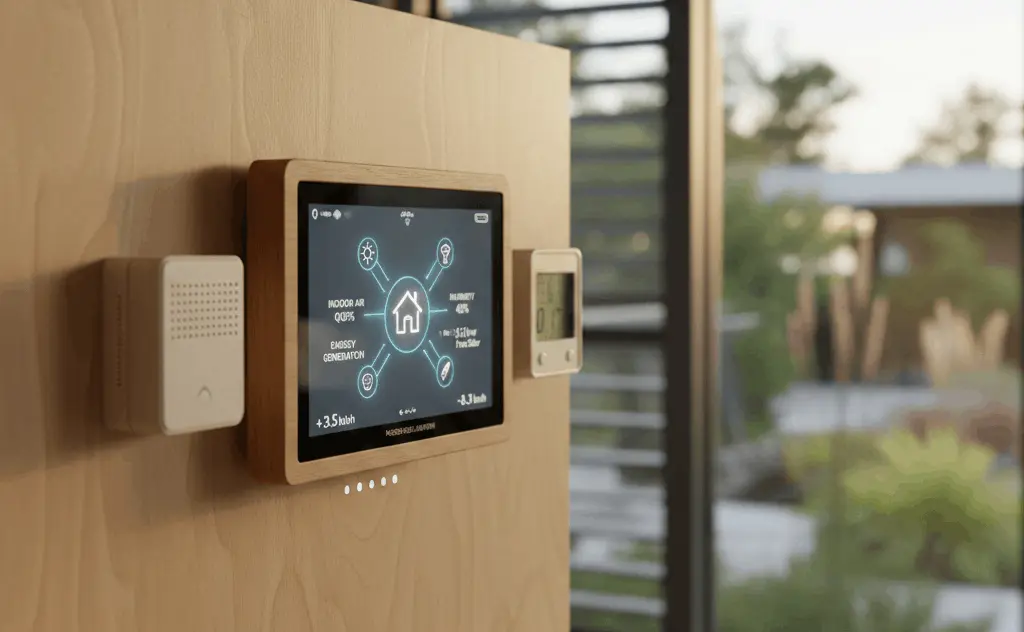
One of the more subtle effects of living in a passive design house is the visibility of the building’s performance. Most passive houses include some form of energy monitoring – a display showing real-time power consumption, ventilation status or indoor air quality readings. When you can see how little energy the building is using, it reinforces the decisions that went into building it.
When people can see the consequences of their actions in real time, they tend to make more deliberate choices. Turning off lights, running appliances during off-peak periods and avoiding unnecessary heating or cooling become habits that are reinforced by visible data rather than abstract environmental concern.
Passive house designs in Australia typically include energy dashboards and monitoring systems. The technology encourages occupants to engage with the building’s performance and creates a feedback loop that standard homes simply do not offer.
Consistency of values
When someone invests in a passive house design in Australia, they are making a statement about their values. That statement tends to have downstream effects.
People who have made a significant commitment to reducing their environmental impact through passive home building often find themselves more conscious of other consumption decisions. Food choices, transport habits, purchasing behaviour and waste management all sit within the same value framework that motivated the building decision. The home becomes a daily reminder of a set of values that extends beyond the building itself.
The effect of comfort on well-being
Passive building design delivers a physical environment that is consistently comfortable. It includes stable temperatures, fresh air, low noise and even light distribution. The psychological effects of that environment are real and accumulate over time.
Mechanical ventilation with heat recovery is a hallmark of passive home building. Homes built to passive house standards supply filtered fresh air continuously while removing stale air and excess moisture.
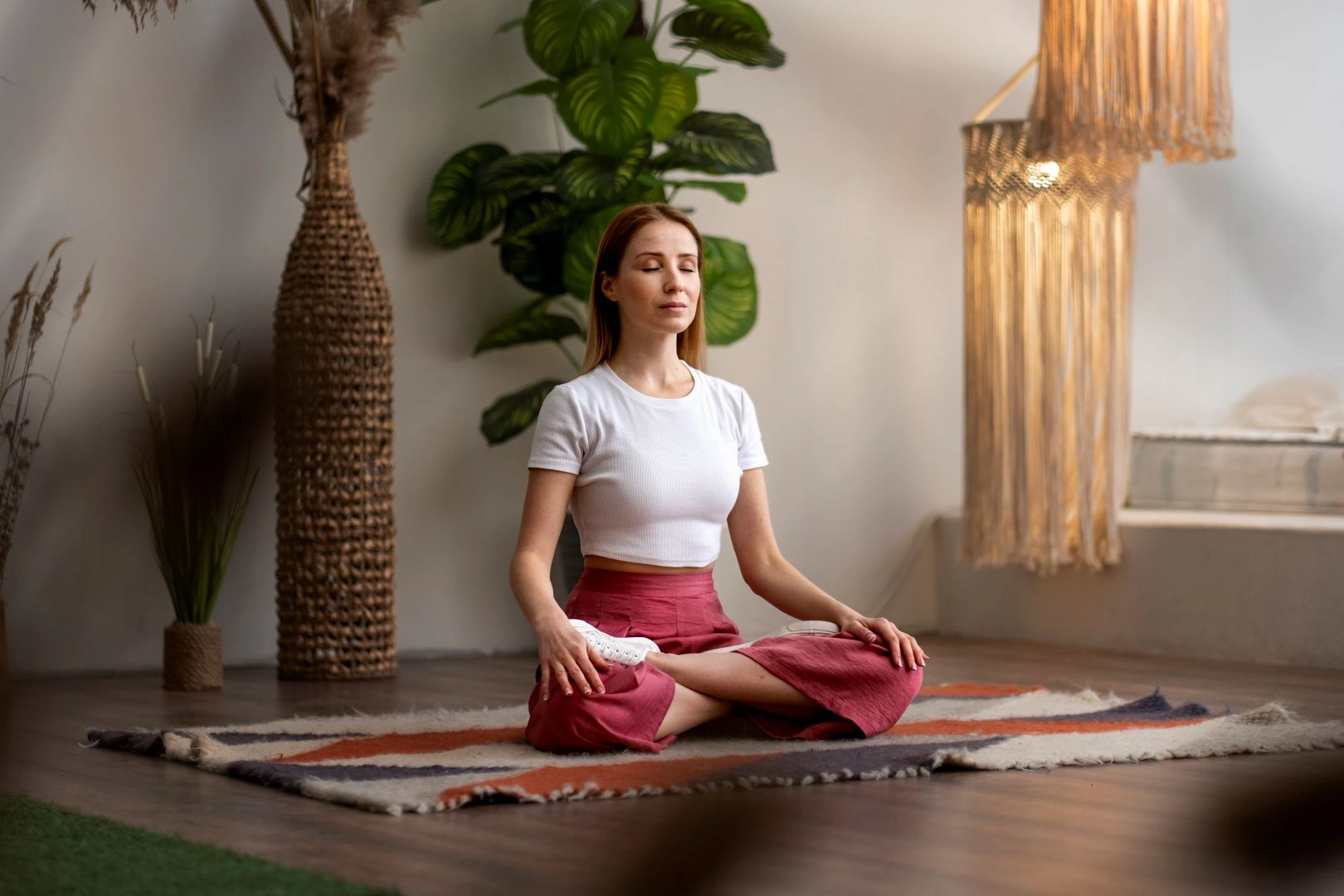
Living in a space with consistently good air quality can improve mood, focus and sleep quality. People often report feeling more alert and healthier, which can influence daily choices like exercise, cooking and time spent indoors. Passive house designers in Australia know that these invisible environmental factors play a large role in shaping behaviour.
Noise reduction and mental clarity
A passive design house is quieter than most conventional homes. Airtight walls, high-performance windows and insulation reduce external noise, creating a calm indoor environment.
This acoustic comfort affects behaviour by reducing irritability and improving concentration. For those working remotely, studying or simply relaxing, the quieter space encourages focus and lowers stress levels. Passive house builders in Australia often highlight this as a key lifestyle benefit that complements energy efficiency.
Behaviour and routine
Living in a high-performance home often encourages routines that support the house’s design principles. Simple habits, such as keeping doors closed, using ventilation boost modes when needed, or adjusting shading at the right times, reinforce the home’s efficiency.
These routines become automatic over time. Residents of passive house designs report that they are more conscious of maintenance, cleaning filters and monitoring energy use because it directly impacts comfort and performance. Behaviour aligns naturally with the passive house design philosophy.
There is also a sense of satisfaction associated with living in a home that is well-designed, sustainable and energy efficient. A passive home builder creates a space that performs reliably and reduces environmental impact. Homeowners feel pride in contributing to sustainability goals.
The set-and-forget process
A passive house design involves sophisticated engineering – airtight construction, the MVHR system, high-performance glazing and energy monitoring systems. From the outside, it can sound like a lot to manage.
In reality, while the engineering behind a passive house design is sophisticated, the experience of living in one is not. The user experience is designed to be set and forget. The ventilation system runs continuously in the background. The building holds its temperature without constant adjustment. There is no need to move a heater from room to room, close curtains against the afternoon sun or monitor drafts around doors and windows. The building manages its own equilibrium, and the occupant’s role is largely to leave it alone.