The difference between passive houses and green homes
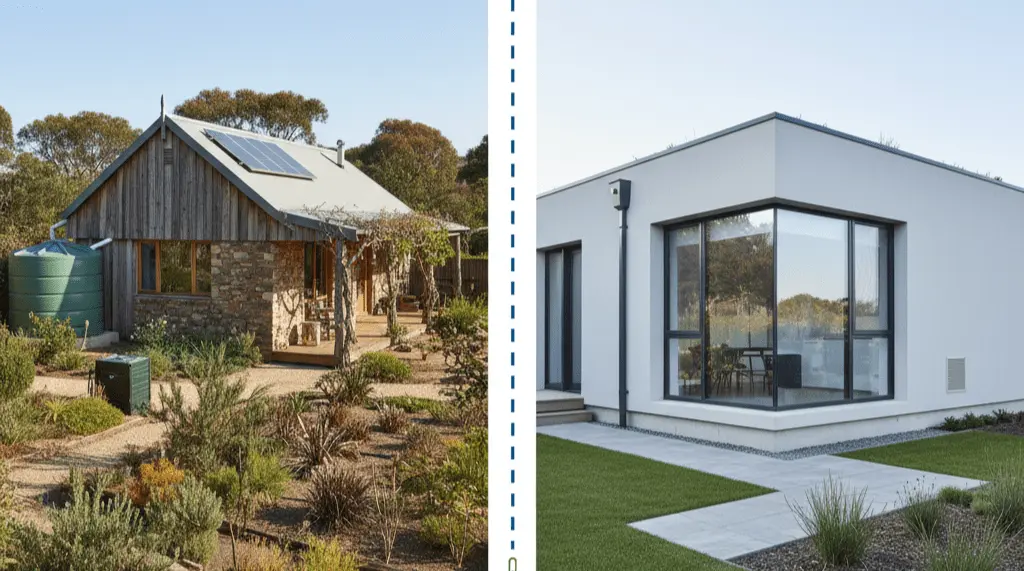
Sustainability and energy efficiency are becoming increasingly important in the Australian housing market. Domain’s Sustainability in Property Report 2025 revealed that listings for energy-efficient (EE) houses for sale attract 13.8% more views than non-EE ones.
As a result of this increased demand, many homeowners and builders are exploring ways to reduce energy costs, improve comfort and lower environmental impact. There are several ways to achieve this, from general green home features like solar panels, water-saving systems and sustainable materials, to the more precise approach of passive house design, which focuses on maximising energy efficiency through insulation, airtight construction and controlled ventilation.
Understanding the differences between these approaches can help homeowners make informed decisions when designing a new home or renovating an existing one.
What is a green home?
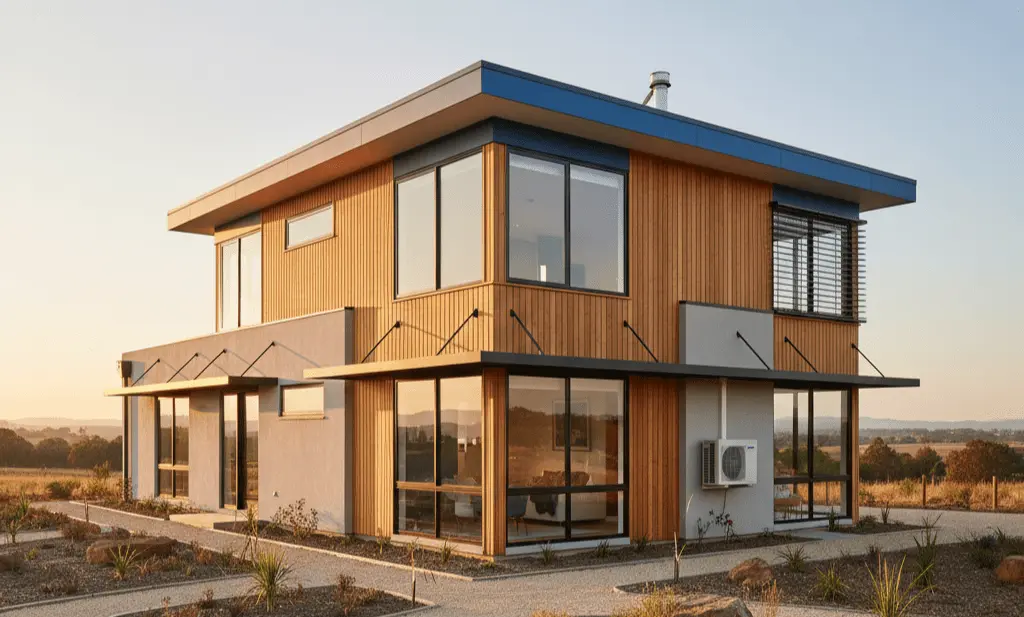
Green homes encompass a broad category of environmentally friendly buildings. These properties typically incorporate sustainable materials, renewable energy systems, water-saving fixtures and energy-efficient appliances. The term “green” serves as an umbrella concept covering various eco-friendly and sustainable building practices without adhering to a single rigid standard.
Australian green homes might feature solar panels, rainwater collection systems, recycled building materials and native landscaping. They often pursue certifications like Green Star or achieve high ratings under the Nationwide House Energy Rating Scheme (NatHERS). The flexibility of green building allows homeowners to prioritise specific environmental concerns based on their values, budget and local conditions.
What is a passive house?
Passive house design takes a more specific, performance-based approach. Originating in Germany as Passivhaus, this building standard has been adapted for Australian climates. To be certified, a passive house in Australia must meet rigorous, measurable criteria for energy performance, focusing primarily on drastically reducing heating and cooling demands.
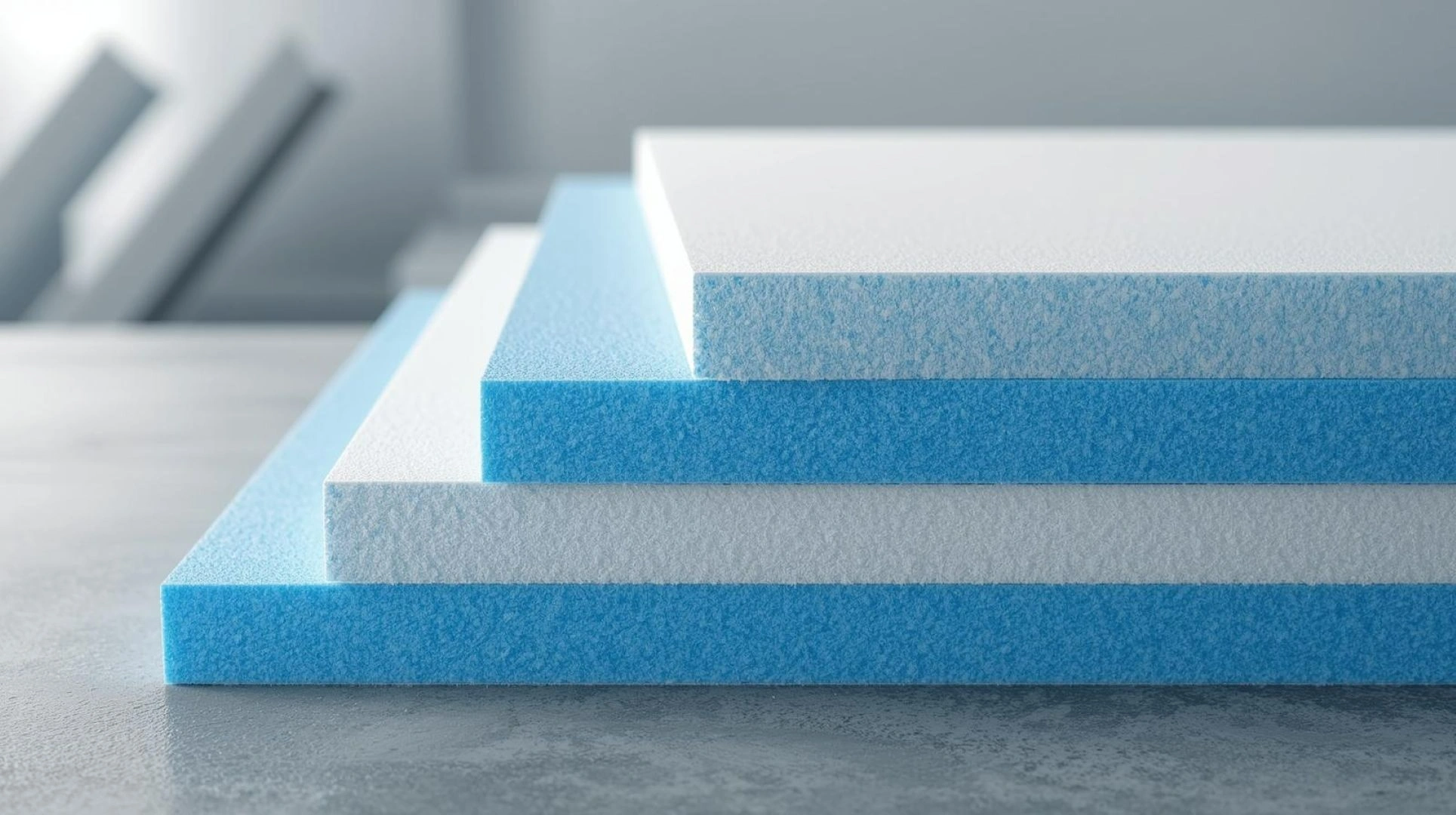
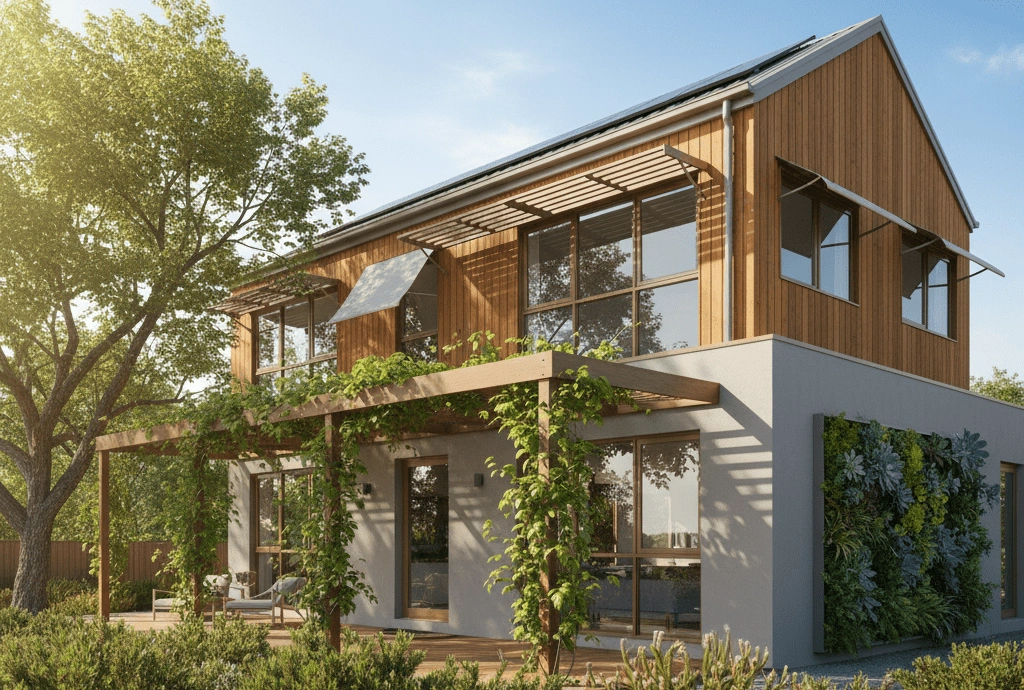
The passive building design methodology centres on five key principles: superior insulation, high-performance windows, airtight construction, thermal bridge-free design and mechanical ventilation with heat recovery (MVHR). These elements work together to create buildings that maintain comfortable temperatures year-round with minimal active heating or cooling.
The key differences between passive houses and green homes
The main difference between passive houses in Australia and general green home construction is the level of precision and performance. While green homes follow general sustainability principles, passive design houses in Australia must comply with precise technical standards. Passive house builders in Australia must demonstrate through detailed energy modelling that their designs will achieve the certification threshold – typically reducing heating and cooling energy use by up to 90% compared to conventional buildings.
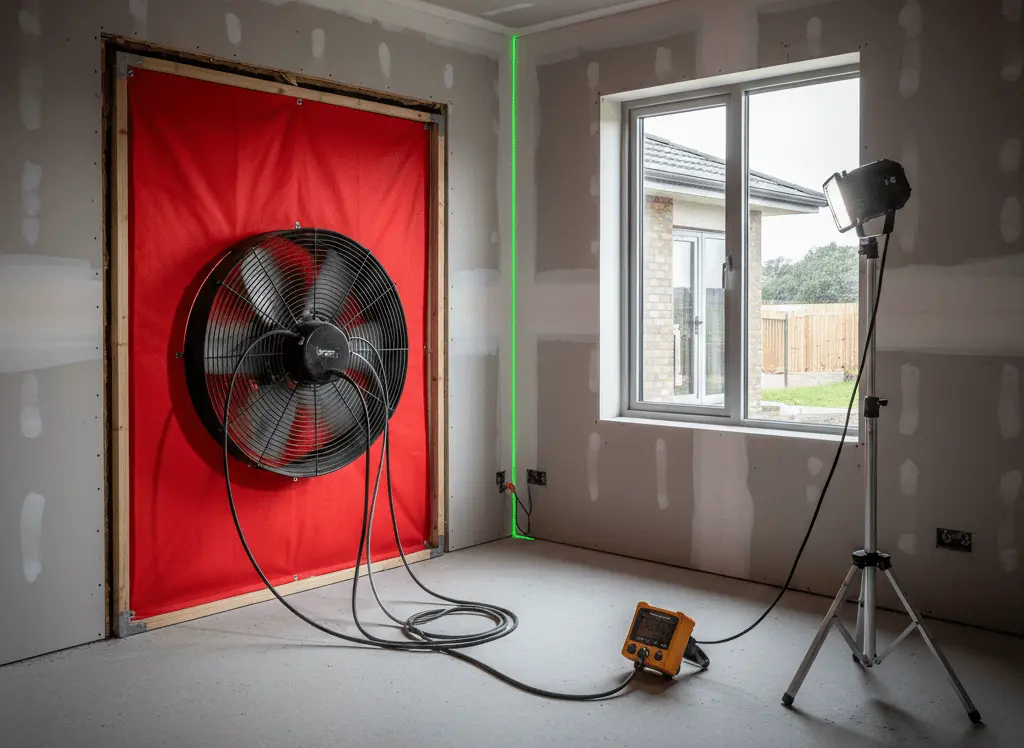
Passive house designs prioritise energy efficiency above all else. Where a green home might incorporate solar panels to offset energy consumption, a passive house goes even further by reducing energy demand through exceptional building performance.Another difference involves verification. Green building certifications often assess design intentions and material choices. Passive house designers in Australia must prove their buildings will perform as claimed through standardised calculations. Projects undergo strict testing, like the blower door test, to verify airtightness, adding accountability to the process.
Which is right for you?
Choosing between a green home and a passive house in Australia depends on your priorities and budget.
A green home might suit you if your main priorities are sustainable materials, water conservation, or on-site renewable energy generation, and you are comfortable with a less stringent, often self-assessed, performance outcome.
A passive house could be a good option if your main priorities are unmatched indoor air quality, extreme thermal comfort and significant long-term energy cost savings. It’s also important to remember that the upfront cost for a passive house in Australia can be higher, due to the need for specialist materials and the expertise of passive house designers and builders. However, the long-term operational savings are significant.
For some homeowners, the ideal solution is a combination of both approaches – designing a home that meets passive house standards for energy efficiency and comfort while also incorporating green home features such as solar panels, rainwater collection and sustainable materials. This hybrid approach means you can maximise both the environmental benefits and long-term savings, creating a home that is comfortable, efficient and future-proof.
Alternatively, many Australians find middle ground by working with passive house builders who understand the standards but build to “passive house principles” without formal certification. This approach captures many benefits while reducing costs and paperwork.
Frequently Asked Questions
Yes. Many certified passive houses incorporate additional green features like solar panels, sustainable materials and water conservation systems. Passive house standards focus specifically on thermal performance, so you can layer other sustainability measures on top. This combination delivers comprehensive environmental benefits and long-term cost savings.
Passive houses work well across all Australian climate zones when properly designed. In hot climates, the emphasis shifts to managing heat gain through shading, thermal mass and night ventilation rather than retaining warmth. Passive house designers in Australia adapt the principles to suit local conditions, keeping your home at comfortable temperatures without excessive air conditioning.
Not all builders have the expertise required for passive house construction. Passive home building demands specialised knowledge of airtightness detailing, thermal bridge prevention and precise installation techniques. Working with certified passive house builders will mean your project meets the strict performance standards required to get certification. The good news is that there is a growing number of certified builders across Australia as the industry recognises the value of passive house expertise.