Passive house vs passive heating: What’s the difference?
What is passive heating?
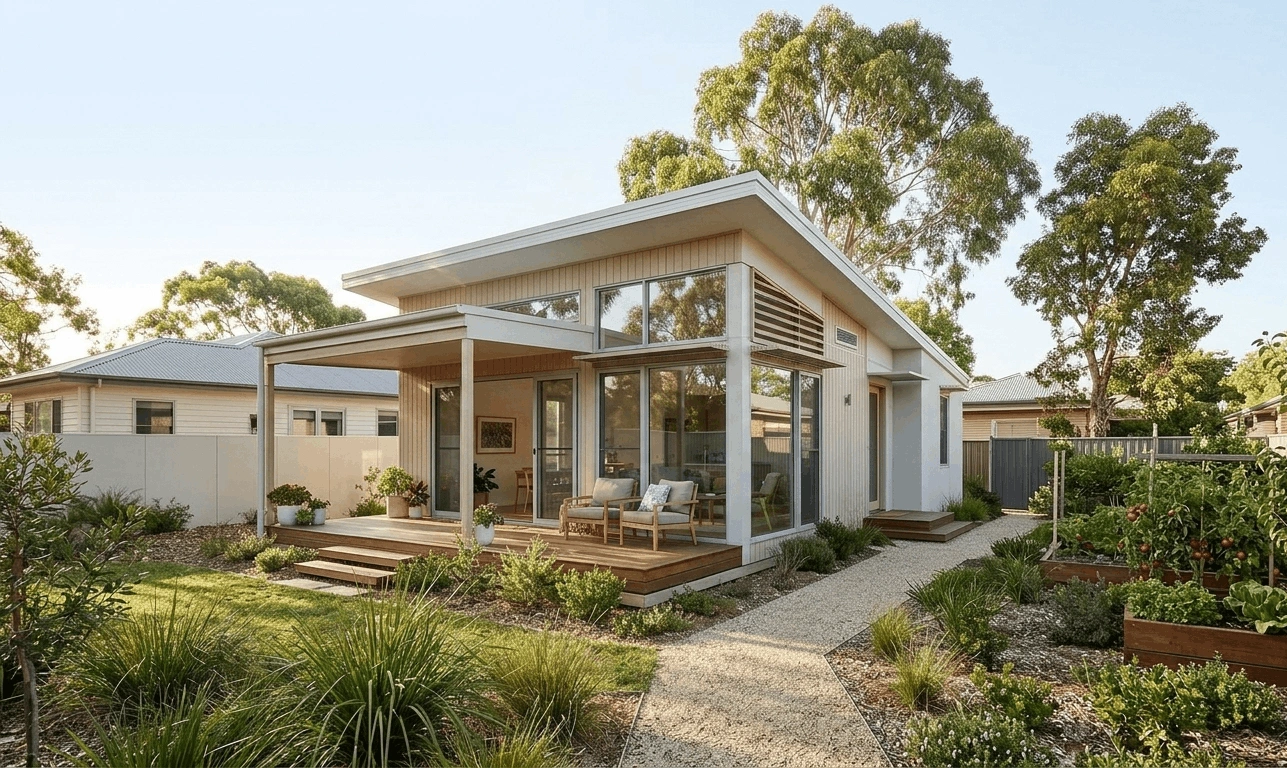
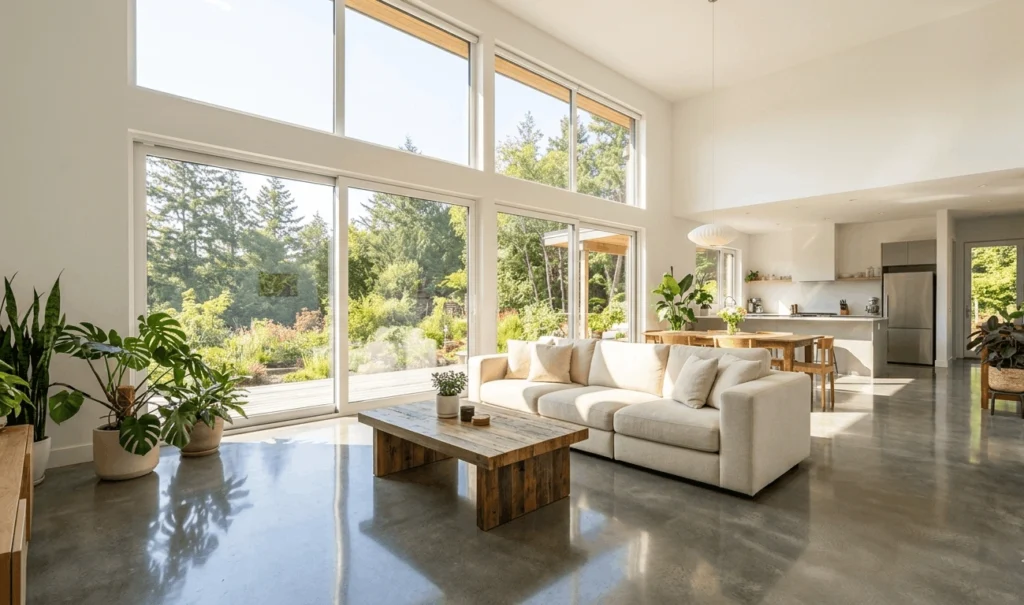
Passive heating – sometimes called passive solar heating – is a design strategy. The goal is to use the sun as a free heat source, trapping warmth inside the home and holding onto it for as long as possible. It does this through a combination of orientation, thermal mass, glazing and insulation.
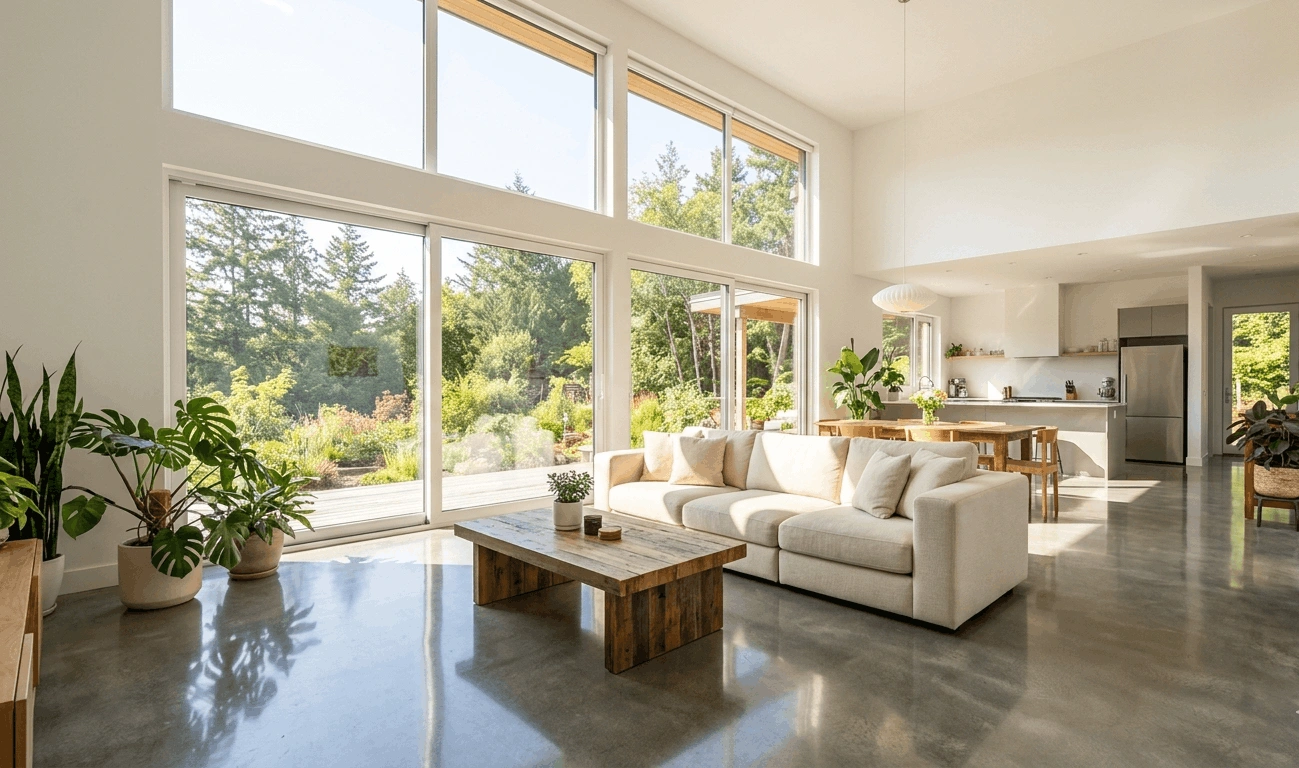
The basic principle works like a greenhouse. Sunlight passes through north-facing glass, hits the floor, walls and furnishings inside, and is re-radiated as heat that can’t escape back through the glass as easily as it entered. That heat is absorbed by materials with high thermal mass, like concrete slabs, brick walls and tiled floors, which store it during the day and release it slowly at night.
Good passive heating design places living areas on the north side of the home, sizes the eaves carefully to let in low winter sun while blocking high summer sun and uses insulation to keep that stored warmth from leaking out overnight. It also pays attention to draught sealing, floor plan layout and the behaviour of warm and cool air moving through the home.
Passive heating is genuinely useful. It can reduce your heating bills significantly and it can be easily applied to almost any home – new builds, renovations and even existing homes where you can make changes to orientation, glazing or insulation.
It is not, however, a certification standard. There is no test it has to pass and no threshold it has to meet. It is a collection of design principles that can be applied in full or in part.
What is a passive house?
Passive house design is something different. It is a rigorous building standard developed by the Passive House Institute in Germany, and it sets precise, measurable targets for how a building must perform. To be certified, a home has to meet specific limits on heating and cooling demand, total primary energy use and airtightness.
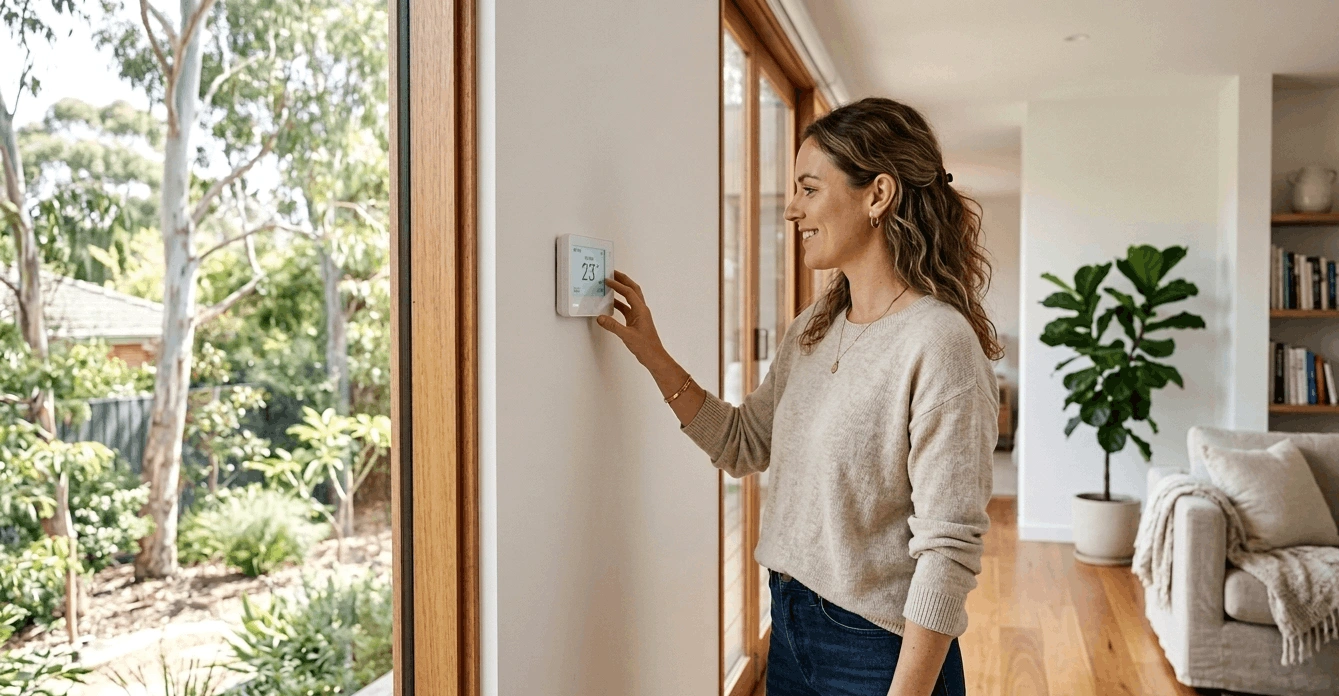
This airtightness is where passive building design differs most from passive heating. A certified passive home is built to be almost completely airtight. There are no uncontrolled gaps in the building envelope where warm air can leak out or cold air can seep in. Because you can’t rely on natural air movement to ventilate an airtight building, a mechanical ventilation with heat recovery (MVHR) system runs continuously, bringing in fresh filtered air while recovering up to 90% of the heat from the outgoing stale air.
This is a fundamentally different approach to building. It is not about optimising a few design features. Rather, it is about treating the entire building as a system and engineering every element to work together.
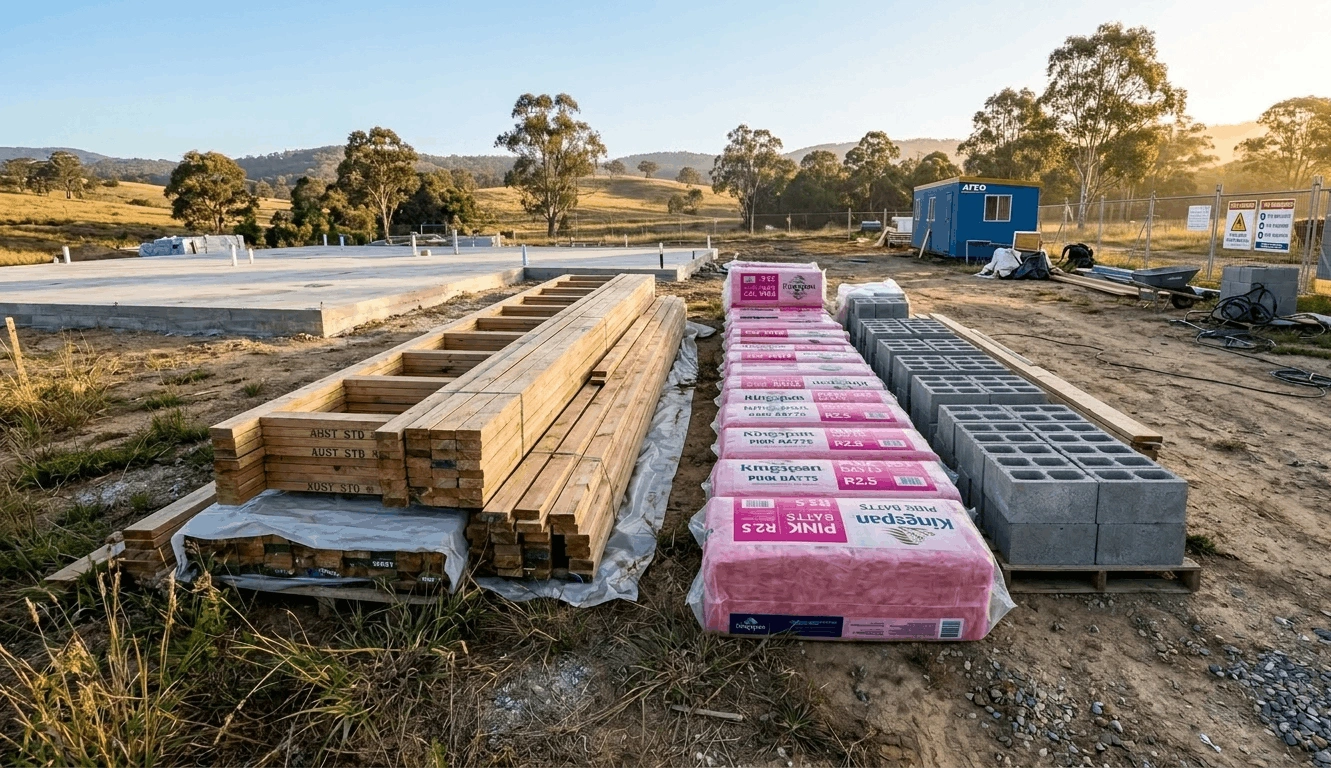
The insulation levels required are far higher than standard construction. Windows must be triple-glazed in most climates. Every penetration through the building envelope has to be carefully sealed. Passive house builders in Australia who are certified to deliver this standard go through specialist training to understand and manage all of this correctly.
Where they overlap, and where they don't
A well-designed passive design house will almost always use passive heating principles. North orientation, thermal mass and good glazing are sensible strategies regardless of whether you’re building to the full passive house standard. So in that sense, passive heating is a subset of good passive house design. It can be seen as one important layer within a much more comprehensive system.
The key difference is that passive heating alone cannot guarantee comfort. A home can have excellent solar orientation and solid thermal mass but still be draughty, poorly insulated and uncomfortable on cold nights. Designing a passive house to the certified standard closes all those gaps. The result is a home that stays comfortable all year and costs very little to run – sun or no sun.
This is why passive house designs are gaining real traction in Australia. Our climate varies enormously and passive house design has to account for all of that. The certification standard provides the framework to do it reliably across every climate zone.