How to plan for passive house landscaping
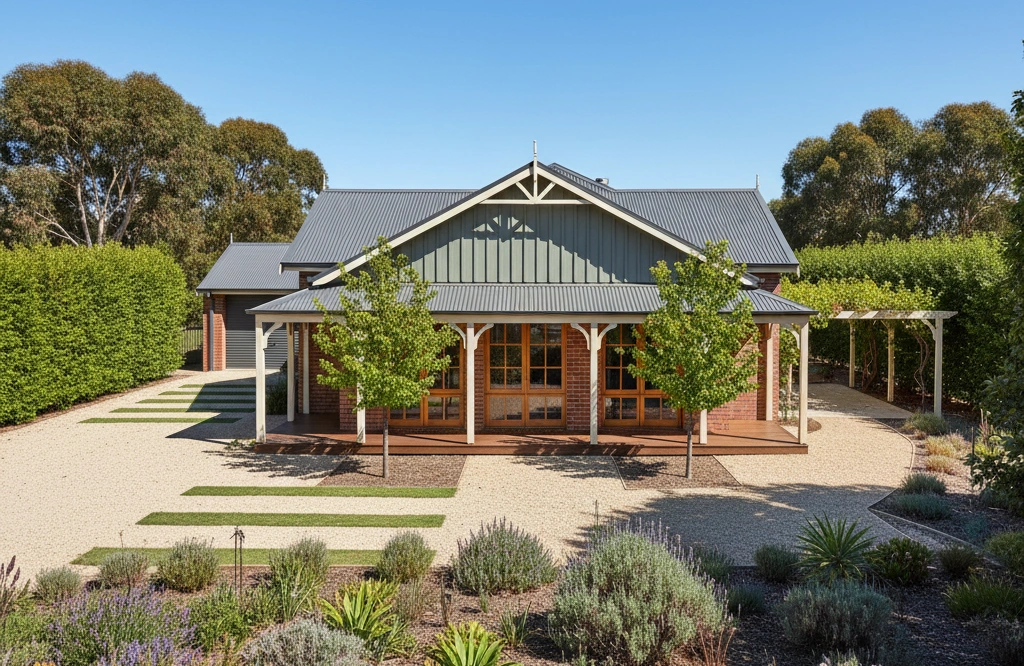
When planning a passive house in Australia, landscaping is just as important as the building itself. The design of your outdoor spaces can significantly influence the energy efficiency, comfort, and overall sustainability of your home. Good landscaping complements your passive house design, helping to control temperature, manage water, and create a pleasant outdoor environment.
Start with the orientation and site analysis
The first step in designing a passive house is understanding the site. Look at sun angles, prevailing winds and the slope of your land. Trees, shrubs and other plantings can be positioned to provide natural shade, block strong winds or redirect breezes. In a passive design house, these natural elements are used strategically to reduce heating and cooling needs.
By analysing the site carefully, a passive home builder can ensure the landscaping supports the building’s energy goals.
Choose plants for energy efficiency
Selecting the right plants is key in passive house designs. For example, deciduous trees should typically be positioned on the north and west sides of the property. These trees provide summer shade while allowing winter sun to reach your home after leaves drop. However, how and where you plant them requires careful consideration of mature tree size, seasonal sun angles and your home’s specific orientation.
Evergreen plants serve different functions in passive house landscaping. They provide year-round wind protection, privacy screening and can help channel cooling breezes towards your home during warmer months. Placement, though, must be carefully planned to avoid blocking the beneficial winter sun.
Southern and western boundaries often benefit from evergreen screening to block cold winter winds and provide privacy. Eastern boundaries might incorporate medium-height evergreens that allow morning sun while providing afternoon shade.
Native and drought-tolerant species are ideal for Australian conditions. They require less water, reduce maintenance and create a natural ecosystem around your passive building design.
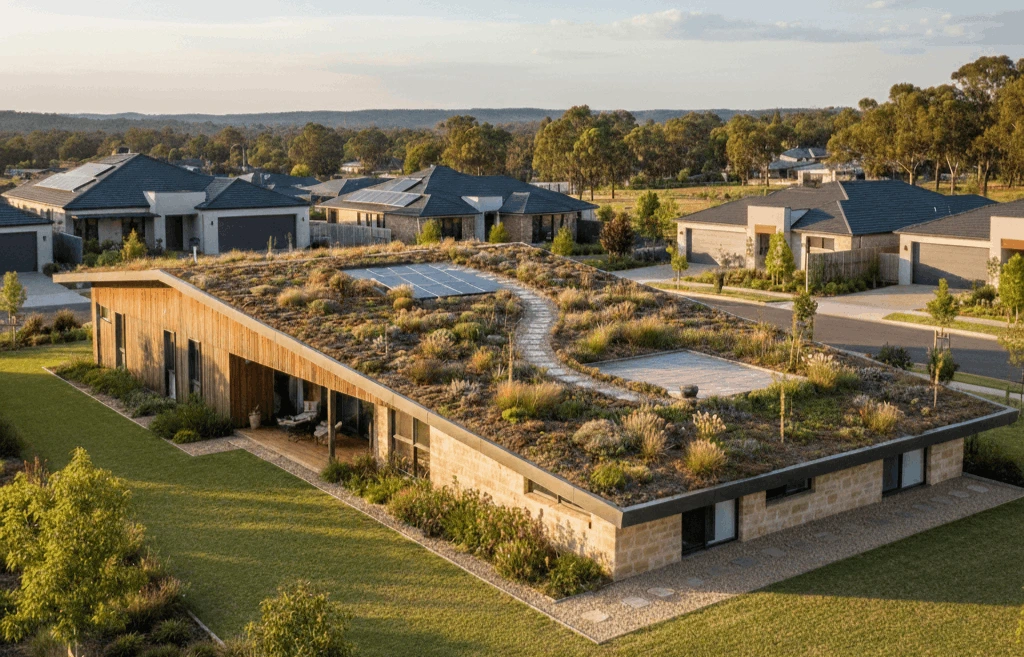
Climbing plants and trellises can shade walls and windows, reducing heat gain in summer. Ground covers and mulches keep soil cool and prevent water loss, while also improving the microclimate around your home.
When planning a passive house in Australia, consider how plants interact with building elements like solar panels, windows and shading devices.
Design outdoor spaces to complement indoor comfort
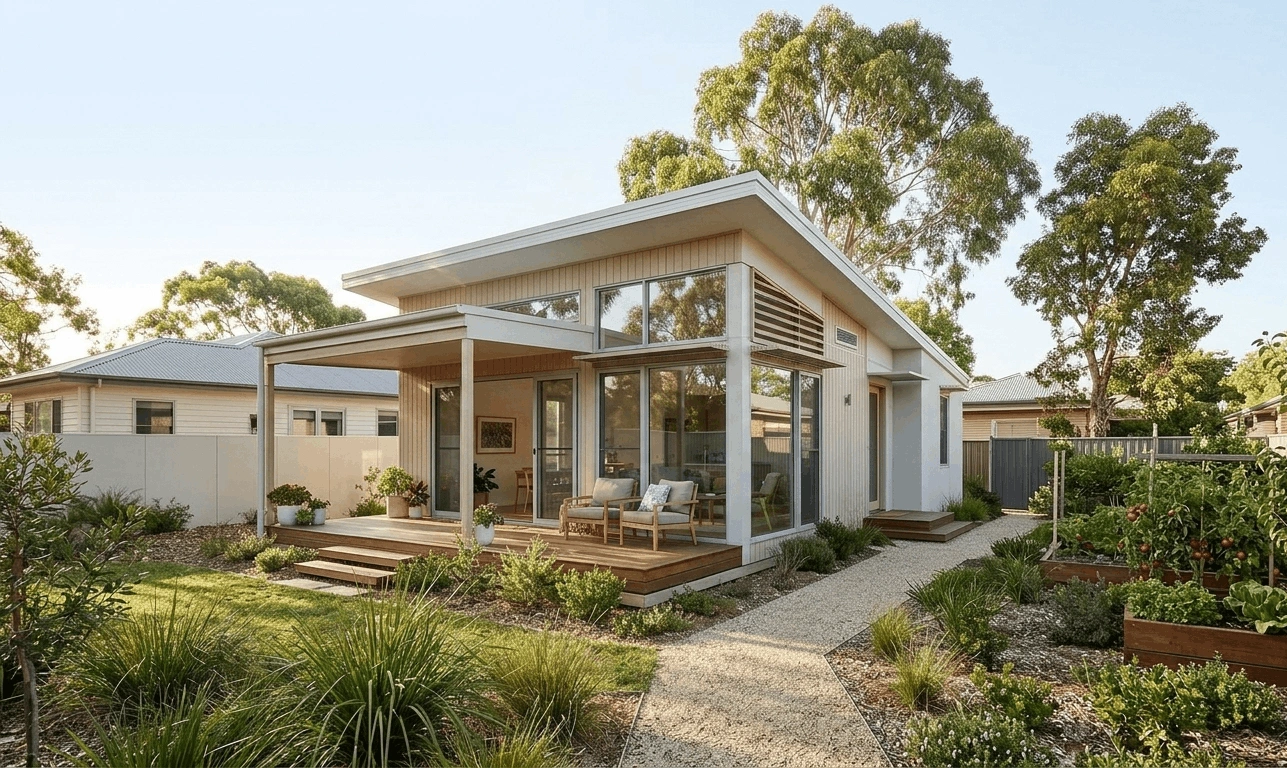
Outdoor areas should extend the comfort of a passive home building. Patios, decks and gardens can be positioned to capture winter sun or be shaded from summer heat.
Paths and driveways can be made with permeable materials to reduce heat reflection and support water absorption. A passive house design benefits from landscaping that uses daylight without increasing heat gain. A well-thought-out landscape plan improves both energy efficiency and the liveability of outdoor spaces.
Consider water management
While not one of the five principles, water management can be an important part of passive home designs. Thoughtful water planning ensures your passive house builders in Australia integrate environmental sustainability with everyday convenience.
Rainwater harvesting, swales and retention basins help reduce the impact of storms and provide irrigation for gardens.
However, water features must be carefully designed to avoid creating excessive humidity that could affect your home’s ventilation systems. Passive home building projects in humid climates might limit water features or position them strategically to capture prevailing breezes that carry moisture away from the building.
Using native plants that require minimal watering also complements passive home building principles. Stormwater can be directed to gardens, trees and permeable surfaces, reducing the load on municipal systems and helping maintain soil health.
Integrate outdoor structures with passive house principles
Structures such as pergolas, verandas and fences can be used to enhance passive house designs. Pergolas over windows can provide shade, while fences and hedges can redirect cooling breezes or block harsh winds. By incorporating these elements from the beginning of your passive house design planning, they work with, rather than against, the building’s performance.
Raised garden beds, seating areas and outdoor kitchens can be positioned to take advantage of seasonal sun patterns. By linking indoor and outdoor spaces, your passive home builder can create a home that feels larger, more connected to nature and aligned with passive building design principles.
Plan for long-term growth and maintenance
Landscaping for a passive house in Australia is a long-term investment. Plants grow, soil settles and shade patterns change over time. Selecting the right species and planning for future growth ensures your passive house builder maintains energy efficiency for decades.
Regular pruning, mulching and irrigation adjustments help keep gardens effective without requiring excessive maintenance. A passive home builder or landscaper can advise on the best species, placement and maintenance schedule to align with passive house design objectives.
Consult experienced passive home builders
Working with specialists in passive home building is essential. Experienced passive house builders, architects and landscapers understand how site orientation, greenery and building design interact. They can offer guidance on everything from planting strategies to water management, ensuring your outdoor spaces enhance the performance of your passive house design in Australia.
A professional passive house builder can also help choose materials for paths, patios and fences that contribute to energy efficiency while remaining aesthetically pleasing. Their advice ensures your landscaping plan complements the goals of a passive home building project.