How to cool a passive house in summer
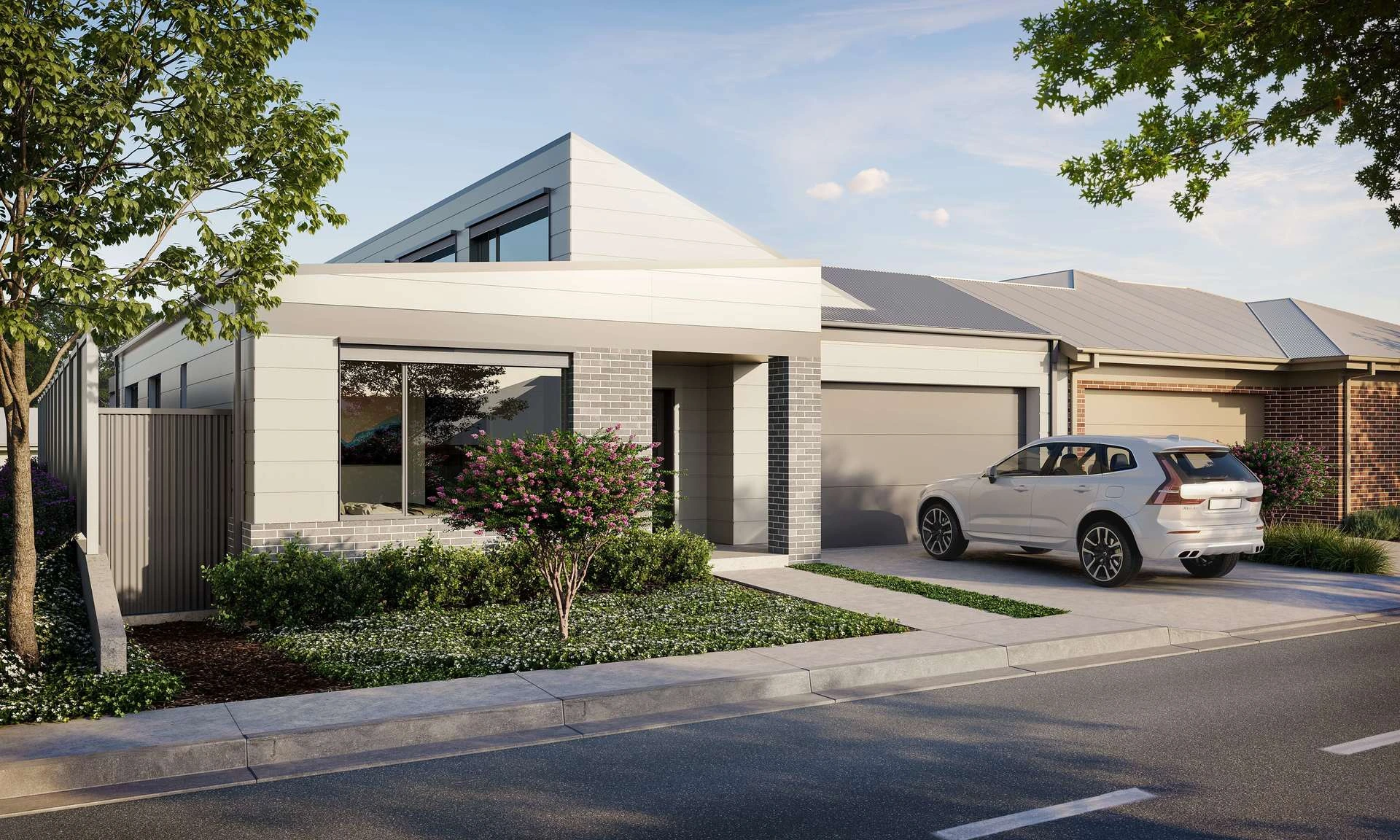
Australia is known for its hot summers, and keeping your home comfortable without relying heavily on air conditioning is one of the key benefits of passive house Australia. A well-designed passive house stays cool in summer through clever passive house design principles, careful planning and smart construction choices.
How passive house design keeps homes cool
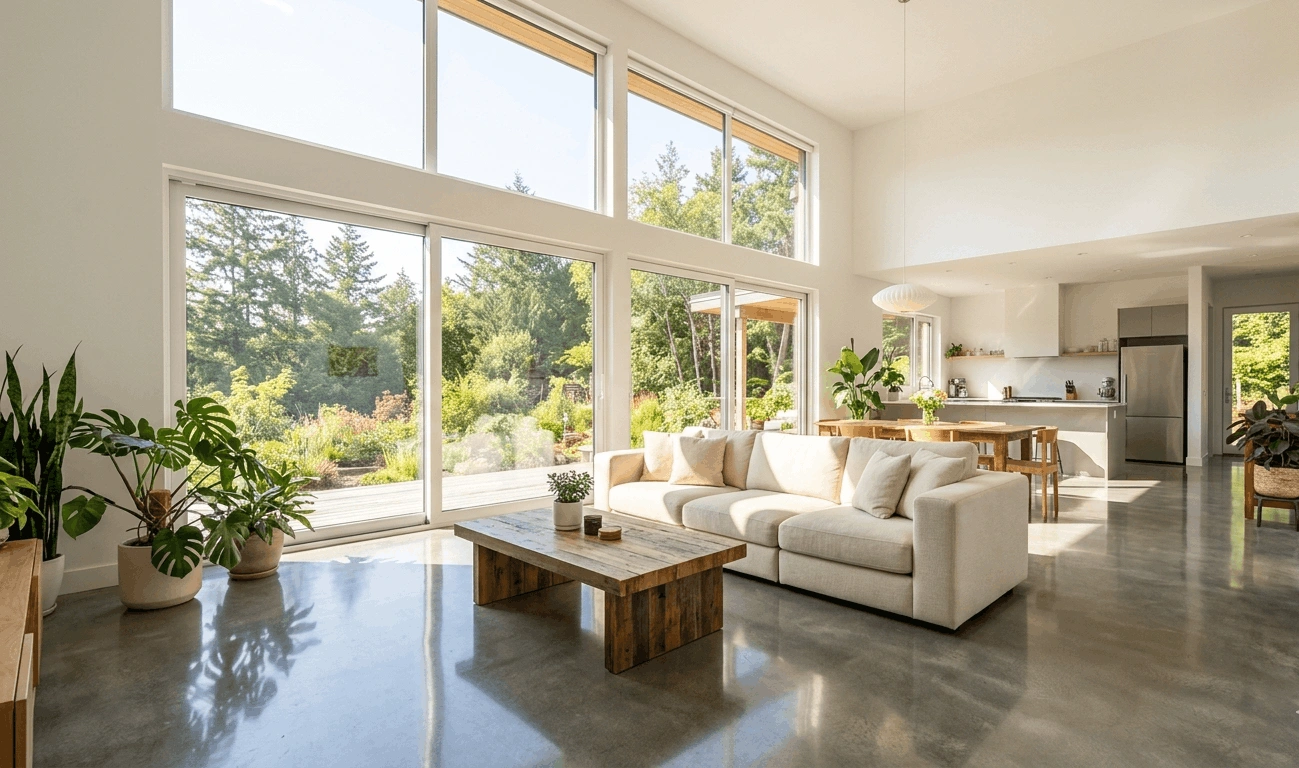
At its core, a passive design house relies on controlling heat gain and promoting natural ventilation. Passive house designs focus on insulation, airtightness, shading and thermal mass to maintain a stable indoor temperature. A passive building design minimises heat entering the home during the day and releases any stored warmth at night.
Key elements include:
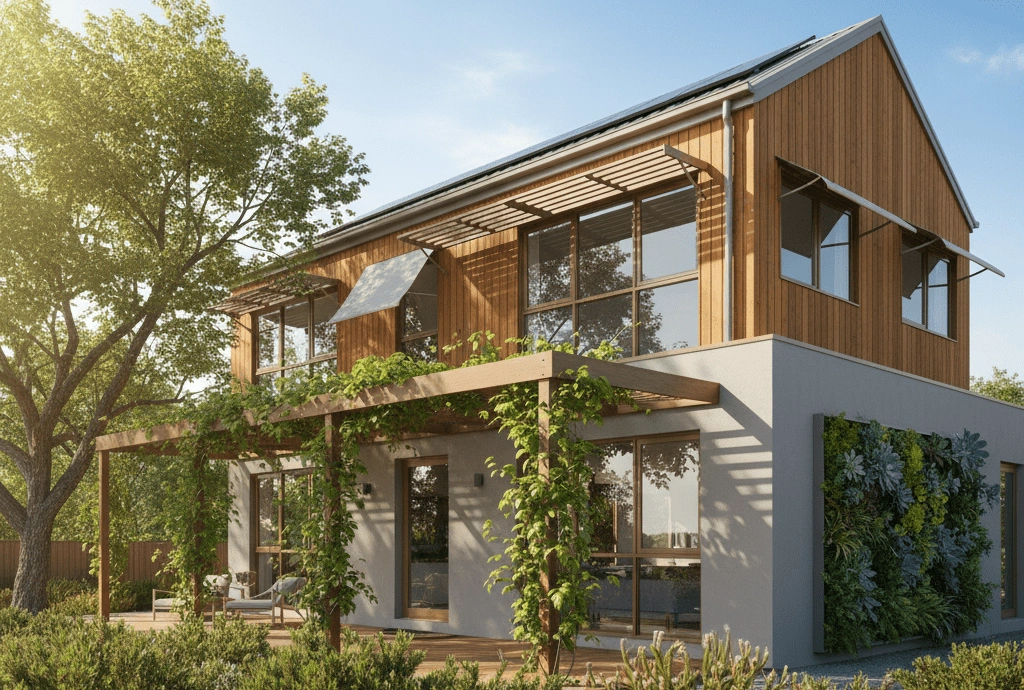
- Orientation and shading: Placing windows and living areas to avoid direct summer sun and using shading devices like awnings, pergolas, shutters and blinds.
- Insulation and airtightness: High levels of insulation in walls, roofs and floors, combined with airtight construction, prevent heat from entering.
- Ventilation: Mechanical ventilation with heat recovery (MVHR) ensures fresh air without losing cool air, and strategically placed operable windows allow cross-ventilation during cooler nights.
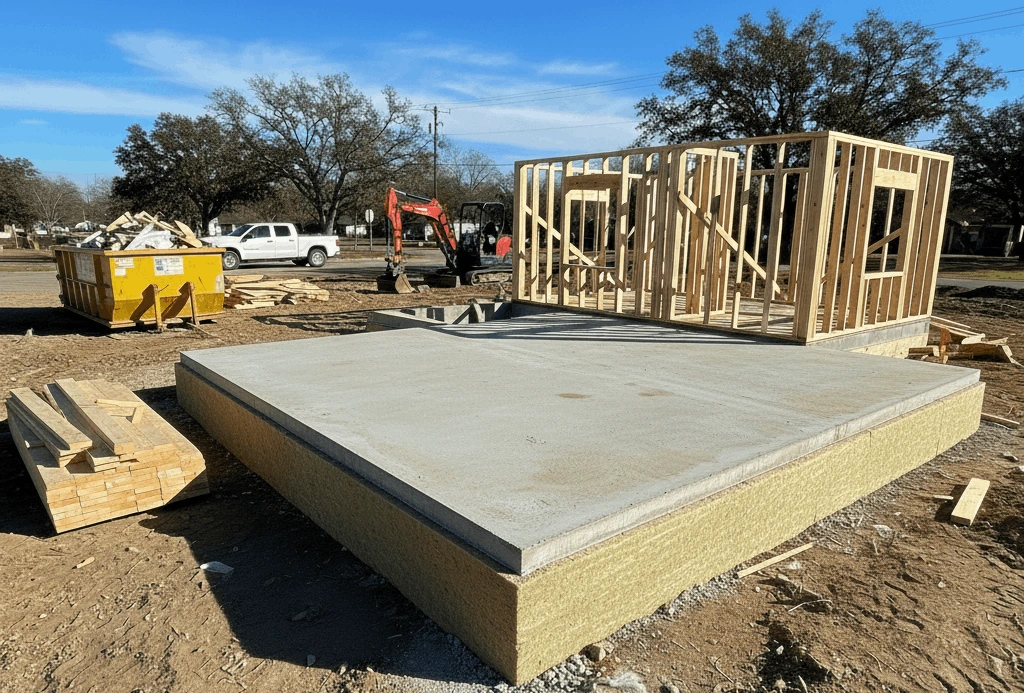
- Thermal mass: Materials like concrete or brick absorb heat during the day and release it slowly at night, keeping indoor temperatures steady.
Working with passive house designers in Australia ensures these elements are correctly integrated. They can adapt passive house designs to local climate conditions, helping you enjoy comfort without overspending on energy.
Using shading and landscaping
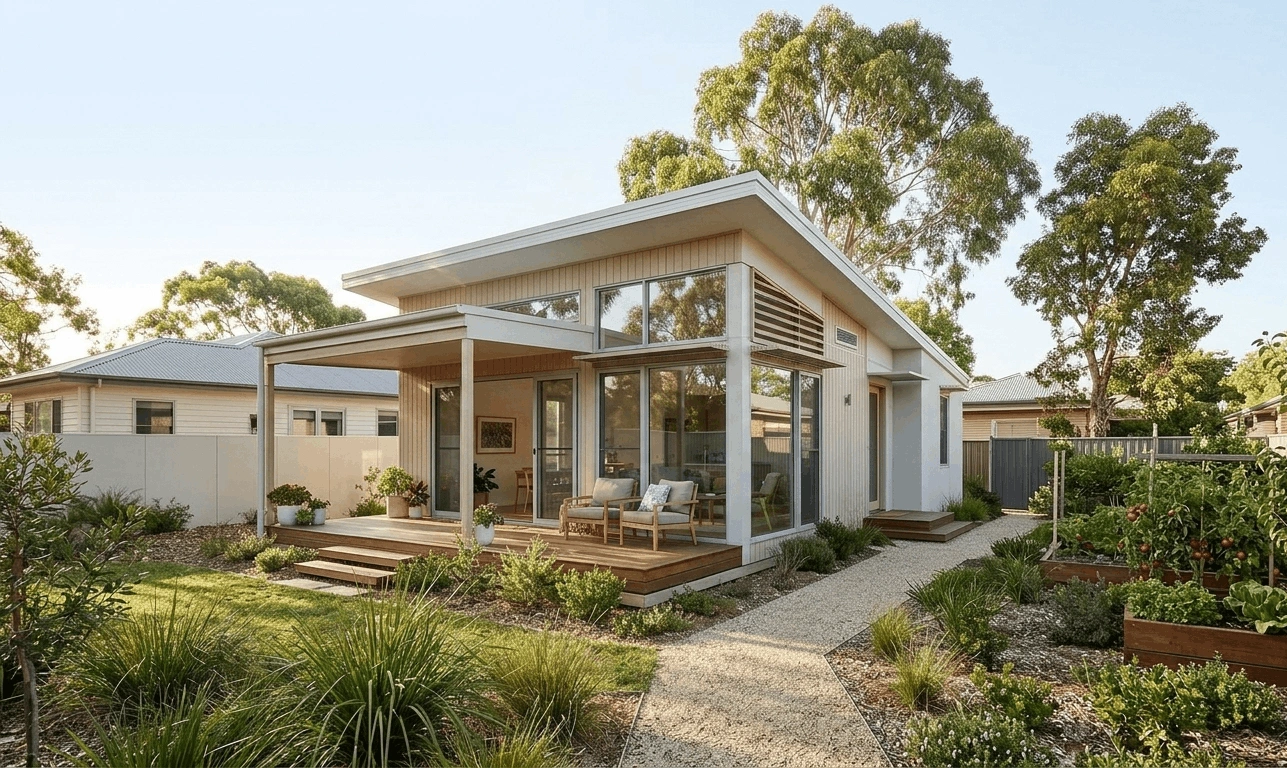
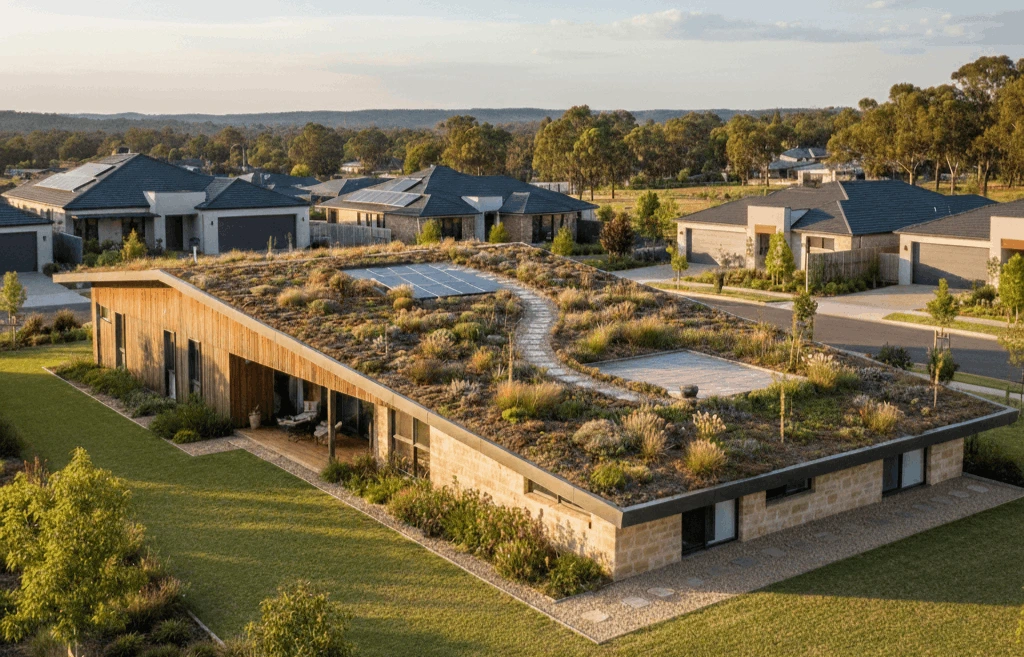
One of the simplest ways to cool a passive house in Australia is through external shading and smart landscaping. Trees, shrubs and trellises can block the sun’s rays before they reach your walls or windows. Overhangs and pergolas work well for north-facing windows in Australia, preventing direct sunlight in summer while allowing winter sun to warm the home.
Window treatments are equally important. High-performance glazing, reflective films and insulated blinds reduce heat gain and maintain a cooler interior. Passive home builders can recommend the best combination of shading and glazing based on your home’s orientation and local weather patterns.
Ventilation strategies
Natural ventilation plays a key role in keeping a passive house in Australia cool. Night purging – opening windows and vents during cooler night hours – allows heat accumulated during the day to escape. Cross-ventilation, where air moves from one side of the house to the other, helps maintain a constant airflow.
Many passive house builders in Australia incorporate mechanical ventilation systems that use heat recovery technology. These systems supply fresh air without losing the energy already stored in the building, keeping homes comfortable without relying on traditional air conditioning.
Understanding MVHR vs air conditioning
Many people confuse MVHR systems with air conditioning, but they serve different purposes in passive house design. MVHR systems primarily provide fresh air and maintain indoor air quality by continuously exchanging stale indoor air with filtered outdoor air. This is required because one of the other key principles in passive house design is thorough insulation and airtightness.
The heat recovery component on MVHR transfers temperature between incoming and outgoing air streams, improving efficiency.
Air conditioning, by contrast, actively cools or heats air to maintain specific temperatures. Whilst MVHR systems can include bypass modes for summer ventilation, they don’t actively cool air.
In a passive house in Australia, there is less emphasis on mechanical heating or cooling because of the design itself, which, when done correctly, ensures stable indoor temperatures. The MVHR ensures constant fresh air whilst the building’s passive features maintain comfortable temperatures.
The energy consumption differs dramatically. MVHR systems use minimal electricity to run fans, typically consuming 40-60 watts. Air conditioning units consume 1,000-3,000 watts or more when actively cooling. This is why passive house builders prioritise MVHR for air quality rather than relying on air conditioning for temperature control.
However, in some Australian climates, some air conditioning may still be required as temperatures soar. The difference is that these systems run far less frequently and at much lower capacities than in conventional homes.
Smart interior design and lifestyle adjustments
Even the best passive house designs can benefit from small lifestyle adjustments in summer. Minimising heat-generating appliances during the day, using ceiling fans to circulate air and keeping doors closed to unused rooms help maintain a stable indoor temperature.
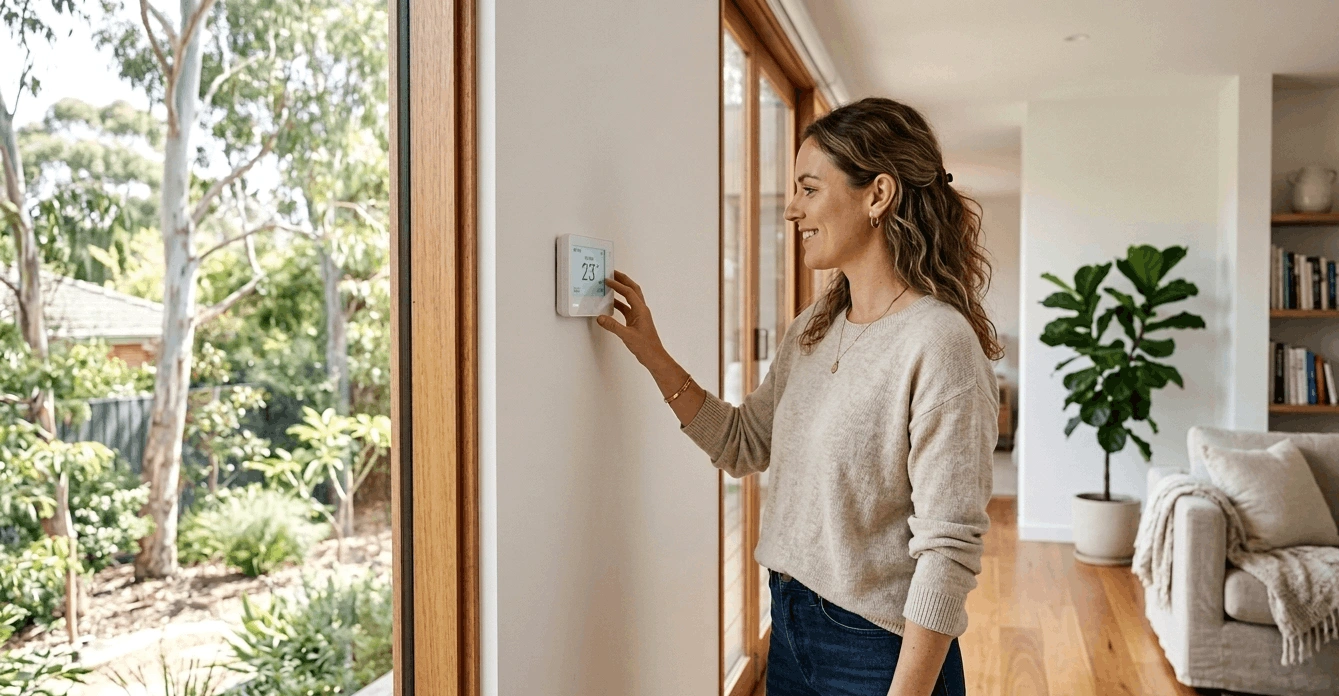
Furniture placement can also affect airflow – keeping pathways clear allows natural ventilation to reach more areas. Curtains and blinds can be adjusted throughout the day to block heat and reduce glare. Passive houses in Australia can also incorporate smart energy systems to make these adjustments easier and more effective.
Frequently Asked Questions
Most passive houses in Australia maintain comfortable temperatures throughout summer using passive design strategies alone. In extreme heatwaves or particularly hot climates, a small backup cooling system may be needed, but it operates far less frequently than in conventional homes. The combination of shading, thermal mass, night ventilation and high-performance insulation keeps indoor temperatures stable.
Whilst achieving full certification is challenging, existing homes can incorporate many passive building design principles. Adding external shading, improving insulation, upgrading to high-performance windows and installing MVHR systems can dramatically improve summer comfort. Passive house designers in Australia can assess existing homes and recommend practical retrofitting strategies that deliver significant improvements without complete reconstruction.
Shading and landscaping are essential for keeping a passive house in Australia cool in summer. Eaves, pergolas, louvres and awnings block direct sunlight before it reaches windows, reducing heat gain. Deciduous trees on the north, east and west sides provide natural shade in summer and allow winter sun through. Strategic landscaping and vegetation also create cooler microclimates around the home, while passive house builders often include green walls and shade sails as part of the overall cooling strategy.