How to plan kitchen design in a passive house
The kitchen is the heart of any home, and when you’re designing a passive house, this space requires particular attention. A passive house design prioritises energy efficiency, thermal comfort and superior indoor air quality. The kitchen can create unique challenges because it generates heat, moisture and odours whilst requiring adequate ventilation. Getting this balance right is essential for maintaining the passive house standard.
Understanding passive house principles in kitchen design
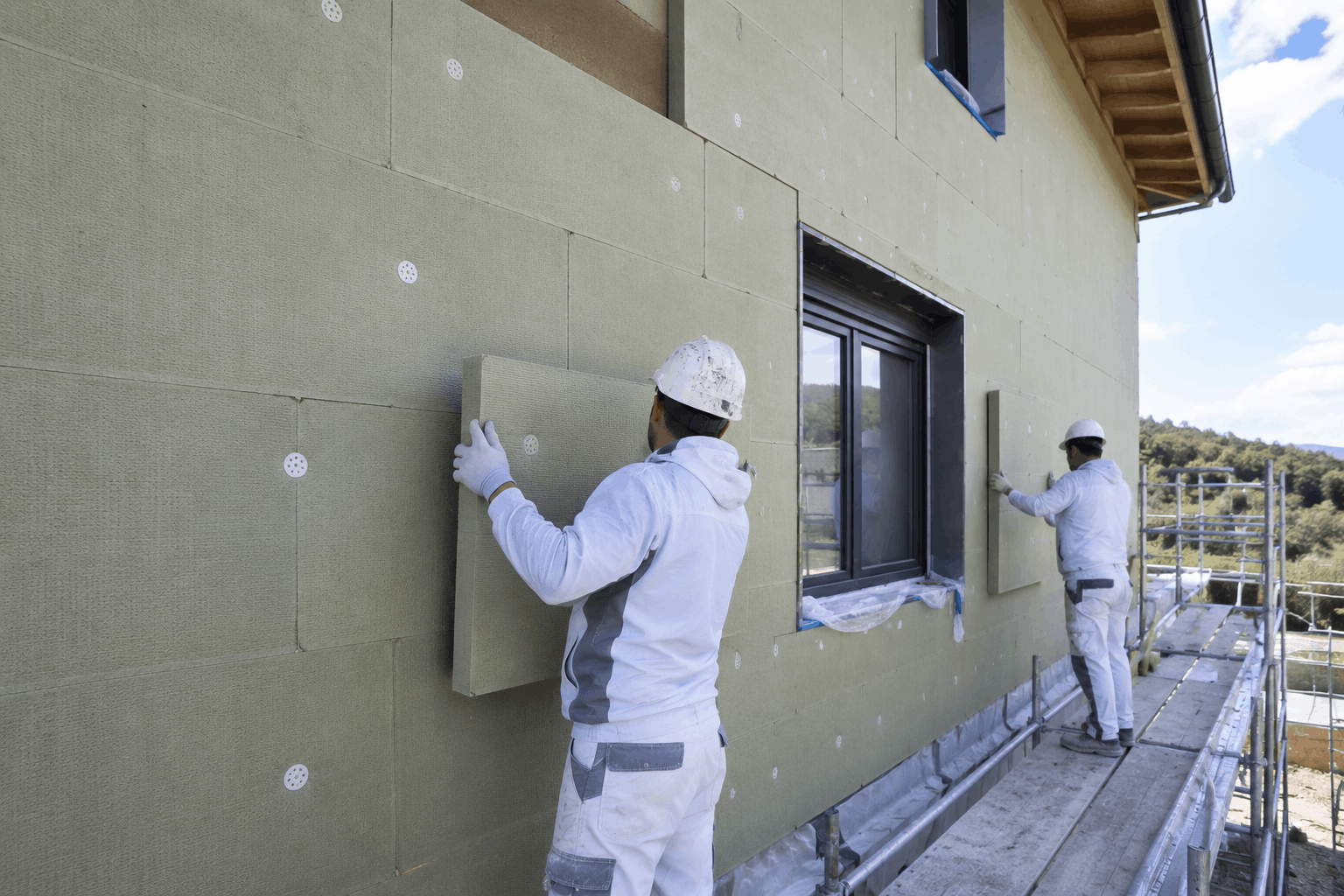
Passive house designs rely on exceptional insulation, airtightness and heat recovery ventilation to minimise energy consumption. For passive house designers in Australia, the kitchen must integrate with these principles. The goal is to create a functional cooking space that doesn’t compromise the home’s thermal envelope or energy performance.
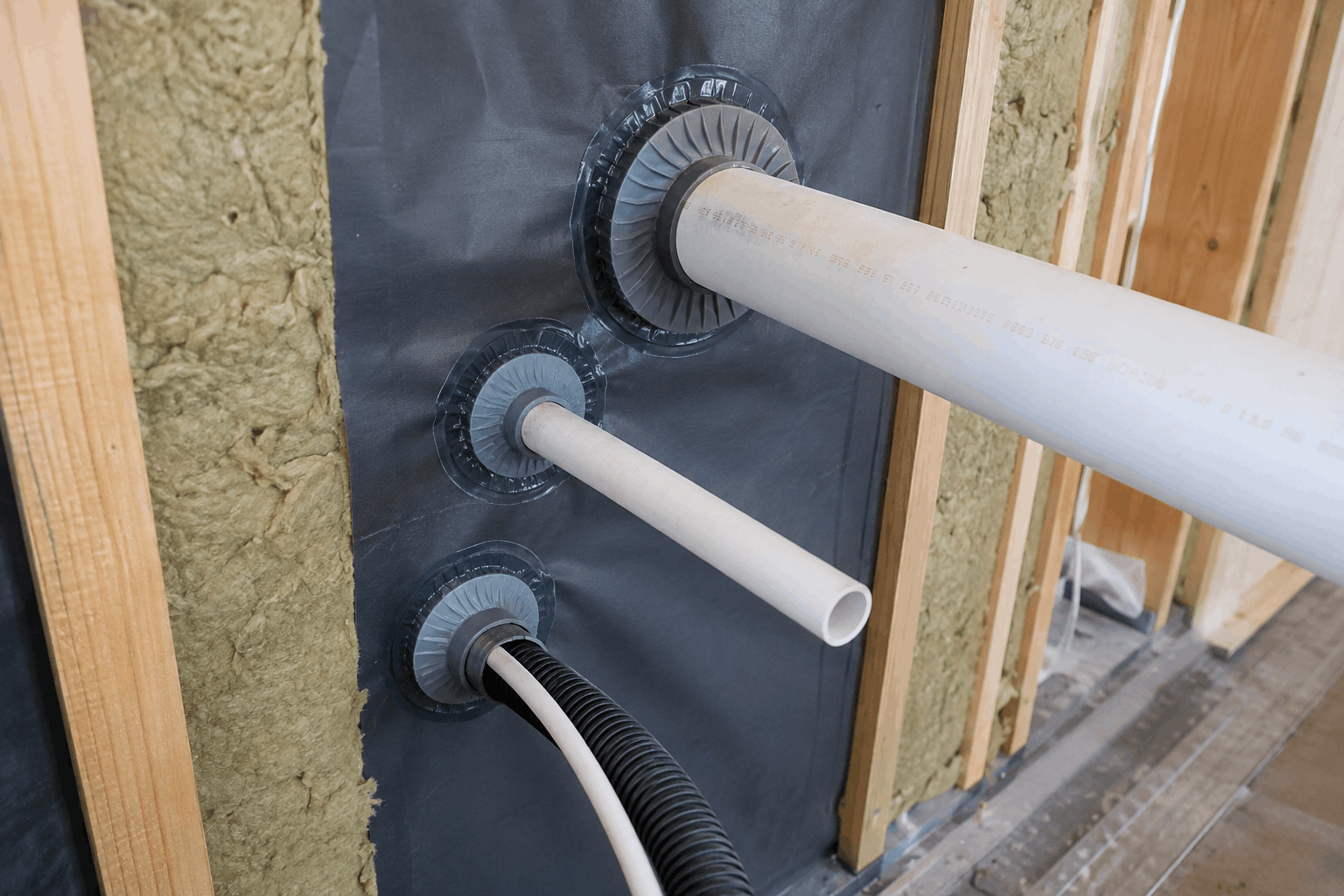
Heat losses often occur through poorly sealed penetrations, inefficient appliances and excessive moisture. A well-designed kitchen limits all three.
Passive building design in Australia should also consider the climate. Whether you’re in temperate regions or tropical zones, the kitchen’s design must account for local conditions whilst adhering to international passive house standards.
Ventilation and heat recovery
One of the most critical aspects of passive house design in Australia is the ventilation system. Kitchens generate significant moisture and cooking odours that must be extracted efficiently. A mechanical ventilation system with heat recovery (MVHR) is central to passive design house specifications, but kitchens often need supplementary extraction.
Avoid traditional recirculating range hoods. Instead, use a dedicated, airtight extract hood that integrates with the ventilation strategy. Some passive house designs in Australia also use boost modes on the MVHR system during cooking for added venting.
Make sure the extraction does not depressurise the home. Balanced airflow protects indoor air quality and preserves thermal comfort. This is especially important in passive home building, where uncontrolled air movement undermines performance.
Appliance selection
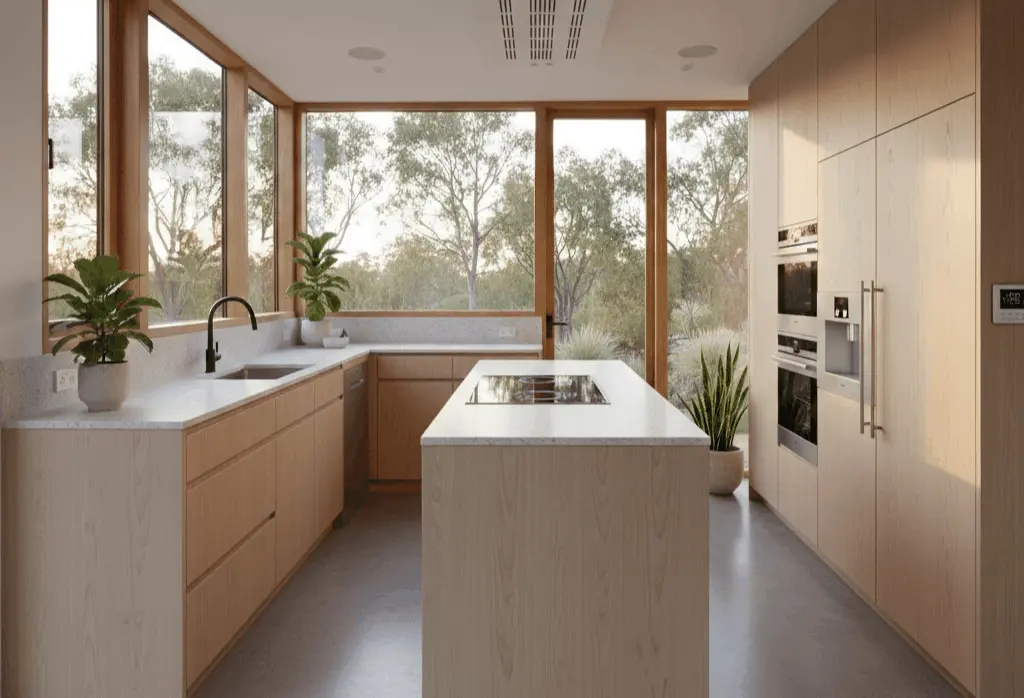
Kitchen appliances can significantly impact energy consumption. When designing a passive house, choose appliances with excellent energy ratings. Induction cooktops are ideal for passive home building because they’re highly efficient and generate less waste heat than gas or traditional electric hobs. This reduced heat output means your heating and cooling systems work less hard to maintain comfortable temperatures.
Select energy-efficient ovens, dishwashers and fridges with low standby power. Also, carefully consider the placement of heat-generating appliances. Positioning ovens and dishwashers away from external walls helps prevent thermal bridging and maintains the integrity of your insulation layer.
Layout
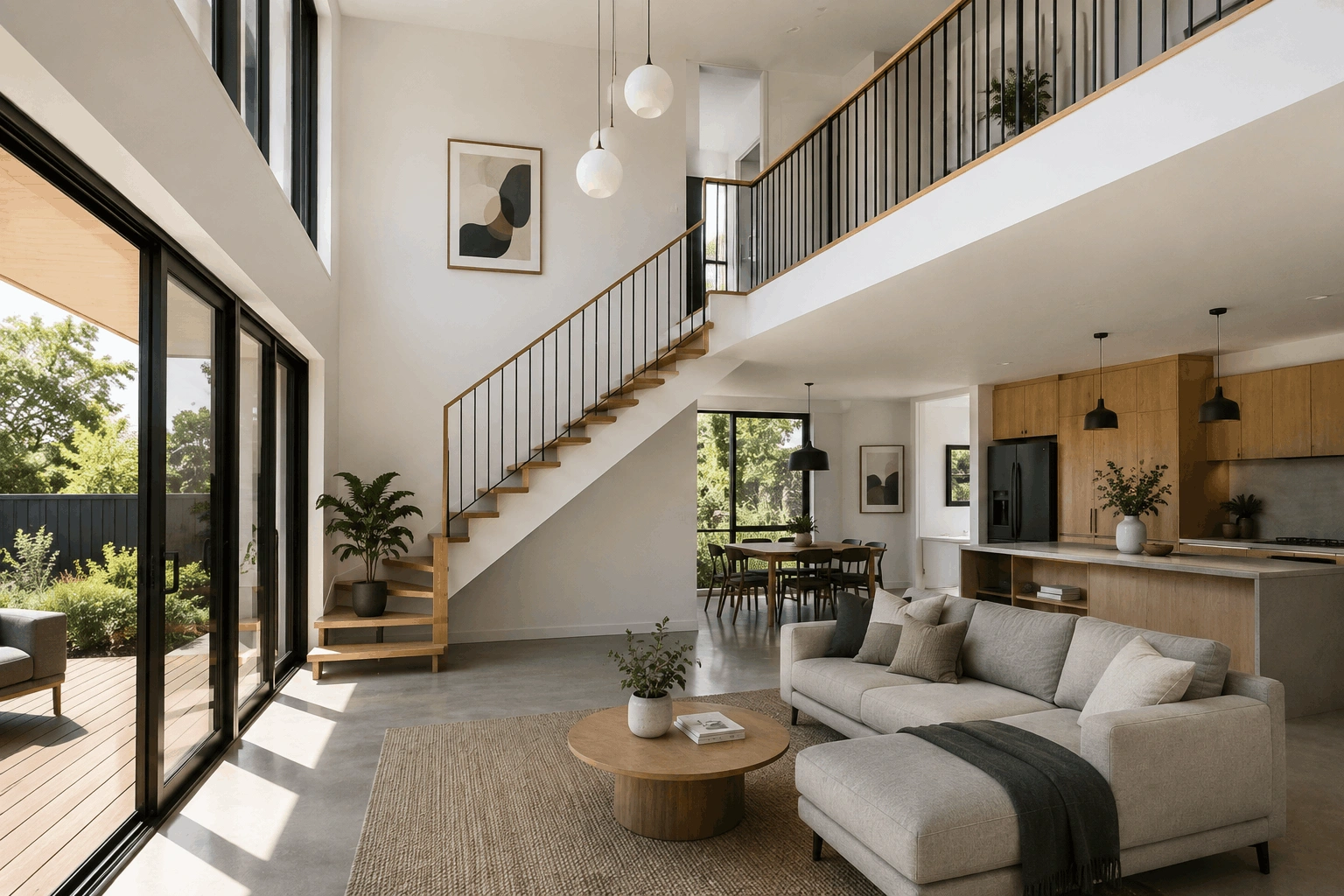
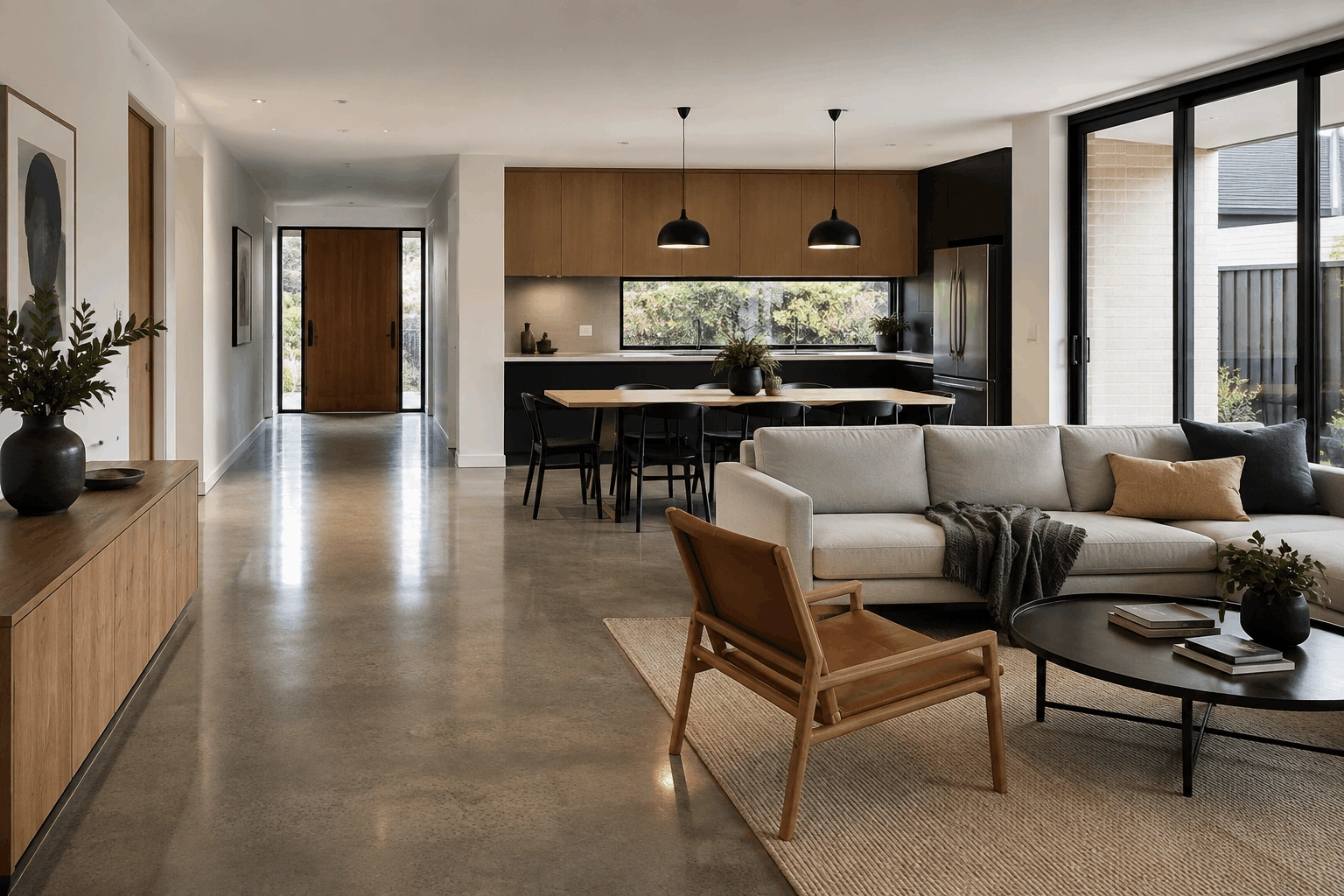
Passive house designs Australia specialists recommend thoughtful kitchen placement within the overall floor plan. Open-plan kitchens are popular, but they can make temperature control more challenging in passive homes. Consider how cooking heat will disperse through nearby living spaces.
Some passive house builders incorporate subtle zoning strategies. Sliding doors or partial or half walls can separate the kitchen from living areas when needed, allowing better control of temperature and odours while maintaining an open feel.
Materials and finishes
Passive house designs in Australia should use materials that support indoor air quality. Many conventional kitchen materials emit volatile organic compounds (VOCs) that can accumulate in airtight buildings. Choose low-VOC or VOC-free paints, sealants, adhesives and cabinetry materials.
From a thermal perspective, heavy benchtops such as stone can add useful thermal mass when placed inside the insulated envelope. This can help moderate temperature swings in a passive design house.
Moisture resistance is also important. Passive houses maintain stable humidity, but kitchens still experience spikes. Proper detailing around splashbacks, joins and cabinetry prolongs performance.
Windows and lighting
Natural light is essential in kitchen design, but windows are thermal weak points. That’s why passive home certification specifies high-performance triple-glazed windows with excellent U-values. These high-performance windows allow daylight in while controlling unwanted heat. Shading devices can be used in Australian climates to help control solar heat gain.
Window placement should also provide adequate natural light for food preparation whilst minimising heat loss or gain. Consider smaller, well-placed windows rather than expansive glazing that might compromise thermal performance.
Additionally, avoid excessive glazing in kitchen splashback areas unless it serves a clear purpose and is properly detailed.
Water efficiency
While not strictly part of the passive house standard, water efficiency aligns with the sustainability principles of passive home building. Install water-efficient taps and consider a small instant hot water unit at the kitchen sink to reduce water waste while waiting for hot water to arrive from a far-away tank or heat pump.
Working with professionals
Passive house designers in Australia understand the complexities of integrating kitchen design with passive house principles. Whether you’re undertaking a new build or renovation, working with experienced passive house builders ensures your kitchen meets performance standards while remaining functional and beautiful.
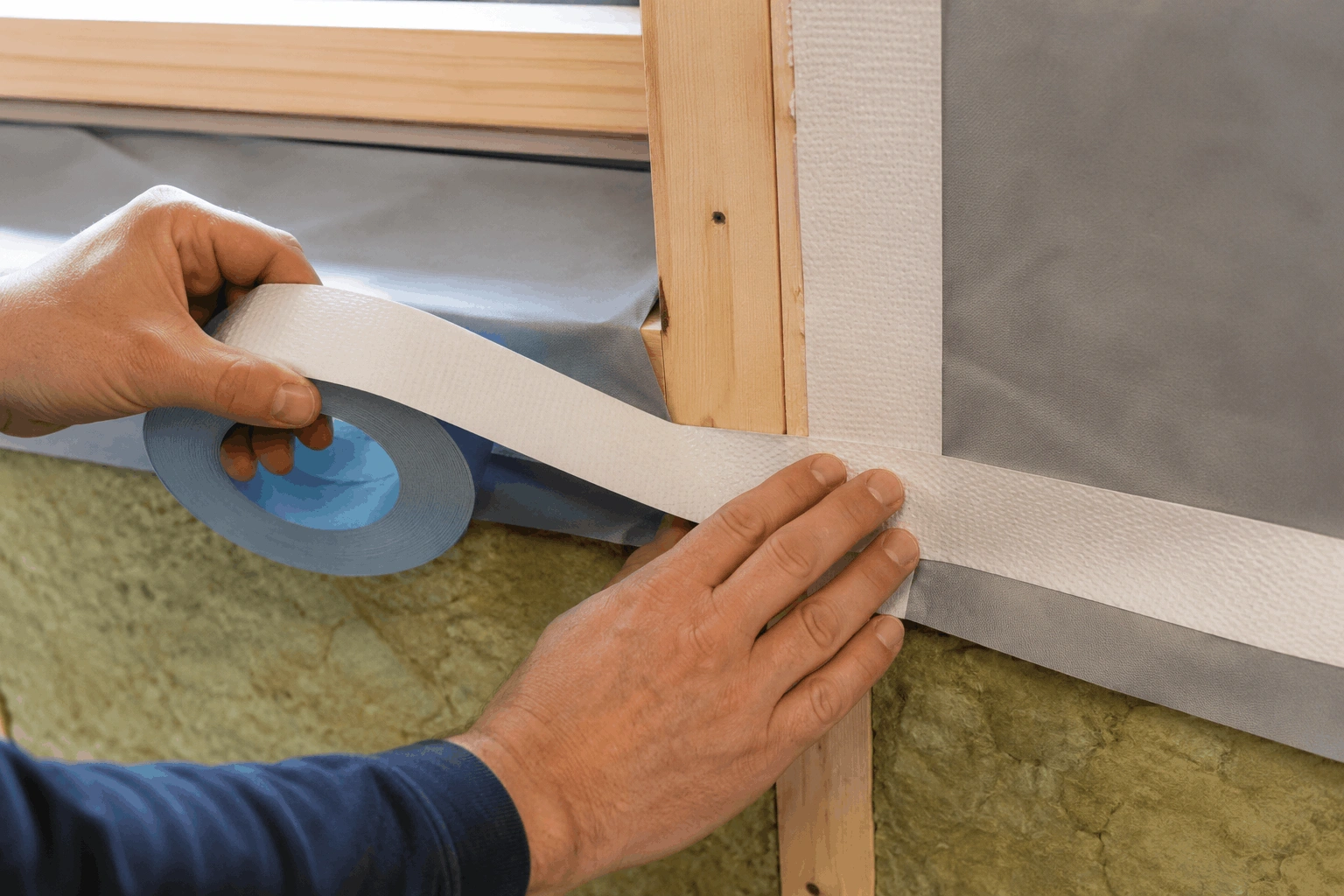
The expertise of qualified passive house designers can prevent costly mistakes. They’ll help you navigate product selection, detail airtightness connections and ensure your kitchen ventilation integrates properly with your whole-house MVHR system.
Frequently Asked Questions
Gas stoves are not recommended for passive houses. They produce combustion byproducts that can negatively impact indoor air quality and require substantial ventilation, which conflicts with the airtight envelope. Induction cooktops are more energy-efficient and better suited to passive house standards.
They do not need special brands, but appliances should be energy efficient, electric and suitable for airtight homes. Induction cooktops and efficient extraction are strongly recommended.
Yes. Open plan layouts work well when heat gains, ventilation and zoning are carefully designed as part of the overall passive house design.